
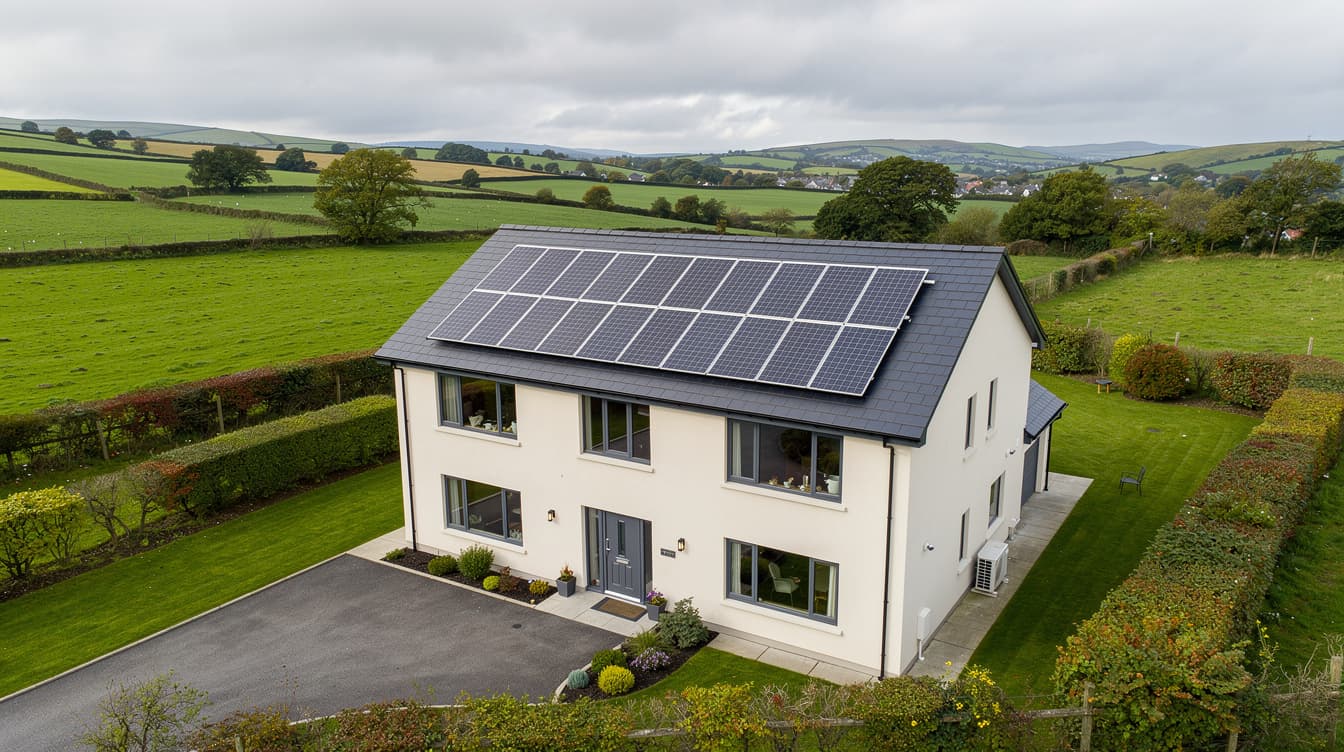
12 Solar Panels Ireland 2026: Cost, Output, Battery & Payback
Twelve panels is the honest middle ground for Irish solar in 2026 — enough to knock a real dent in a 3-bed semi’s bill without blowing past the SEAI grant cap, but small enough that it fits on most single-pitch roofs with no awkward second array to plan around. It’s also the sizing where the “do we add a battery?” question actually starts to matter, because a 12-panel system produces just enough surplus to make one work — but not so much that it’s a slam-dunk decision.
This guide walks through exactly what 12 panels costs in Ireland right now (August 2026), how much electricity it produces month by month, whether it’s the right count for your home and bills, and how it stacks up against the 10-panel and 14-panel setups it’s constantly compared against.
What does a 12-panel solar system cost in Ireland in 2026?
Standard installed pricing for a 12-panel system with a modern hybrid inverter, on a single-pitch tile or slate roof, from an SEAI-registered installer in August 2026:
| Setup | Gross price | After €1,800 SEAI grant |
|---|---|---|
| 12 × 440 W panels + 5 kW hybrid inverter (no battery) | €8,400 – €9,800 | €6,600 – €8,000 |
| 12 panels + 5 kWh LiFePO₄ battery (most common) | €10,900 – €12,600 | €9,100 – €10,800 |
| 12 panels + 10 kWh battery (heat pump / EV homes) | €13,200 – €15,100 | €11,400 – €13,300 |
| 12 panels + Eddi diverter (immersion, no battery) | €9,300 – €10,700 | €7,500 – €8,900 |
At 440 W panels — the dominant residential module in Ireland right now — 12 modules give you 5.28 kWp of DC array. That’s under the 6 kWp SEAI grant cap and comfortably inside the <6 kW NC6 threshold that keeps grid connection simple. Move to 460 W or 480 W panels (Longi Hi-MO X10, JA Solar DeepBlue 4.0 Pro or Jinko Tiger Neo N-Type) and 12 panels lands at 5.52 kWp or 5.76 kWp — still inside both caps but pulling every euro of the €1,800 grant.
Ready to Go Solar?
Get your free personalised quote from SEAI-registered installers.
How much electricity does 12 solar panels produce in Ireland?
A well-sited 12-panel south or southeast-facing array in Ireland produces around 4,600–5,150 kWh per year. That’s roughly the annual electricity use of a typical Irish 3-bed semi without a heat pump or EV — so 12 panels can, in principle, cover 100 % of household consumption on an annualised basis, though not month-by-month.
Here’s the month-by-month pattern for a 5.28 kWp (12 × 440 W) array on a 30° south-facing pitch in the Irish Midlands, based on SEAI PVGIS data:
| Month | Typical output (kWh) | Share of annual |
|---|---|---|
| January | 150 – 180 | 3 % |
| February | 220 – 260 | 5 % |
| March | 380 – 430 | 8 % |
| April | 560 – 620 | 12 % |
| May | 640 – 720 | 14 % |
| June | 660 – 740 | 14 % |
| July | 610 – 690 | 13 % |
| August | 530 – 600 | 11 % |
| September | 400 – 460 | 9 % |
| October | 260 – 310 | 6 % |
| November | 160 – 200 | 4 % |
| December | 120 – 150 | 3 % |
| Annual total | 4,690 – 5,360 | 100 % |
The stark distribution is what really shapes the sizing decision: May, June and July together deliver about 41 % of the entire year’s generation, while December, January and November combined produce only 10 %. This isn’t a rooftop that keeps you self-sufficient through winter — even 12 panels won’t. The right way to think about it is annualised: over a year, you offset the equivalent of one typical family’s consumption.
East-facing or west-facing? Drop the annual number by 12–18 %, so around 4,000–4,400 kWh. Split east-west across two pitches (6 panels each)? Expect around 4,300–4,700 kWh but with a flatter daily curve that actually self-consumes better if no one is home midday.
How much roof space do 12 solar panels need?
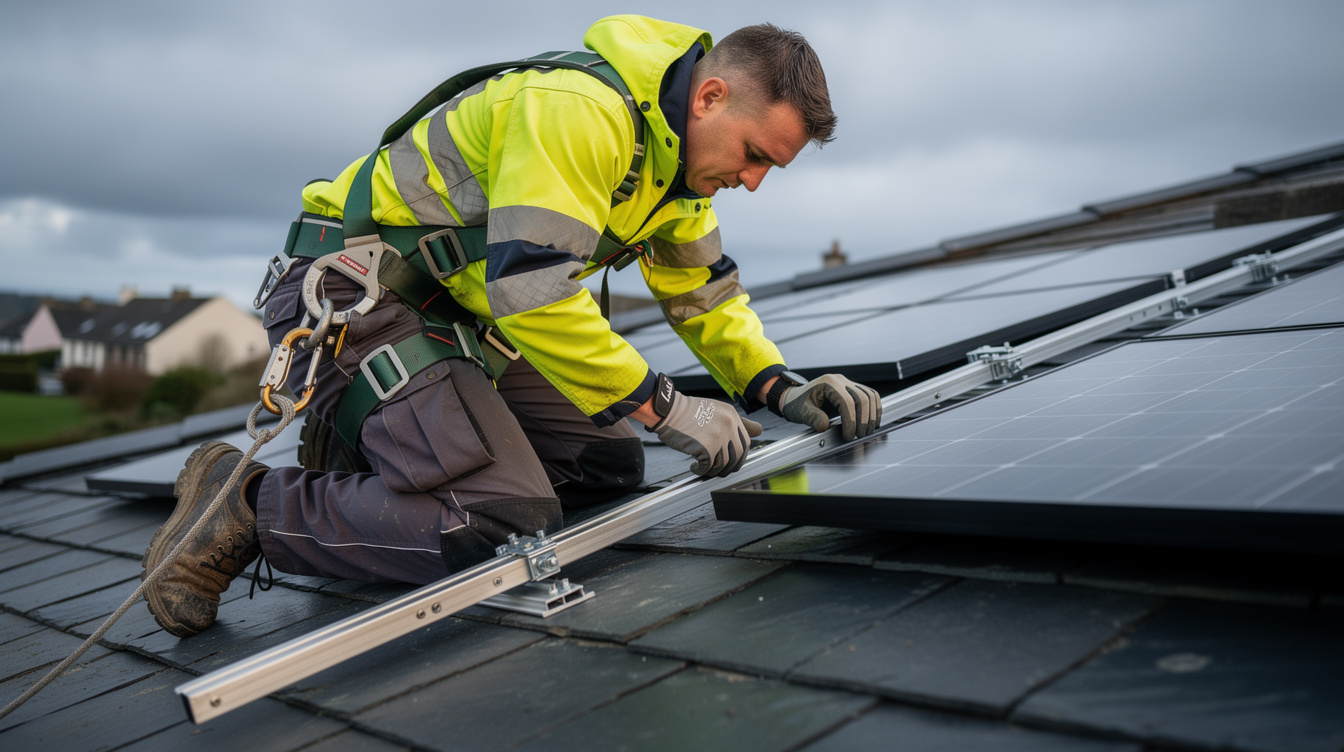
A standard residential 440 W panel measures roughly 1,762 mm × 1,134 mm — call it 2.0 m² per module. Twelve panels therefore need around 24 m² of usable pitch, plus a 300 mm setback from ridge, verges and eaves.
Practical roof-space rules of thumb:
- Standard 3-bed semi (single pitch, no dormers or velux): almost always fits. The main pitch on a modern 3-bed is typically 30–40 m².
- 3-bed semi with dormer or roof-light: tight. May need a mixed portrait/landscape layout or a split across two pitches.
- Bungalow with hipped roof: almost always fits in landscape orientation on a single pitch.
- Terraced house: depends on chimney position and party-wall setbacks. Often 10–12 panels is the physical maximum.
- 4-bed detached: trivially fits — 12 panels usually leaves room for a future top-up if bills grow.
Will 12 panels cover my electricity bill?
Depends entirely on what your bill actually is. Real-world 2026 numbers for an Irish household at the current average unit rate of 34 c/kWh (all-in, day + standing charge, SSE Airtricity / Bord Gáis / Electric Ireland variable):
| Household type | Typical annual use | 12-panel coverage | Annual saving (12-panel + 5 kWh battery) |
|---|---|---|---|
| 1–2 person, no EV, gas heat | 3,200 kWh | Over 100 % (huge export) | €780 – €920 |
| 3–4 person semi, gas heat, no EV | 4,600 kWh | Roughly 100 % | €1,020 – €1,180 |
| 3–4 person + EV (10,000 km/yr) | 6,500 kWh | 70–80 % | €1,150 – €1,320 |
| Heat pump, no EV | 8,500 kWh | 55–65 % | €1,180 – €1,350 |
| Heat pump + EV | 10,500 kWh | 45–55 % | €1,220 – €1,410 |
Watch the two effects: absolute saving rises as your bill grows even though percentage coverage falls, because high-use households self-consume nearly every kWh the panels produce (avoiding the low 20 c CEG export rate and pocketing the full 34 c retail rate instead). For heat pump or EV homes, 12 panels is still a strong economic play — but if your annual use is above 8,000 kWh, 14 or 16 panels usually returns more per euro invested.
Do 12 panels need a battery?
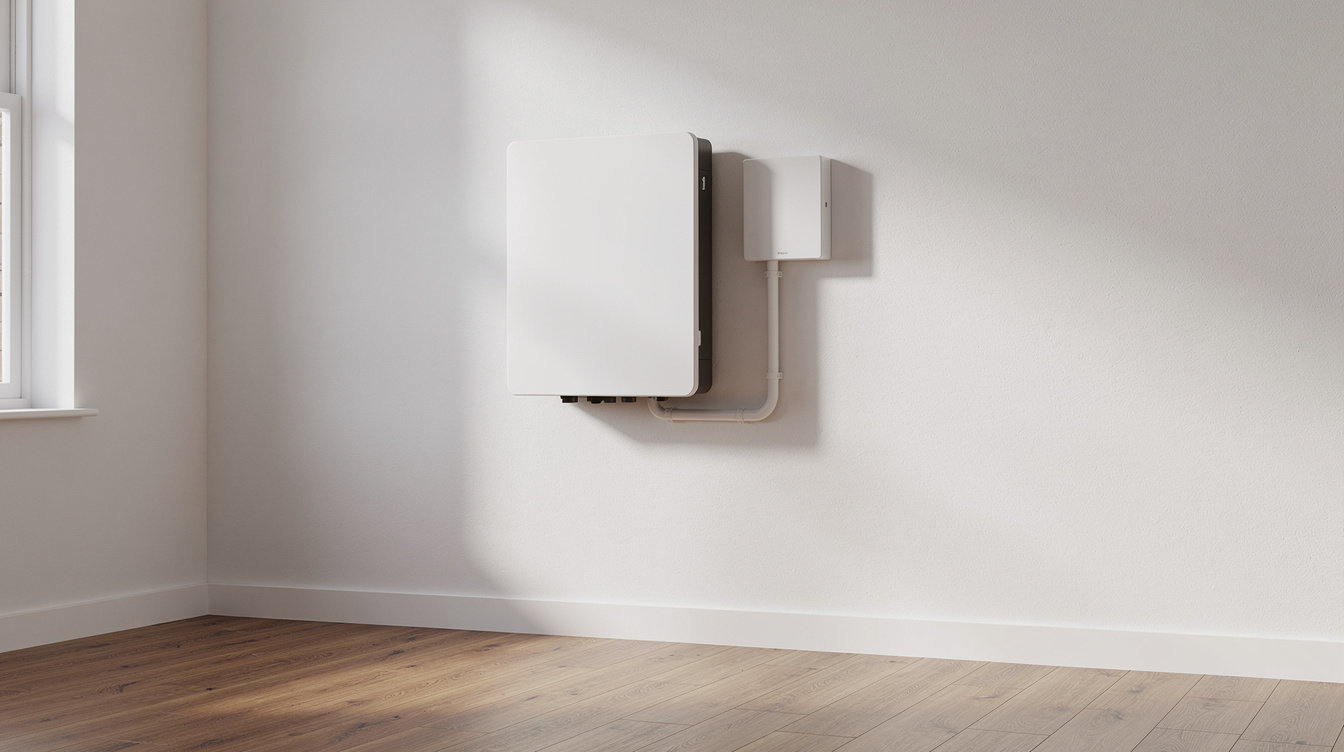
At 12 panels you’re producing enough to make a battery worth doing — but only if certain conditions are true. A 5 kWh battery on a 12-panel system typically stores 2–4 kWh of daily surplus from April through September, offset to evening use. That’s worth roughly 30 c × 3 kWh × 180 days = €160 saved in the good months, plus 10 c × 1 kWh × 185 winter days = another €19 in winter (batteries barely fill in December). Total annual saving from adding a battery: €170–€220.
A 5 kWh battery adds €2,500–€3,100 net to the system. Payback on the battery alone: 12–18 years. It’s worth adding if:
- Your household is empty midday on weekdays (all generation would otherwise export at €0.18–€0.24)
- You have a smart meter and are on a night-tariff plan (Electric Ireland Smart Drive, Energia Smart Drive, SSE Airtricity Smart Meter) — battery can charge from cheap night electricity and cover morning peak too
- You value grid-outage backup (needs a compatible hybrid inverter with EPS mode)
- You’re already at the €1,800 SEAI grant cap so the battery is 100 % incremental spend anyway
Skip the battery if you’re home most weekdays (an Eddi immersion diverter at €700–€900 gets a similar saving with a 4–5 year payback) or if the quote pushes the total over €13,000 — the marginal cost per kWh saved gets ugly at that point.
12 vs 10 vs 14 panels: which is right for you?
| Metric | 10 panels | 12 panels | 14 panels |
|---|---|---|---|
| DC array (440 W panels) | 4.40 kWp | 5.28 kWp | 6.16 kWp |
| Annual output | 3,900–4,400 kWh | 4,700–5,300 kWh | 5,300–5,900 kWh |
| SEAI grant captured | €1,760 (partial) | €1,800 (full) | €1,800 (full) |
| Net cost (panels + 5 kWh battery) | €8,200–€9,700 | €9,100–€10,800 | €10,400–€12,100 |
| Payback (avg-use semi) | 6–7 years | 5–6 years | 5–6 years |
| Payback (heat pump/EV home) | 5–6 years | 5–6 years | 4–5 years |
| Roof space needed | ~20 m² | ~24 m² | ~28 m² |
Pick 10 panels if roof space is tight (small terraced or a dormer-broken pitch), your annual bill is under €1,000, or you don’t plan to add an EV or heat pump within 5 years. You lose €40 of grant (SEAI pays €700/kWp for the first 2 kWp then €200/kWp up to 6 kWp — 4.4 kWp qualifies for €1,760).
Pick 12 panels if you want to pull the full €1,800 grant without overspending, your annual use is 3,500–6,500 kWh, and your roof comfortably takes 24 m² on one pitch. This is the pragmatic default for a modern 3-bed semi.
Pick 14 panels if you have a heat pump, EV, or plan to add one within 3 years. The marginal €1,300–€1,500 buys you 500–600 more kWh/yr — and if you self-consume most of that at 34 c/kWh, it pays back in 4–5 years, faster than the base system. It’s also the natural sweet spot for the full 6 kWp grant, sat right on the NC6 threshold.
Get a Free Quote — Compare Installers Side by Side
Quotes from SEAI-registered installers with grant paperwork handled.
SEAI grant, planning permission & grid connection for 12 panels
Twelve 440 W panels sits comfortably inside every regulatory limit for domestic solar in Ireland in 2026:
- SEAI grant: Full €1,800 available for systems up to 6 kWp. A 5.28 kWp array (12 × 440 W) qualifies for the full grant provided the homeowner meets the criteria (property built and occupied before 31 December 2020, MPRN with no prior PV grant, uses an SEAI-registered installer). Grant paid direct to homeowner within 4–6 weeks of the post-works BER upload.
- Planning permission: Not required. The SI 235/2022 exemptions (updated by SI 493/2022) removed size caps for domestic rooftop PV in October 2022 — 12 panels on any pitched roof is exempt in any planning zone except protected structures.
- Grid connection: Under 6 kW inverter output falls under NC6 — a simple micro-generator notification, not a full application. Your installer files the NC6 with ESB Networks and it’s typically approved within 20 working days. You keep your existing meter.
- Post-works BER: Required to release the grant. Costs €150–€250 (see our BER assessment cost guide).
- Clean Export Guarantee (CEG): Automatic on any modern smart meter. Supplier will pay you for exported kWh at their published CEG rate (0.18–0.24 c/kWh across 2026 suppliers).
Best 12-panel setups by installer strategy (2026)
What most Irish installers actually put on 12-panel homes right now:
- Budget pathway (€7,500–€8,500 net): 12 × 440 W Jinko Tiger Neo N-Type or JA Solar Bifacial + Growatt 5 kW hybrid. No battery. Best pick if you’re home midday most weekdays and can self-consume directly.
- Mainstream (€9,500–€10,500 net): 12 × 440 W Longi Hi-MO 6 or JA Solar DeepBlue 4.0 + Sungrow SH5.0RT or SolaX X1-Hybrid 5.0 + 5 kWh Sungrow / SolaX battery. Best all-round value in 2026.
- Premium (€12,000–€13,500 net): 12 × 460 W Longi Hi-MO X10 or REC Alpha Pure-R + SolarEdge single-phase inverter with per-panel optimisers + 10 kWh SolarEdge or BYD battery. Best for shaded or complex roofs, or heat pump / EV households.
- Backup-critical (€11,500–€13,000 net): 12 × 440 W + Sunsynk 5 kW hybrid + 5 kWh Sunsynk battery. Full EPS grid-fail backup so priority circuits stay live in outages.
A quick word on inverter sizing: for a 5.28 kWp (12 × 440 W) array, a 5 kW hybrid inverter is the industry-standard match. That’s an oversizing ratio of 1.06:1 — healthy and grid-friendly, no meaningful clipping. Don’t let anyone quote you a 3.6 kW inverter for 12 panels; you’ll clip 3–5 % of summer generation and cost yourself real money.
Common 12-panel install pitfalls to avoid
The five most expensive mistakes we see homeowners make on 12-panel setups in Ireland:
- Undersizing the inverter to save €300. A 3.6 kW inverter clips peak generation on sunny days — you lose 150–250 kWh/yr, worth €50–€85. Payback on the €300 saved: never.
- Skipping the post-works BER. Without it, SEAI won’t release the €1,800 grant. The BER expires 10 years after issue, so make sure the pre-works assessment isn’t already close to expiry.
- Buying an oversized battery. On a 12-panel system, a 10 kWh battery rarely fills more than 6–7 kWh even in summer — you’re carrying 3–4 kWh of dead capacity. Stick to 5–6 kWh unless you have a heat pump AND an EV AND night-tariff arbitrage in play.
- Splitting 12 panels across two poorly-matched pitches without power optimisers. A 4-and-8 split on a string inverter drags the whole string down to the underperforming leg. Either use SolarEdge / Enphase per-panel electronics, or run two separate MPPT strings (most hybrids have 2 MPPTs — use them).
- Signing before checking the NC6 will pass. Rural single-phase supplies close to the transformer limit can be flagged for a full NC7 application — that can add 2–3 months and €500–€1,500 in DSO fees. Ask your installer to check ESB Networks capacity first (there’s a public constraints map at esbnetworks.ie).
Where do 12 panels leave you long-term?
Over a 25-year system life (panel warranty is typically 25 years product / 30 years performance for tier-1 modules), a 12-panel system in Ireland will produce roughly 110,000–125,000 kWh of electricity. At an average blended rate of 30 c/kWh (weighted between retail avoided-purchase and CEG export), that’s a lifetime value of €33,000–€37,500 against an initial net cost of €7,500–€10,800 — an internal rate of return of 11–14 % depending on your household profile.
You’ll almost certainly need to replace the inverter once at year 10–12 (€1,200–€1,800 in 2026 money for a like-for-like hybrid) and, if you have a battery, replace it once at year 10–15 (€2,500–€3,500 for a 5 kWh LFP replacement). Panels themselves almost always outlast their warranty in Irish conditions — the mild, humid climate is actually kinder on modules than hot, dry regions.
Should you go 12 panels? A quick decision framework
Choose 12 panels if:
- Annual electricity use is 3,500–6,500 kWh (typical Irish 3-bed semi)
- Roof has 24 m² usable pitch on south, southeast, or southwest orientation
- You want the full €1,800 SEAI grant with minimal fuss
- Budget is €7,500–€11,000 net
Go smaller (8–10 panels) if: tight roof, low bills (under €1,000/year), or terraced house with chimneys eating into pitch.
Go bigger (14–16 panels) if: heat pump installed, EV in the driveway, annual use above 7,000 kWh, or a large detached with generous roof.
Either way, get 3 quotes from SEAI-registered installers and compare like-for-like on panel wattage, inverter brand, battery capacity and post-install monitoring. See our guide to comparing solar quotes for the seven line items that actually matter.
Frequently asked questions
Can 12 solar panels run a house? Yes, on an annualised basis, for a typical Irish 3-bed semi using 4,500–5,000 kWh per year with no heat pump or EV. Winter months you’ll still draw from the grid; summer you’ll export the surplus.
How many kWh does 12 solar panels produce per day in Ireland? Average day: 12–15 kWh. Peak summer day: 25–35 kWh. Deep winter day: 1–4 kWh. Annual average works out to roughly 13 kWh/day.
How much roof do I need for 12 solar panels? Around 24 m² of usable pitch (about 6 m wide by 4 m tall), plus 300 mm setback from ridge and eaves. Most 3-bed semis and bungalows have this on their main south-facing pitch.
What size battery do I need for 12 solar panels? 5 kWh for most households. Go 10 kWh only if you have a heat pump, EV, or run night-tariff arbitrage. Bigger batteries rarely pay for themselves on a 12-panel array.
Do I need planning permission for 12 solar panels in Ireland? No. Since October 2022 (SI 235/2022), rooftop solar of any size on a domestic dwelling is planning-exempt in Ireland, except on protected structures or in architectural conservation areas.
How long do 12 solar panels last? Panels: 25–30+ years (tier-1 module warranties are typically 25 years product / 30 years performance). Inverter: 10–15 years typical. Battery: 10–15 years for LiFePO₄ chemistry.
Ready to Get 12 Solar Panels Installed?
Free, no-obligation quotes from SEAI-registered installers in your area.
Related Articles
14 Solar Panels Ireland 2026: Cost, kWh Output, Battery & Payback
What 14 solar panels cost in Ireland 2026 (€10.4-12.1k after grant), annual kWh output, roof space, battery pairing and how 14 stacks vs 12 or 16 panels.
20 Solar Panels Ireland 2026: Cost, Output, Battery & Payback
What 20 solar panels cost in Ireland 2026 (€12.7-18.6k net after grant), 7,600-8,100 kWh output, roof space, battery choice and payback vs 10 or 14 panels.
Best Solar Setup Ireland 2026: Complete System Design Guide
The best solar setup for Ireland 2026 — panels, inverter, battery, diverter and installer — with 4 real-world configurations, prices and paybacks.