
SEAI Home Energy Upgrade Loan Ireland 2026: 2.99% Loans for Solar & Retrofit
The SEAI Home Energy Upgrade Loan Scheme quietly became one of the most useful pieces of climate policy in Ireland this decade — and most homeowners still haven't heard of it. Rates start at 2.99% APR, borrowing runs from €5,000 to €75,000, and the money is unsecured. Applications so far this year are already up 96% on 2025, according to the Department of Climate.
The catch? Solar PV on its own doesn't qualify. If you know how the rules actually work, though, you can still use the loan to fund your solar install — and the total cost of borrowing on a €15,000 retrofit-plus-solar package is often lower than a standard green personal loan by €1,500–€2,500 over the term. Here is everything you need to know before you apply in 2026.
What Is the Home Energy Upgrade Loan Scheme?
The Home Energy Upgrade Loan Scheme (HEULS) is a €500 million government-backed loan facility launched in April 2024 by the Department of Climate, Energy and the Environment. It is delivered by the Strategic Banking Corporation of Ireland (SBCI) and backed by the European Investment Bank (EIB) — the first scheme of its kind in Ireland.
The Government pays a 2% per annum interest subsidy to participating lenders, which is why banks can offer rates well below their standard personal loan APR. Loans are unsecured, meaning no charge is placed on your home.
Key numbers at a glance
| Feature | Detail (July 2026) |
|---|---|
| Loan amount | €5,000 – €75,000 |
| Term | 1 to 10 years |
| Interest rate | From 2.99% APR |
| Security | Unsecured (no charge on your home) |
| Scheme close | 31 December 2026 (or until fully drawn) |
| Government subsidy | 2% p.a. paid to lenders via SBCI |
| Backed by | SBCI + European Investment Bank |
The Solar PV Problem — and How to Solve It
Here is the rule that trips people up: you cannot borrow under the scheme for solar PV alone. The loan is designed to drive deep retrofit — insulation, heat pumps, ventilation — not single-measure solar installs.
But there are two clean workarounds, both of which we see homeowners use every week:
Ready to Go Solar?
Get your free personalised quote from SEAI-registered installers.
Route 1: The Better Energy Homes 25% rule
If your primary grant application is under Better Energy Homes (the individual grants scheme — attic insulation, cavity insulation, heating controls, etc.), you can spend up to 25% of the borrowed amount on non-eligible works, including solar PV panels.
Practical example: you apply for a €20,000 loan to upgrade cavity insulation, attic insulation and heating controls. You can direct up to €5,000 of that toward a solar PV install alongside those measures. In practice a 3 kW system (roughly €6,200–€7,400 before the €1,800 solar grant) fits comfortably inside the 25% allowance on a €20,000 loan.
Route 2: One Stop Shop or Community Energy Grant
If you are going for a deep retrofit through the National Home Energy Upgrade Scheme (One Stop Shop) or the Community Energy Grant, solar PV is an eligible measure inside the package. There is no 25% cap here — the loan can cover the full contribution you owe after the grant.
A One Stop Shop project must lift the home to at least BER B2 and include multiple upgrades. If that fits your home's situation, this is the cleanest path.
Who Can Apply?
To qualify for the Home Energy Upgrade Loan Scheme in 2026, you must:
- Own the property (owner-occupier or landlord)
- Be undertaking works that are supported by an SEAI grant
- Achieve at least a 20% improvement in the home's energy performance
- Meet the lender's own credit assessment
- Be an Irish resident with a valid PPSN
The dwelling must be located in the Republic of Ireland. Non-domestic properties, new builds and holiday lets are not eligible.
2026 Rates by Lender — Full Comparison
Nine lenders currently offer HEULS-backed loans (as of July 2026), and the rate differences are large enough that shopping around genuinely saves money.
| Lender | From (APR) | Notes |
|---|---|---|
| PTSB | 2.99% | Tiered: 2.99% on €50k+, 4.15% on €5–15k |
| Bank of Ireland | 3.00% | Rates from 3%; online drawdown |
| AIB | 3.55% | Variable APR; one flat rate all tiers |
| Avant Money (via An Post) | 3.69% | Fixed rate; digital application |
| Participating credit unions | 3.90–4.50% | 7 credit unions, 28 branches, 267k members |
Rates correct July 2026 — confirm on the lender's site before applying, they change quarterly. PTSB dropped its lowest tier from 3.55% to 2.99% in January 2026.
Why PTSB is often the cheapest — and often the wrong choice
PTSB has the headline rate, but only if you borrow €50,000 or more. On a €15,000 borrow, PTSB actually charges 3.75%, above Bank of Ireland at 3.00%. If your total loan is under €25,000 — which covers most homeowners doing solar + insulation — Bank of Ireland is usually the cheapest option in 2026.
Worked Example: Solar + Insulation on a 3-Bed Semi
Let's take a common 2026 project: a 1990s three-bed semi in Meath. The homeowner wants a 5 kW solar PV system with a 5 kWh battery plus cavity wall and attic insulation.
| Item | Gross Cost | Grant | Net |
|---|---|---|---|
| Cavity wall insulation | €1,700 | €700 | €1,000 |
| Attic insulation | €1,600 | €800 | €800 |
| 5 kW solar + 5 kWh battery | €12,500 | €1,800 | €10,700 |
| Total to finance | €12,500 |
Because the primary grant application is under Better Energy Homes and non-eligible works (solar) come in under the 25% cap, this project qualifies for a HEULS loan. Total works €15,800 — loan required €12,500 to cover the net cost after grants (some homeowners fund the deposit from savings and only borrow what's needed post-grant).
Monthly repayment comparison — €12,500 over 7 years
| Loan Type | APR | Monthly | Total Interest |
|---|---|---|---|
| HEULS (BoI) | 3.00% | €165 | €1,367 |
| Standard green personal loan | 6.90% | €188 | €3,265 |
| Credit union personal loan | 7.99% | €195 | €3,824 |
The HEULS saves this homeowner around €1,900 in interest over the term versus a standard green personal loan, and roughly €2,450 versus a credit union rate — while funding a system that will lift their BER from C1 to B2 and cut electricity bills by an estimated €950–€1,200 per year.
How to Apply — Step by Step
- Get an SEAI grant application in first. The loan is contingent on grant-supported works — you cannot apply for the loan before your SEAI grant approval is in progress.
- Get quotes from SEAI-registered installers. You need a detailed quote showing the works, cost breakdown and expected BER uplift.
- Choose your lender. Compare rates across at least three lenders. Bank of Ireland, PTSB and Avant Money are the top three for €10k–€25k loans in 2026.
- Complete the lender's HEULS application. You will need SEAI grant confirmation, quotes, ID, proof of address and 3–6 months of bank statements.
- Sign the loan and drawdown when works begin. Most lenders release funds in tranches: deposit, mid-installation and final. AIB and BoI can release in a single tranche if you request it.
- Complete works within 12 months. Grants must be claimed and the BER re-assessed within the timeframe on your SEAI approval letter.
Common Mistakes to Avoid
- Applying to the wrong lender first. Bank credit assessments are shared via the Central Credit Register — multiple applications in a short window can hurt your score. Pick your top choice and go with them.
- Underestimating the total project. Add 10–15% contingency. Scaffolding for a two-storey house, extra insulation depth, or a battery upgrade often pushes final cost above the initial quote.
- Assuming solar-only qualifies. It does not. If you only want solar PV, you are better off with a standard green personal loan, personal savings, or one of the installer-financed 0% deals we cover in our solar financing guide.
- Missing the 25% cap on Better Energy Homes. If solar is more than 25% of your total borrow, the whole loan can be knocked back at drawdown — even after approval.
- Not completing the BER re-assessment. No post-works BER, no grant — and the lender may recall the subsidised rate.
What About Community Energy Grants?
The Community Energy Grant (CEG) is the underrated route in 2026. It pools multiple homeowners in an area (or an estate) into a single upgrade project, managed by a nominated project coordinator. Grants are typically 30–50% higher than the equivalent individual grants because the state pays out more per home when project delivery is bundled.
Solar PV is a fully eligible measure under CEG. If you are on a road or in an estate where 8+ homes are considering upgrades, contact SEAI about establishing a CEG project. It takes 6–9 months to set up but the maths are meaningfully better.
Frequently Asked Questions
Is the Home Energy Upgrade Loan Scheme still open in 2026?
Yes. The scheme is open for drawdown until 31 December 2026 or until the €500 million pot is fully committed — whichever comes first. Uptake is up 96% year-on-year, so budget could be exhausted before the deadline.
Can I use the loan for a battery only?
Standalone battery storage is not currently a grant-supported measure under SEAI, so a battery-only loan does not qualify. Add a battery as part of a solar install and it becomes eligible under the same Better Energy Homes 25% route.
Do I need to be tax compliant?
Yes. Lenders check tax status as part of standard credit assessment. Any Revenue arrears will need to be resolved before drawdown.
Can landlords apply?
Yes, landlords can apply on rental properties provided the works are grant-eligible under SEAI schemes (which include most Better Energy Homes and One Stop Shop upgrades on rental homes built before 2011).
What if my BER doesn't improve by 20%?
The 20% BER uplift is a SEAI condition for eligibility. The BER assessor confirms this after works. If the uplift falls short, the loan can be recalled or converted to the lender's standard personal loan rate. This rarely happens on projects that include solar plus insulation.
Can I combine the HEULS with the SEAI €1,800 solar grant?
Yes — the solar grant is claimed separately once your PV system is commissioned and registered. The HEULS covers your net cost after the grant lands. Together they are the cheapest way to finance solar plus retrofit in Ireland in 2026.
Planning Your Solar + Retrofit Project?
We'll match you with SEAI-registered installers who can size your system and quote the full project for HEULS eligibility.
Bottom Line
The SEAI Home Energy Upgrade Loan is genuinely one of the cheapest ways to fund a solar-plus-retrofit project in Ireland in 2026. Rates from 2.99% are meaningfully below the 6–8% you'll see on standard green personal loans, and the €5,000–€75,000 range comfortably covers most homeowner projects.
The trap is trying to use it for solar alone — you can't. Bundle solar with insulation under Better Energy Homes and stay inside the 25% non-eligible cap, or go for a One Stop Shop retrofit where solar is a fully qualifying measure. Get quotes early: the €500m pot is being drawn faster than the Department expected, and the scheme is still officially due to close at the end of 2026.
Related reading: SEAI solar grants explained · All solar financing options in Ireland 2026 · One Stop Shop retrofits.
Related Articles
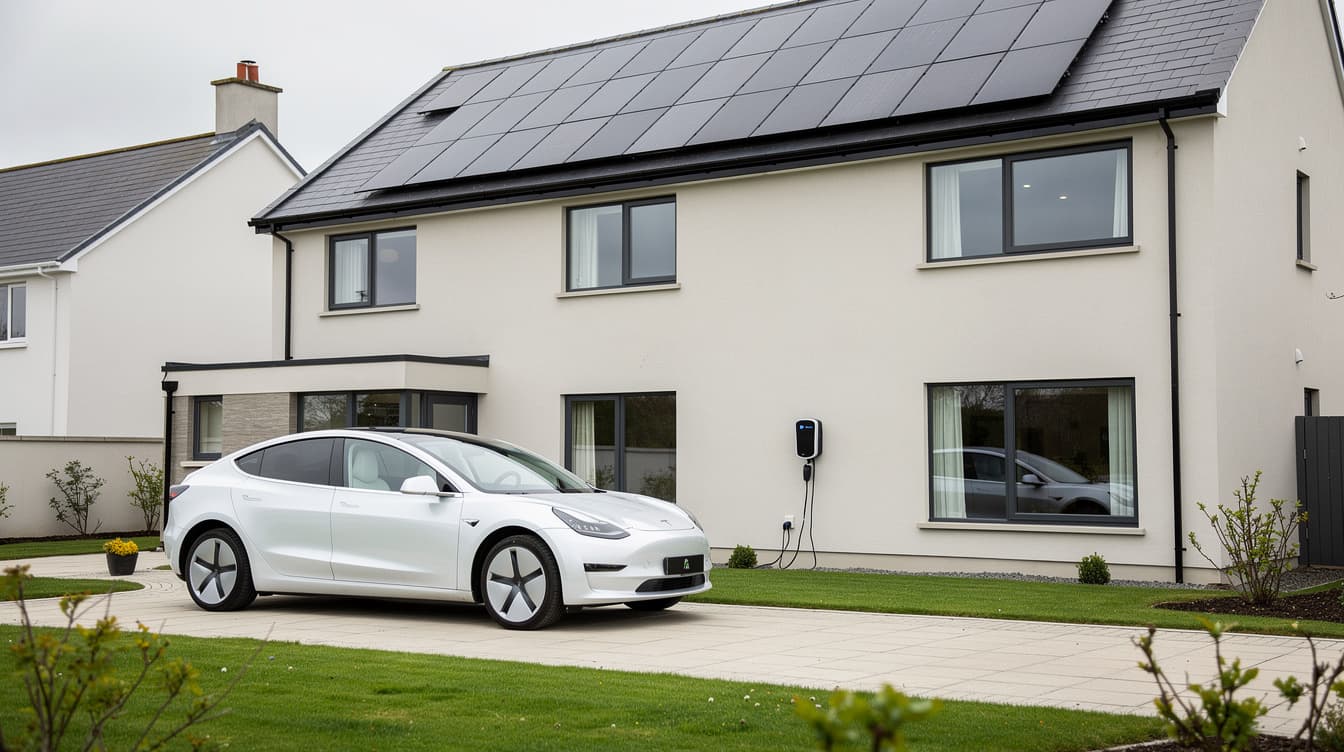
EV Charger + Solar Panels Ireland 2026: Combined Install Costs & Free Charging
Real 2026 Ireland costs for combined solar + EV charger install. €2,100 grant stack, best solar-diverting chargers, and how many free EV km you actually get.
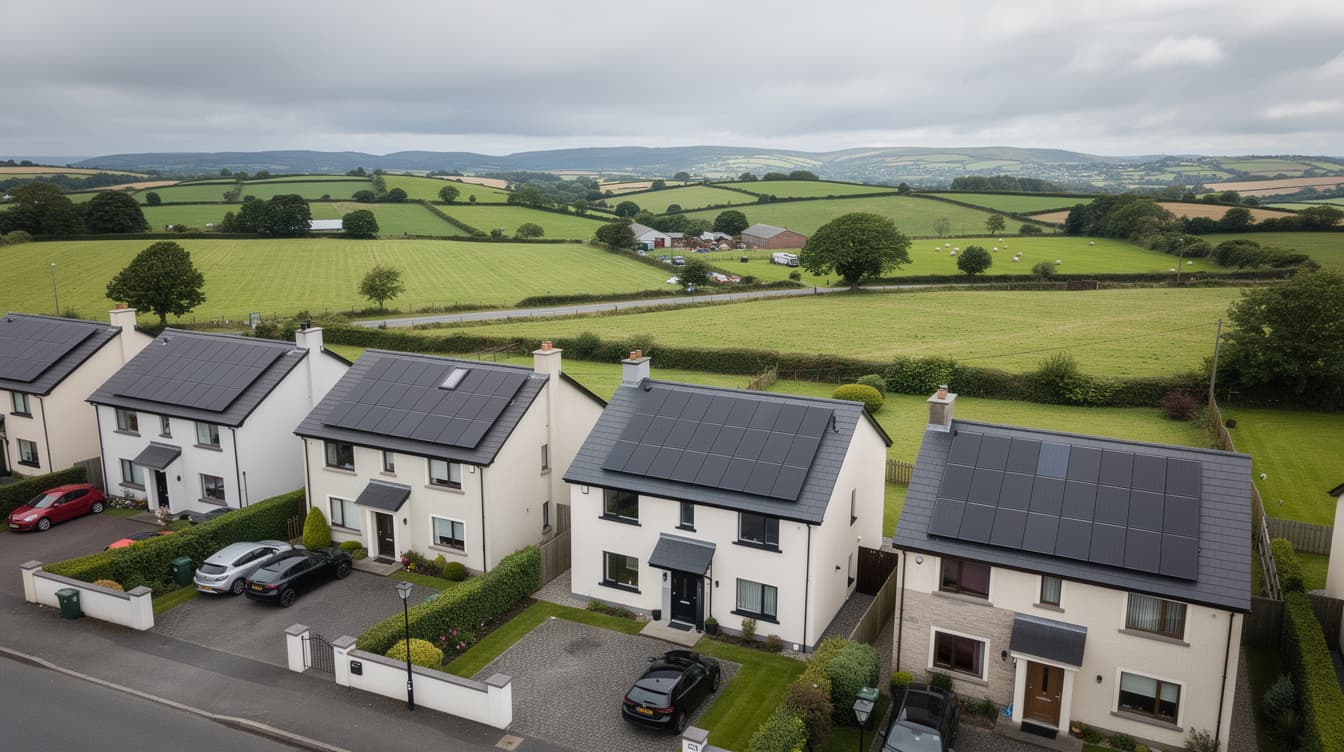
SolarEdge vs Enphase Ireland 2026: Price, Warranty & Which Wins on Irish Roofs
Full Ireland 2026 comparison: SolarEdge vs Enphase microinverters. Real installer prices, warranty gap, shading gains, and which wins for Irish roofs.
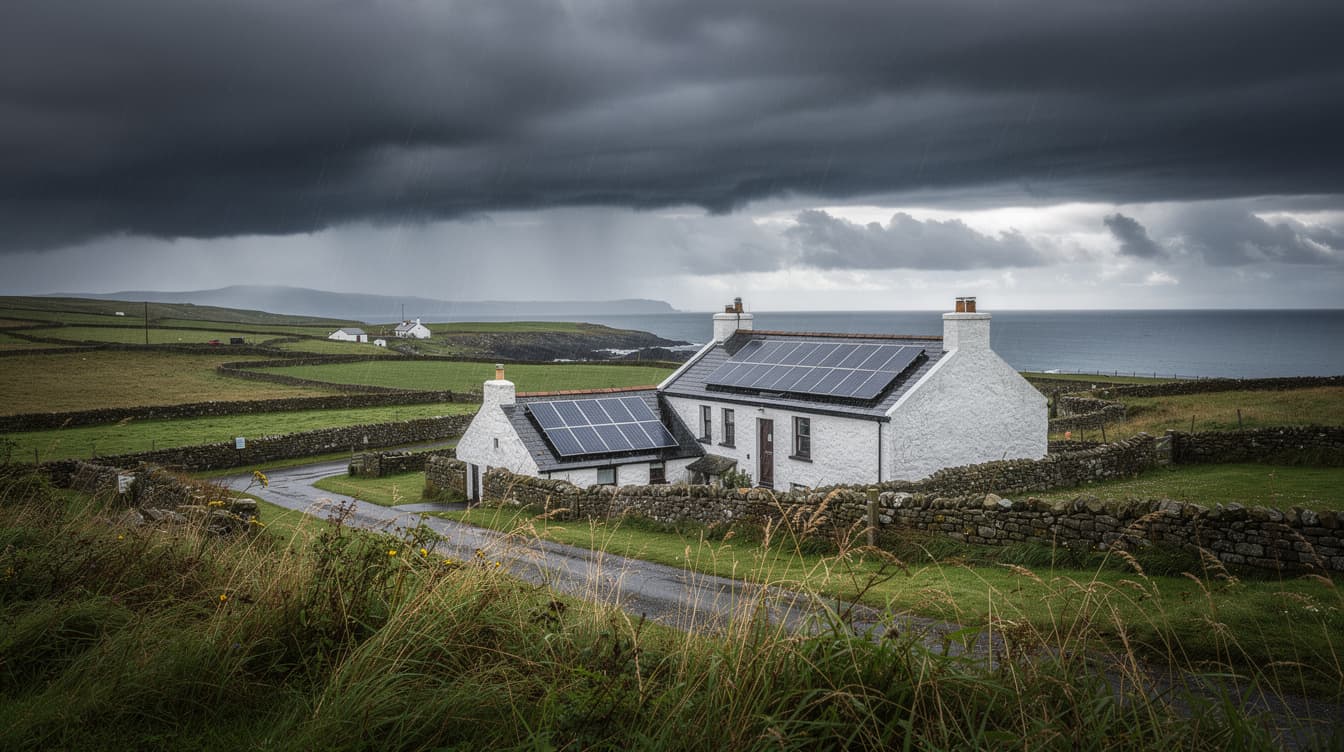
Storm & Lightning Damage to Solar Panels Ireland 2026: Insurance, Surge Protection, Repairs
How Irish solar systems survived Storm Éowyn's 183km/h gusts. Wind loading zones, surge protection costs, home insurance gotchas, before-storm checklist.