
Solar Panels Donegal 2026: Costs, Output, Installers & What Makes the Northwest Different
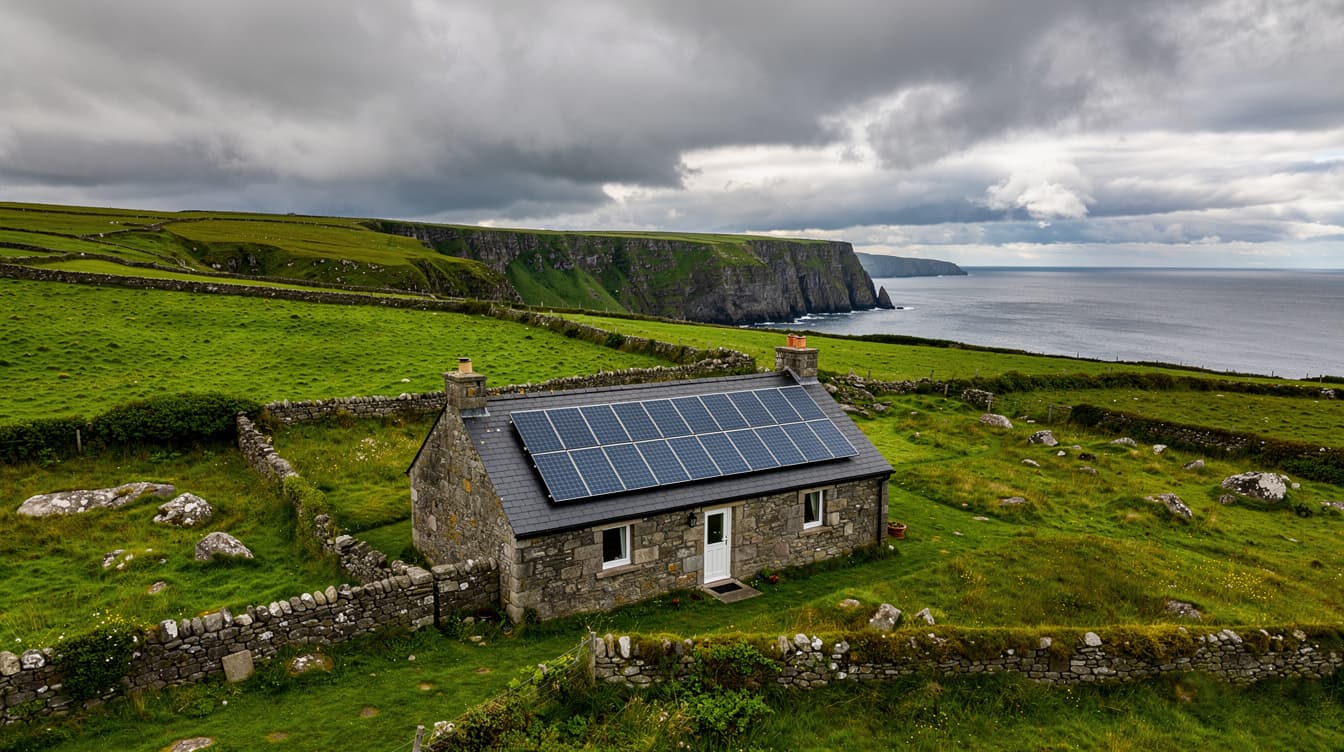
Donegal sits at Ireland's northwest tip, battered by Atlantic weather and blessed with some of the country's most dramatic landscapes. If you live here, you've probably heard that solar panels "don't work" this far north. That's wrong. Donegal homes are going solar in record numbers in 2026, and the economics work — even with lower sunshine hours than Wexford or Waterford.
This guide covers everything a Donegal homeowner needs to know: real output figures for our latitude, what a system actually costs after the SEAI grant, which installers serve the county, and the unique factors — from exposed roofs to rural planning — that make Donegal installations a little different from the rest of Ireland.
Get Free Solar Quotes from Donegal Installers
Compare prices from SEAI-registered installers who know Donegal roofs — no cost, no obligation.
Do Solar Panels Actually Work in Donegal?
Yes — and better than you'd think. Solar panels generate electricity from daylight, not direct sunshine. On a bright overcast day (which Donegal has plenty of), panels still produce 20–40% of their peak capacity. And remember: Germany, which has similar solar irradiance to Ireland's northwest, is one of Europe's largest solar energy markets.
Here's how Donegal stacks up against other Irish counties:
| County | Annual Output per kWp | Peak Sun Hours | vs Donegal |
|---|---|---|---|
| Wexford (best) | 965 kWh/kWp | ~3.0 hrs | +18% |
| Dublin | 900 kWh/kWp | ~2.8 hrs | +10% |
| Galway | 860 kWh/kWp | ~2.6 hrs | +5% |
| Donegal | 817 kWh/kWp | ~2.5 hrs | Baseline |
That 18% gap between Donegal and Wexford sounds significant, but it's actually small in financial terms. A 4.4 kWp system in Wexford might produce 4,250 kWh/year versus 3,600 kWh/year in Donegal — roughly €150 less in annual savings. Over a 25-year panel lifespan, the payback difference is about 18 months. Solar still works perfectly well here.
What Solar Panels Cost in Donegal in 2026
Donegal pricing runs slightly lower than Dublin thanks to reduced labour overheads, but installer travel time to remote areas (Fanad, Arranmore, Gweedore) can add €200–€500 to a quote. Here's what you'll actually pay:
| System Size | No. of Panels | Cost Before Grant | After €1,800 SEAI Grant | Annual Output (Donegal) |
|---|---|---|---|---|
| 2.2 kWp | 5 panels | €4,200–€5,400 | €2,400–€3,600 | ~1,800 kWh |
| 4.4 kWp | 10 panels | €7,200–€9,000 | €5,400–€7,200 | ~3,600 kWh |
| 6.6 kWp | 15 panels | €10,500–€13,000 | €8,700–€11,200 | ~5,400 kWh |
| Add 5 kWh battery | — | +€3,800–€5,200 | +€3,800–€5,200 | Boosts self-use 25–35% |
The most popular system in Donegal is the 4.4 kWp (10-panel) setup. It maximises the €1,800 SEAI grant, covers roughly 75–80% of a typical household's electricity, and pays for itself in 7–9 years even at Donegal's solar yield. All residential solar installations in Ireland are charged at 0% VAT since May 2023.
The SEAI Solar Grant for Donegal Homes
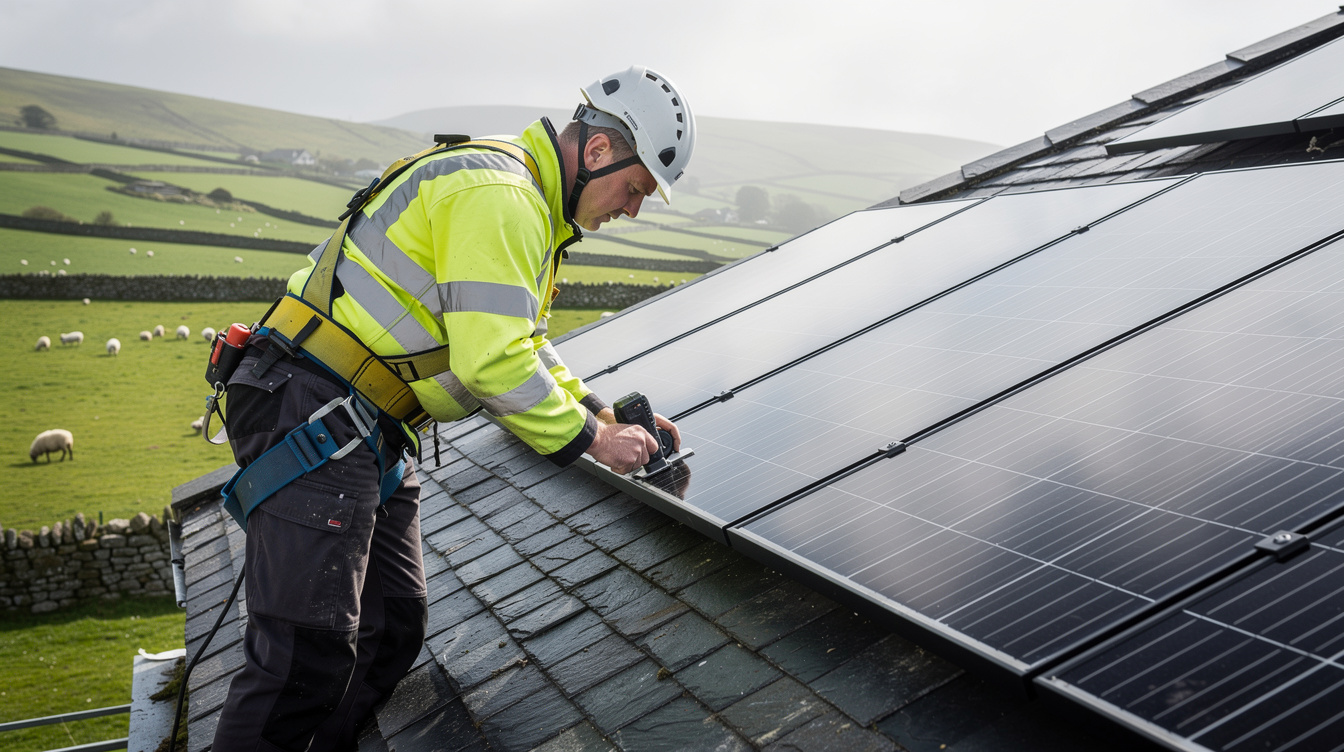
The SEAI solar electricity grant is worth up to €1,800 in 2026 and is available to every homeowner whose property was built and occupied before 2021. There's no means test — it's property-based, not income-based.
What you need to apply:
- Your MPRN (on the top of any electricity bill)
- Your Eircode
- An SEAI-registered installer (the installer handles most of the paperwork)
- A system of at least 2 kWp (minimum 5 panels with modern 440W modules)
The grant is paid directly to your installer, so you only pay the net amount. The full process from SEAI application to completed installation typically takes 4–8 weeks in Donegal.
For a deeper dive into grant eligibility, see our full SEAI grant guide.
Donegal-Specific Installation Factors
Installing solar in Donegal isn't quite the same as doing it in a suburban Dublin estate. Here's what to watch for:
Exposed Roofs and Wind Loading
Donegal gets some of Ireland's strongest winds, especially along the coast from Malin Head to Killybegs. Your installer must factor in wind loading calculations specific to your location. This might mean:
- Stronger mounting rails and additional roof anchors
- Panels mounted flush (not tilted) on exposed sites
- Slight premium on installation (€200–€500 extra for coastal properties)
Rural Roof Types
Many Donegal homes have traditional slate or concrete-tile roofs rather than the modern tile you'd find in newer estates. Slate roofs require specialist mounting brackets, but any experienced local installer handles these routinely. If you have a thatched roof (rare but not unheard of in Donegal), solar panels aren't suitable — consider ground-mounted panels instead.
Electricity Consumption Patterns
Donegal had the lowest median residential electricity consumption of any Irish county in 2023, at just 2,575 kWh (versus the national average of 3,174 kWh). This is partly because many Donegal homes rely on oil, solid fuel, or LPG for heating rather than electricity. A smaller solar system (6–8 panels) may be sufficient for many homes here.
However, if you're switching to a heat pump or charging an electric vehicle, your consumption will jump significantly — in which case, a larger 10–15 panel system makes more sense. Read our guide on combining solar with a heat pump.
Planning Permission
Since October 2022, homeowners can install unlimited rooftop solar panels without planning permission. Ground-mounted arrays up to 25m² are also exempt. The only exceptions are protected structures and homes in Architectural Conservation Areas — if that applies to you, contact Donegal County Council's planning department before proceeding.
Find Out What Solar Would Cost for Your Donegal Home
Enter your details and get up to 3 quotes from local SEAI-registered installers.
How Much You'll Save in Donegal
Let's run the numbers for the most common system size — a 4.4 kWp (10-panel) setup on a south-facing Donegal roof.
| Metric | Value |
|---|---|
| Annual output | ~3,600 kWh |
| Self-consumption (no battery) | ~40% (1,440 kWh) |
| Electricity saved (at €0.30/kWh) | €432/year |
| Export income (2,160 kWh × €0.185/kWh) | €400/year |
| Total annual benefit | €830/year |
| Net cost after grant | €5,400–€7,200 |
| Payback period | 7–9 years |
With a battery, self-consumption rises to 65–75%, eliminating most of your export and replacing it with higher-value savings at the full retail electricity rate. This pushes annual savings to around €980+ but adds €3,800–€5,200 to the upfront cost, so the payback period stays roughly the same.
Want to see figures specific to your house? Try our solar panel savings calculator.
Selling Electricity Back to the Grid in Donegal
Under Ireland's Clean Export Guarantee (CEG), you can sell surplus electricity back to your energy supplier. In 2026, the best export rates are:
- Energia: 24c/kWh (day rate)
- SSE Airtricity: 22c/kWh
- Electric Ireland: 18.5c/kWh
- Bord Gáis: 21c/kWh
All you need is a smart meter (ESB Networks installs these free — request one through your supplier if you don't have one yet) and an agreement with your electricity provider. The first €400 of export income per year is tax-free.
For a full comparison of export tariffs, read our Clean Export Guarantee guide.
Finding an SEAI-Registered Installer in Donegal
You must use an SEAI-registered installer to qualify for the €1,800 grant. Several companies serve Co. Donegal, including local firms and regional operators covering the northwest.
How to check if an installer is registered:
- Go to SEAI's Solar PV Company register
- Filter by county: Donegal
- Check that the company is listed for domestic installations
Tips for choosing in Donegal specifically:
- Ask if they've done installs on exposed coastal sites — wind loading experience matters
- Check if they charge extra for remote locations (Fanad, Inishowen, Arranmore)
- Get at least 3 quotes — pricing varies widely, even within the county
- Verify they carry public liability insurance and offer a written workmanship warranty
You can also browse our Donegal installers directory for companies active in the county.
Best System Size for Different Donegal Homes
| Home Type | Recommended System | Why |
|---|---|---|
| 2-bed cottage / townhouse | 6–8 panels (2.6–3.5 kWp) | Matches Donegal's low median consumption; still qualifies for full grant |
| 3-bed bungalow / semi-d | 10–12 panels (4.4–5.3 kWp) | Sweet spot for most families; maximises grant value |
| 4-bed detached / farmhouse | 14–18 panels (6.2–7.9 kWp) | Roof space to spare; ideal if switching to heat pump or EV charging |
| Farm with outbuildings | 10–25 kWp (commercial) | TAMS III grant available; shed roofs ideal for large arrays |
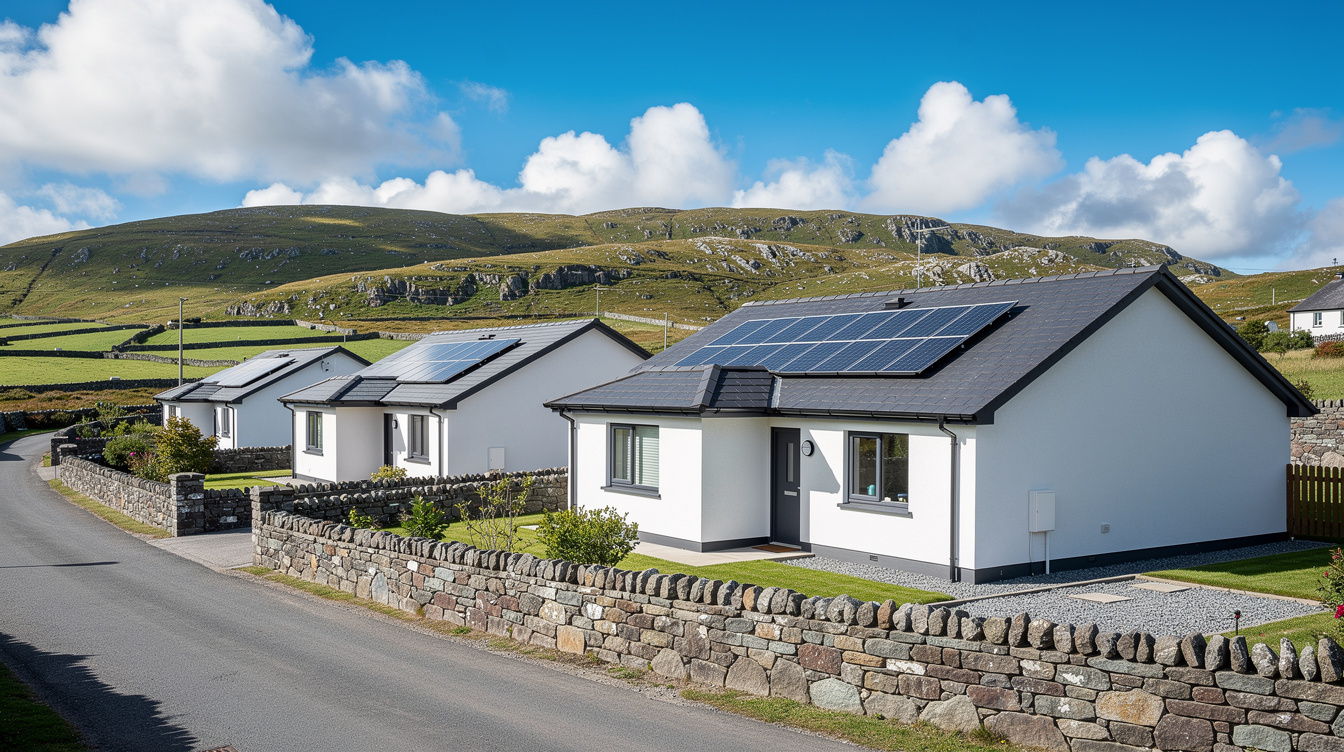
Donegal has a high proportion of bungalows and detached homes with large south-facing roof areas — ideal for solar. If you're in a bungalow, check our specific bungalow solar panel guide.
Donegal Farmers: TAMS III Solar Grant
If you're farming in Donegal, you may qualify for the TAMS III solar PV grant, which covers 60% of costs (up to €90,000) for systems installed on farm buildings. This is separate from the domestic SEAI grant and can make larger commercial-scale systems very affordable.
Dairy, beef, and poultry farms with high daytime electricity use (milking machines, cooling, ventilation) are especially good candidates. Read our full solar panels for farms guide.
Frequently Asked Questions
Is it worth getting solar panels in Donegal even though it rains a lot?
Absolutely. Solar panels work on daylight, not direct sunshine. Donegal's output is about 18% less than the sunniest Irish counties, which adds roughly 18 months to payback — you'll still see a return well within the 25-year panel lifespan. Many Donegal homeowners report saving €600–€1,000 per year.
How long does installation take?
The physical installation takes 1–2 days for a typical domestic system. The full process from applying for the SEAI grant to finished install is usually 4–8 weeks, depending on installer availability and ESB Networks smart meter scheduling.
Will my panels survive Donegal storms?
Yes, when properly installed. Modern panels and mounting systems are rated for wind speeds well above anything Ireland experiences. Your installer will calculate the specific wind loading for your site and use appropriate fixings. Coastal installations get additional anchoring as standard.
Can I get solar panels on the islands (Arranmore, Tory)?
Yes, but expect a surcharge of €500–€1,000+ for island installations due to transport logistics. The SEAI grant still applies. Given high electricity costs on the islands, solar can actually be more cost-effective there than on the mainland.
Ready to Go Solar in Donegal?
Get your free personalised quote from SEAI-registered installers who cover Co. Donegal.
Related Articles
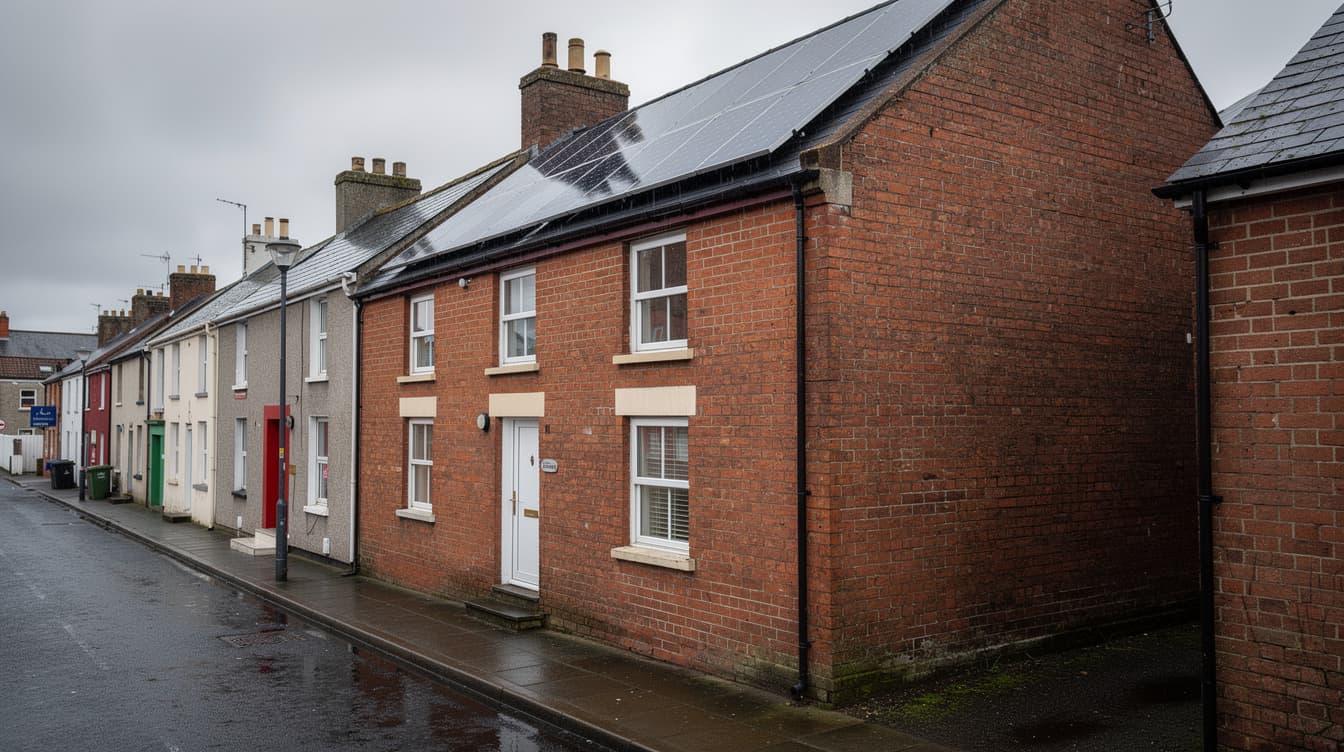
Solar Panels for a 2-Bed House in Ireland 2026: Costs, System Sizes & Why Small Homes Are Ideal
How much do solar panels cost for a 2-bed house in Ireland? From €2,400 after SEAI grant. System sizes, real savings, and why smaller homes get faster payback.
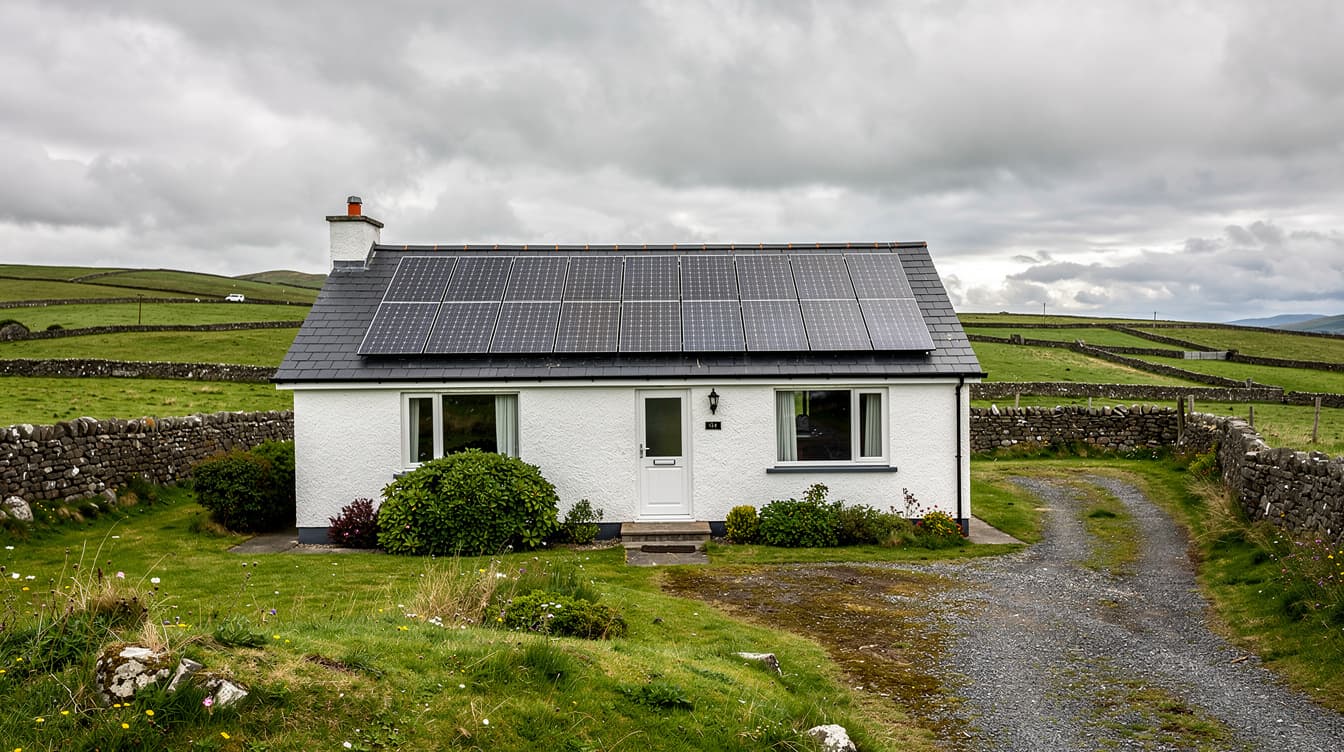
Solar Panels for a Bungalow in Ireland 2026: Costs, Roof Space & Why Bungalows Are Ideal
Irish bungalows are ideal for solar. A 4 kWp system costs €4,000–5,000 after SEAI grant, saves €730–1,360/yr. Full cost breakdown for 2–4 bed bungalows.
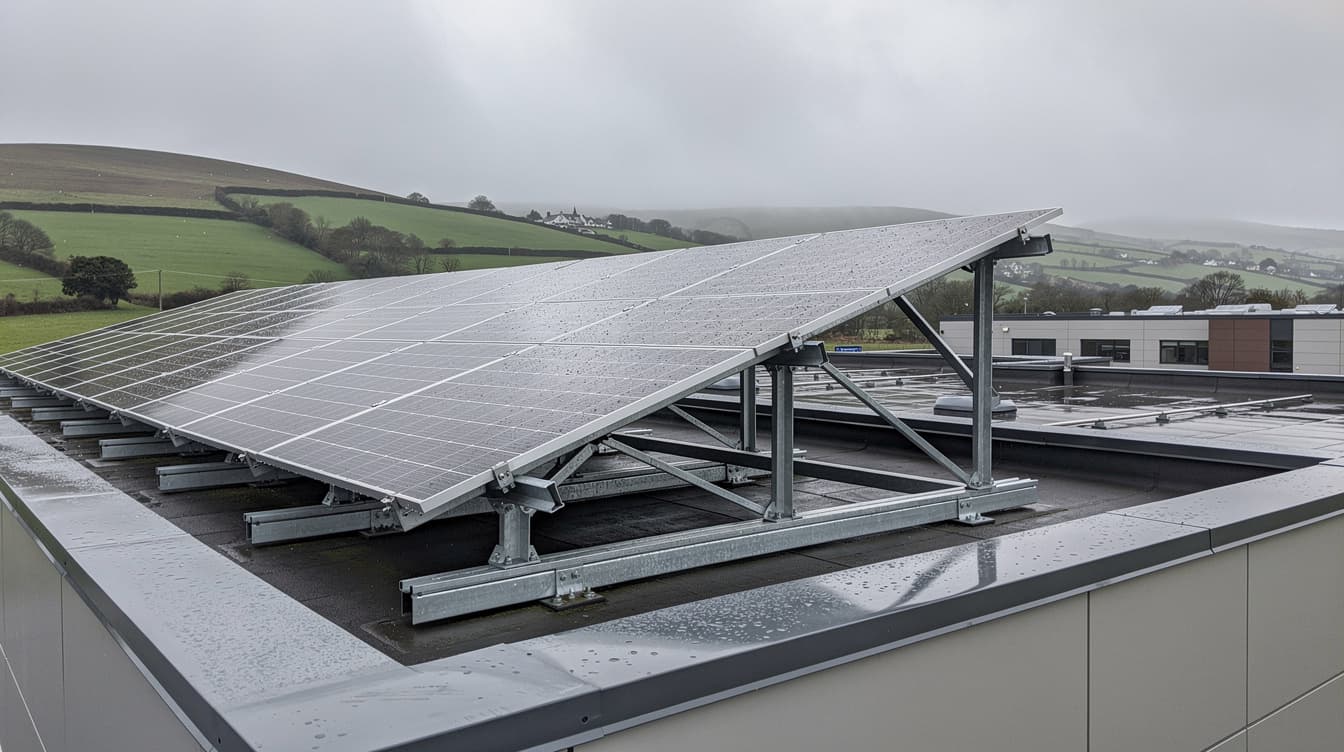
Solar Panels on a Flat Roof in Ireland 2026: Mounting, Costs & Planning Rules
Flat roof solar costs €500-€1,000 extra for tilt frames. Ballasted systems need no drilling. Full guide to mounting, planning permission and structural checks.