
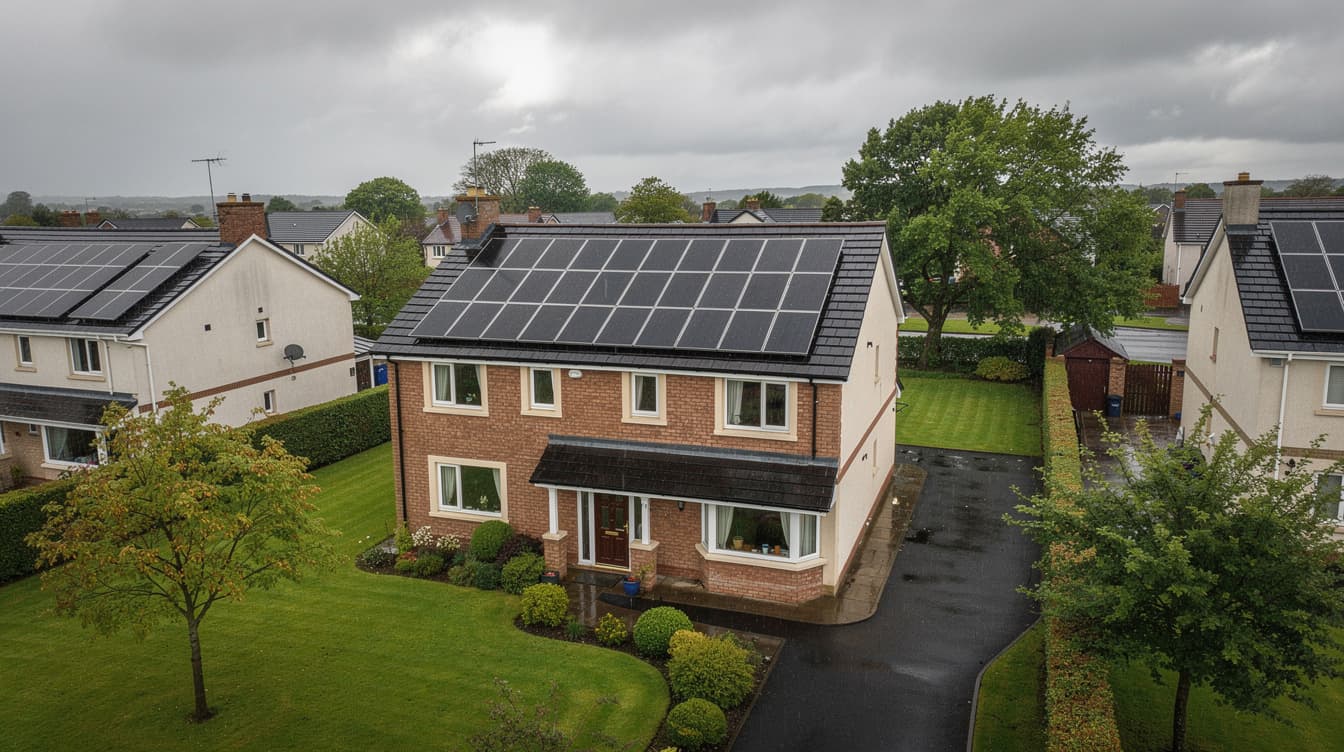
5 kWp Solar System Cost Ireland 2026: Price, Output, Payback & Sizing Guide
A 5 kWp solar PV system sits right in the sweet spot for medium-to-larger Irish homes in 2026 — big enough to cover most of the daytime load for a family of 4–5, small enough to fit on a standard 30–35 m² roof, and typically producing 4,300–4,700 kWh a year in Irish conditions. The awkward part: the SEAI Solar PV grant caps at 4 kWp, so going to 5 kWp means the last 1 kWp costs 100% out of pocket. This guide covers what a 5 kWp system actually costs in Ireland in 2026, how the payback maths change vs a grant-maxing 4 kWp, and when it's the smarter call.
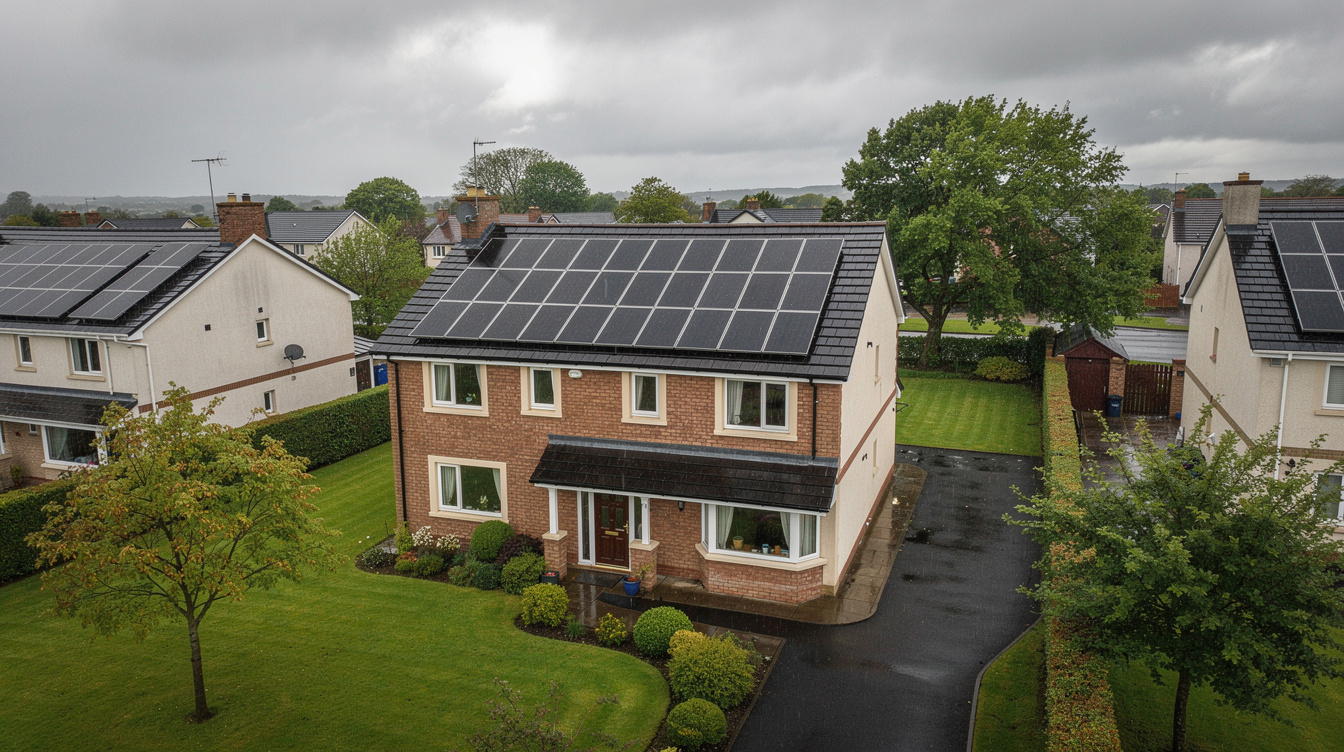
The headline number for August 2026
Based on quotes crossing the desk in July and early August 2026, a fully installed 5 kWp solar PV system in Ireland (12–13 panels, single-phase, no battery) currently sits at:
| Configuration | Gross price | SEAI grant | Net price |
|---|---|---|---|
| 5 kWp panels + string inverter | €10,850 | €1,800* | €9,050 |
| 5 kWp + hybrid inverter (battery-ready) | €11,600 | €1,800* | €9,800 |
| 5 kWp + hybrid + 10 kWh battery | €16,900 | €1,800* | €15,100 |
*SEAI grant is capped at 4 kWp regardless of system size — the extra 1 kWp above the cap is at your cost. All prices assume 0% VAT (bundled contract) and standard tile/slate roof, single-phase supply, DIT10 assessment fee excluded (typically €200–€300).
Why 5 kWp specifically? The 4-vs-5-vs-6 kWp trade
The Irish market has settled on three “standard” residential system sizes: 4 kWp (grant-max), 5 kWp (slightly over), and 6 kWp (family-home, single-phase max). Each hits a different household type:
- 4 kWp (10–11 panels, ~19 m²) — the grant-optimal size. Best €/kWh generated. Right for retired couples, empty nesters, small families with mostly evening consumption and no immediate battery plans.
- 5 kWp (12–13 panels, ~24 m²) — the mid-tier. Right for households that use 4,500–6,000 kWh/year, have some daytime load (WFH, retirees at home during the day, an EV that occasionally charges during daylight), and are considering a battery within 2 years.
- 6 kWp (14–16 panels, ~29 m²) — the family-home upper end. Right for consumption above 6,000 kWh/year, whole-home electrification (heat pump + EV), or homes with a shallow-pitch/large south-facing roof.
The 5 kWp size specifically wins when your annual consumption is 4,500–5,800 kWh, your roof can just about fit 12–13 panels, and you don't want to over-invest in a 6 kWp system that would export half of its summer output at 21c/kWh instead of using it in the house at 42.8c/kWh.
Not Sure What Size Fits Your Home?
Get 3 free quotes from SEAI-registered installers who'll size the system based on your actual bill, not a generic template.
What's actually in a 5 kWp Irish install
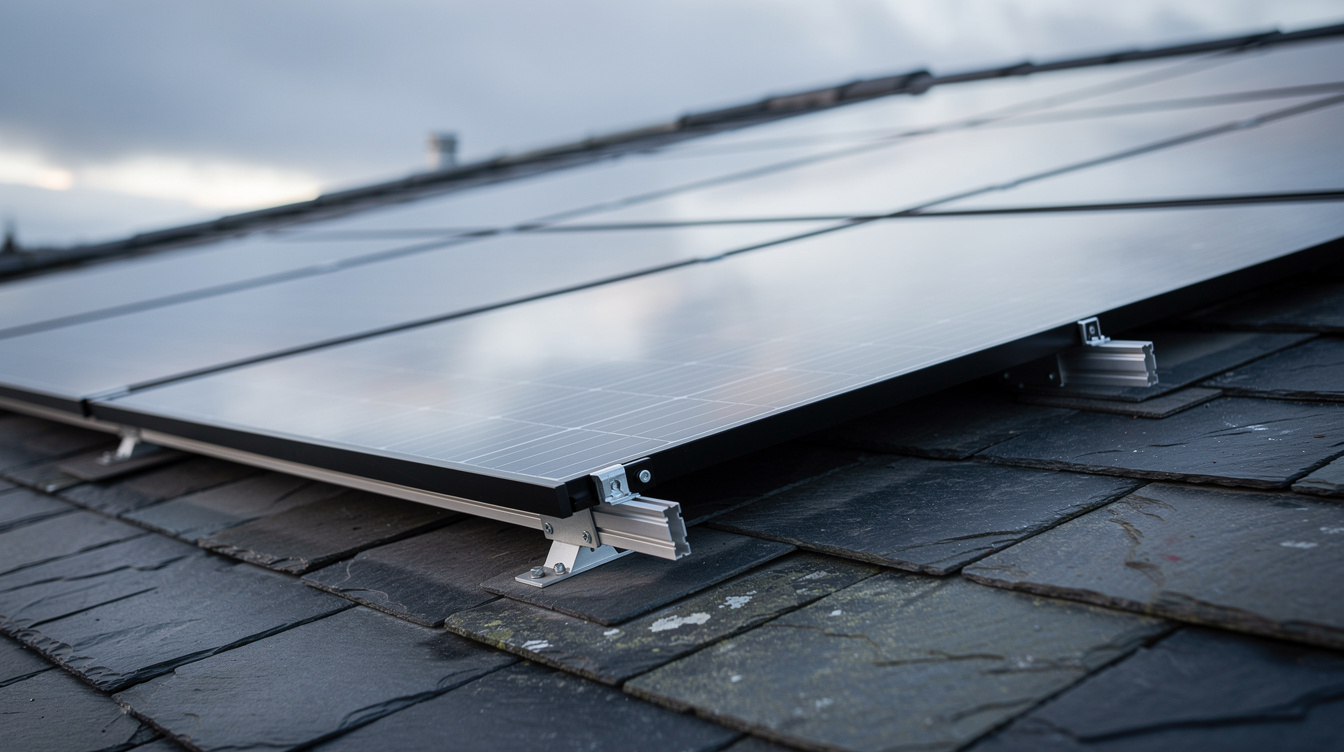
A typical 5 kWp quote in Ireland in August 2026 will spec:
- Panels: 12 or 13 x 425–440 W monocrystalline modules. In 2026 the standard-fit brands are Jinko Tiger Neo, AIKO Neostar 2S, Longi Hi-MO 6, and JA Solar DeepBlue 4.0. Jinko and AIKO are winning most quotes on wholesale price and 30-year performance warranty.
- Inverter: Sunsynk 5 kW hybrid, Fronius Primo 5.0-1, GoodWe GW5000-MS, or Solis S6-EH1P5K — all 5–5.5 kW single-phase units. Hybrid inverters (battery-ready) add roughly €500–€800 vs a plain string inverter but save you a full inverter replacement if you add a battery later.
- Mounting: Aluminium rail with roof-hook feet for slate or tile (standard), or ProfilPlus/Van der Valk in-roof kit if you're getting the roof re-slated at the same time (adds €800–€1,200).
- DC + AC isolators, generation meter, and enclosure — standard SEAI-compliant kit.
- NC-6 form + ESB Networks micro-generation connection paperwork — included in every reputable quote in 2026.
Panel count varies by module wattage. 12 x 440 W = 5,280 Wp (call it 5.3 kWp), 13 x 385 W = 5,005 Wp (a 5.0 kWp system). Most quotes will size the panel count so the DC array is slightly over 5 kWp to compensate for the ~4% loss between DC nameplate and AC-metered output.
Realistic annual output in Ireland
The Photovoltaic Geographical Information System (PVGIS) from the EU Joint Research Centre remains the gold standard for solar yield estimates in Ireland. For a 5 kWp system at 35° pitch, unshaded, in a typical Irish location:
| County / Region | South-facing yield | East/West split (10° off south) |
|---|---|---|
| Cork / Wexford (sunniest) | 4,700 kWh/yr | 4,450 kWh/yr |
| Dublin / Kildare / Meath | 4,500 kWh/yr | 4,300 kWh/yr |
| Galway / Mayo / Clare | 4,350 kWh/yr | 4,150 kWh/yr |
| Donegal / Sligo (cloudiest) | 4,200 kWh/yr | 4,000 kWh/yr |
So a 5 kWp system generates roughly 4,300–4,700 kWh in year 1 depending on where in Ireland you live and roof orientation. Panels degrade about 0.5% per year, so over 25 years you'll average around 4,000–4,400 kWh/yr — roughly 105,000–115,000 kWh of lifetime generation from a €9,050 net investment.
The payback maths — and where 5 kWp beats 4 kWp
The Irish residential unit rate at end of Q2 2026 is around 42.8c/kWh (CRU standing charge excluded). The Clean Export Guarantee (CEG) — what you get paid for surplus electricity sent to the grid — is currently at 21c/kWh for most Irish suppliers as of Q3 2026 (down from ~24c in 2024 as wholesale prices softened).
The economics depend heavily on your self-consumption ratio — the fraction of generated electricity you use in the house vs export to the grid. For a 4 kWp system without a battery, most Irish households self-consume 30–40%. For a 5 kWp without a battery, self-consumption drops to 25–32% (bigger array, same daytime load). Adding a 10 kWh battery pushes both up to 65–80%.
| Setup | Annual gen. | Self-consumed @ 42.8c | Exported @ 21c | Year-1 saving | Payback |
|---|---|---|---|---|---|
| 4 kWp, no battery (35% SC) | 3,700 kWh | €554 | €505 | €1,059 | 6.8 yrs (€7,250) |
| 5 kWp, no battery (28% SC) | 4,500 kWh | €539 | €680 | €1,219 | 7.4 yrs (€9,050) |
| 5 kWp + 10 kWh battery (70% SC) | 4,500 kWh | €1,348 | €283 | €1,631 | 9.3 yrs (€15,100) |
A 5 kWp system saves you around €160/year more than a 4 kWp, but costs €1,800 more net — so the incremental 1 kWp pays back over 11–12 years on its own. That's slower than the 4 kWp base, but still well inside the panel warranty (25–30 years).
Where 5 kWp really wins: households already committing to a battery. A 4 kWp + battery combo often ends up battery-throttled — the array fills the battery by 11 am on sunny summer days and dumps the rest to grid at 21c. A 5 kWp array delays that saturation by 1–2 hours and gives the battery more shoulder-season charging when generation is thin.
Where the extra 1 kWp goes on the roof
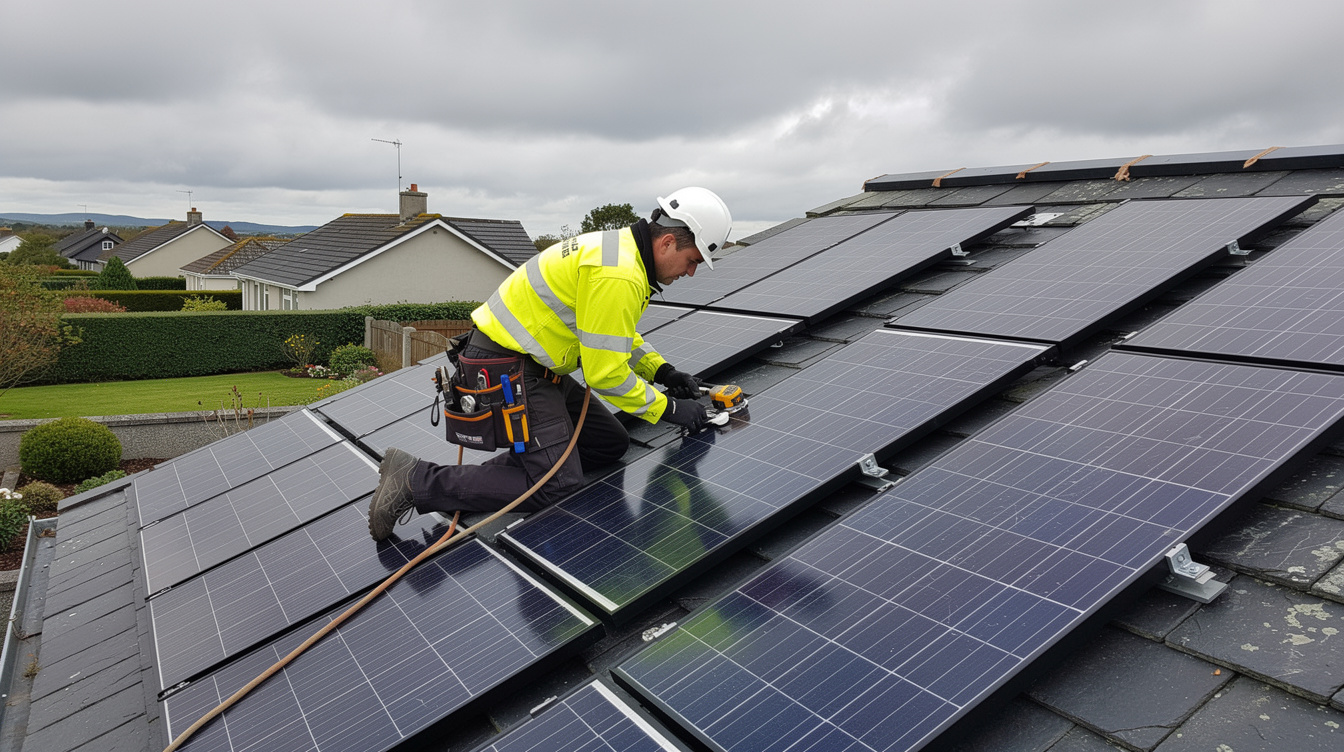
The physical difference between a 4 kWp and 5 kWp install: 2 or 3 extra panels. That's about 5 m² more roof. Most standard 3-bed semi-Ds and 4-bed detached homes in Ireland have plenty of usable roof for 12–13 panels — where it gets tight:
- Split roofs with dormers or Velux windows can lose 3–4 panels of usable area, pushing you towards a mixed east/west split (7 on each aspect) or a smaller-size system.
- Chimneys and vent stacks that shadow the array for 1–2 hours a day around noon can knock 10–15% off yield — often better to skip 2 panels and use a lower-count 4 kWp system than shoehorn 13 into a shaded layout.
- Older cottages with steep 45–50° pitch lose 3–5% yield vs the 30–35° ideal, but gain excellent winter output because low winter sun hits the array closer to perpendicular. Not a reason to downsize.
Battery-ready hybrid inverter — worth the €500 upgrade?
The Q3 2026 hybrid vs string inverter price gap has narrowed to about €500–€800. A hybrid inverter (Sunsynk 5 kW, GoodWe SDT G3, Solis S6-EH) accepts a battery on the DC side later without swapping any hardware. A string inverter (SolarEdge SE5000H, Fronius Primo 5.0-1) requires either a full inverter replacement or an AC-coupled battery (Powerwall 3, or a separate battery inverter) — adding €600–€1,200 to a later retrofit.
If there's any realistic chance you'll add a battery within 5 years, the hybrid upgrade is a lay-down. If you're certain you won't (older couple, no EV plans, small evening load), stick with the string inverter and pocket the €500.
What raises or lowers the price above/below €9,050
| Adds € | Saves € |
|---|---|
| 3-phase supply install (400V) — +€300–€600 | Straightforward single-storey tile roof — −€300 |
| Scaffold day-rate for 3+ storey house — +€400–€900 | Second install on the same day (neighbour combine) — −€300–€500 |
| Steep pitch (45°+) or difficult roof access — +€250–€500 | Skip hybrid inverter (string only) — −€500–€800 |
| Optimisers (SolarEdge / Tigo) — +€400–€700 | Cash payment discount (some installers) — −€150–€300 |
| Consumer unit upgrade for older CU — +€250–€500 | Standard slate roof, ground floor access — −€100–€200 |
The SEAI grant paperwork — still €1,800, still hassle-free
The SEAI Solar PV grant is still €1,800 for 4 kWp or above, unchanged since the last review. Your SEAI-registered installer handles the application on your behalf. The house must be built before 1 January 2021, occupied as your primary residence, and you must be the homeowner. The grant is paid directly to you after install and BER assessment. See our SEAI grant eligibility checker if you're unsure whether you qualify.
The 1 kWp you add beyond the 4 kWp cap doesn't get any additional grant — the €1,800 is a flat cap. But that extra kWp still qualifies for 0% VAT (bundled contract with the panels and inverter), so the incremental cost is roughly the wholesale kit cost plus a modest labour surcharge.
5 kWp with vs without battery — the sizing question
If you're spending €9,050 on the panels, spending another €5,300–€7,200 on a 10–13 kWh battery raises payback from ~7 years to ~9 years but roughly doubles the household bill saving. Whether that's worth it depends on:
- Your evening consumption pattern. If most of your electricity use is 5–10 pm (cooking, showers, EV charge start, TV/heating), the battery displaces peak-rate imports at the highest-value tariff. Payback improves.
- Do you have a smart meter with 30-minute settlement? If yes, you can layer dynamic-tariff arbitrage on top of solar self-consumption — adding €300–€600/year in extra saving. See our smart meter and MPRN guide.
- Blackout resilience matters. Storm Éowyn (Jan 2025) put €3,000+ into insurance claims for spoiled fridge/freezer contents nationwide. A battery + backup circuit keeps essentials running.
Our full battery-sizing framework by household size lives at our battery sizing guide.
Want a 5 kWp Quote?
Get 3 free quotes from SEAI-registered installers — with and without battery so you can see the payback difference for your bill.
Common 5 kWp mistakes we see in Irish quotes
- Undersized inverter. Some installers spec a 4 kW inverter on a 5 kWp array to save money — you'll cap output at 4 kW on the sunniest hours and lose 4–7% of annual yield. Insist on a 5–5.5 kW inverter matched to the array.
- Missing SEAI grant paperwork. The installer must be SEAI-registered and submit the grant application. A cheap non-SEAI installer means you forfeit the €1,800. See our SEAI installer verification guide before signing.
- String vs micro-inverter confusion. Micro-inverters (Enphase IQ8) cost 20–30% more than string but win handily on split roofs and shaded arrays. Ask which is being quoted and why.
- No warranty on labour. Panel warranties (25–30 years) and inverter warranties (10–15 years) come from the manufacturer. Labour warranty from the installer should be 5–10 years — if they only offer 2, that's a red flag.
FAQ
Is a 5 kWp system too big for a typical Irish home?
Not usually. A 3-bed semi-detached family home uses 4,500–6,000 kWh/year, which is exactly what a 5 kWp array produces. If your bill is under 3,500 kWh/year (retired couple, small load), a 4 kWp is closer to the sweet spot.
How many panels for 5 kWp?
12–13 modern panels. 12 x 425 W = 5.1 kWp; 13 x 385 W = 5.0 kWp. Panel size has stabilised around 1.85 m x 1.14 m (2.1 m²), so 12–13 panels needs 25–28 m² of usable roof.
Can 5 kWp be installed on a 3-phase supply?
Yes, and it makes the ESB Networks paperwork slightly easier — 3-phase supplies can accept up to 11 kW export without special approval, vs 5.75 kW on single-phase. See our 3-phase voltage guide for context. A 5 kWp system fits comfortably within the single-phase limit either way.
Will the €1,800 SEAI grant still be around in 2027?
SEAI grants have been steady since a step-down in September 2023. The scheme is funded through end-2026 and expected to continue at similar rates through 2027 pending Government Budget 2027 in October. There's no announced cut, but grants historically taper as the technology becomes cheaper — don't count on the current rate lasting forever if you're already ready to install.
Does a 5 kWp system need planning permission?
No. Since October 2022 (as amended in 2023), residential rooftop solar is exempt from planning permission across all of Ireland, with no size cap for domestic rooftop PV. This applies whether you install 4, 5, 6, or 10 kWp on a house.
Is a 5 kWp too small if I have an EV?
With a battery, no — a 5 kWp + 10 kWh combo covers roughly 60–65% of a typical Irish household's electric bill including modest EV charging (~5,000 EV miles/year). If your EV does 15,000+ miles/year and you home-charge most of it, a 6–7 kWp system is a better fit.
Bottom line
A 5 kWp system in Ireland today lands at around €9,050 net after grant — roughly €1,800 more than a grant-optimal 4 kWp. It's the right choice for medium-sized households (4,500–6,000 kWh/year), homes planning a battery within 2 years, and anyone with an EV or heat pump on the horizon. If your bill is small and battery-less, the 4 kWp size still wins on pure payback. If your roof and budget stretch to it, a 6 kWp system future-proofs you further — but 5 kWp is the pragmatic sweet spot for most Irish family homes in 2026.
Ready to Go Solar with 5 kWp?
Get free quotes from SEAI-registered installers who’ll size your system to your bill, not a template.
Related Articles
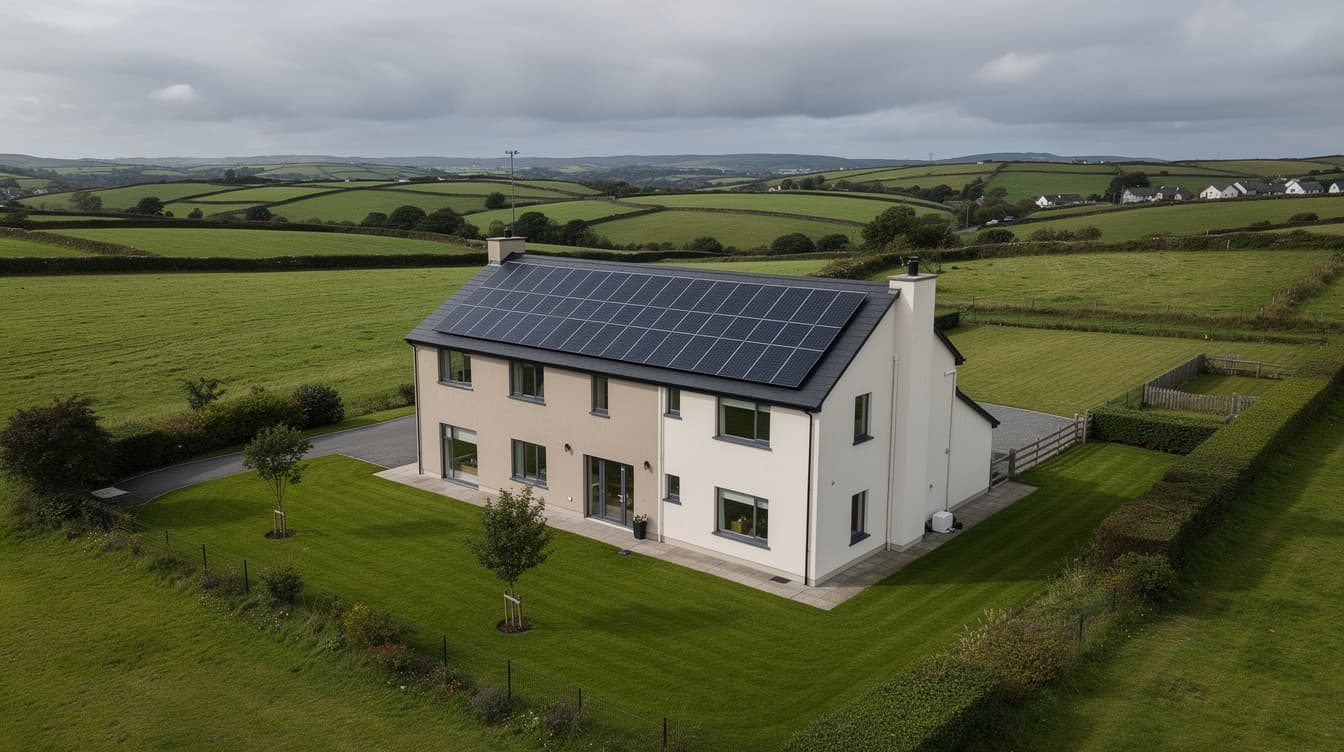
20 Solar Panels Ireland 2026: Cost, Output, Battery & Payback
What 20 solar panels cost in Ireland 2026 (€12.7-18.6k net after grant), 7,600-8,100 kWh output, roof space, battery choice and payback vs 10 or 14 panels.
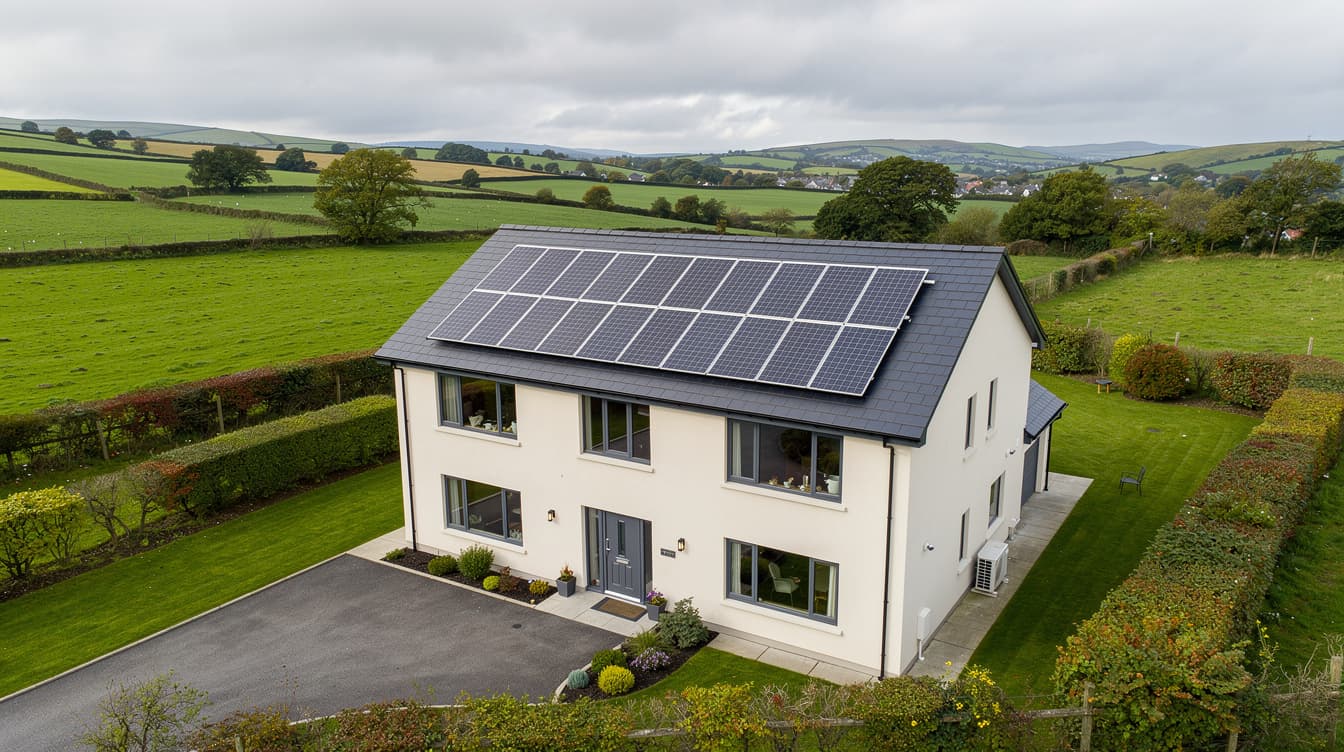
12 Solar Panels Ireland 2026: Cost, Output, Battery & Payback
What 12 solar panels cost in Ireland 2026 (€9.1-10.8k after grant), annual kWh output, battery sizing, roof space needed and how 12 stacks vs 10 or 14 panels.
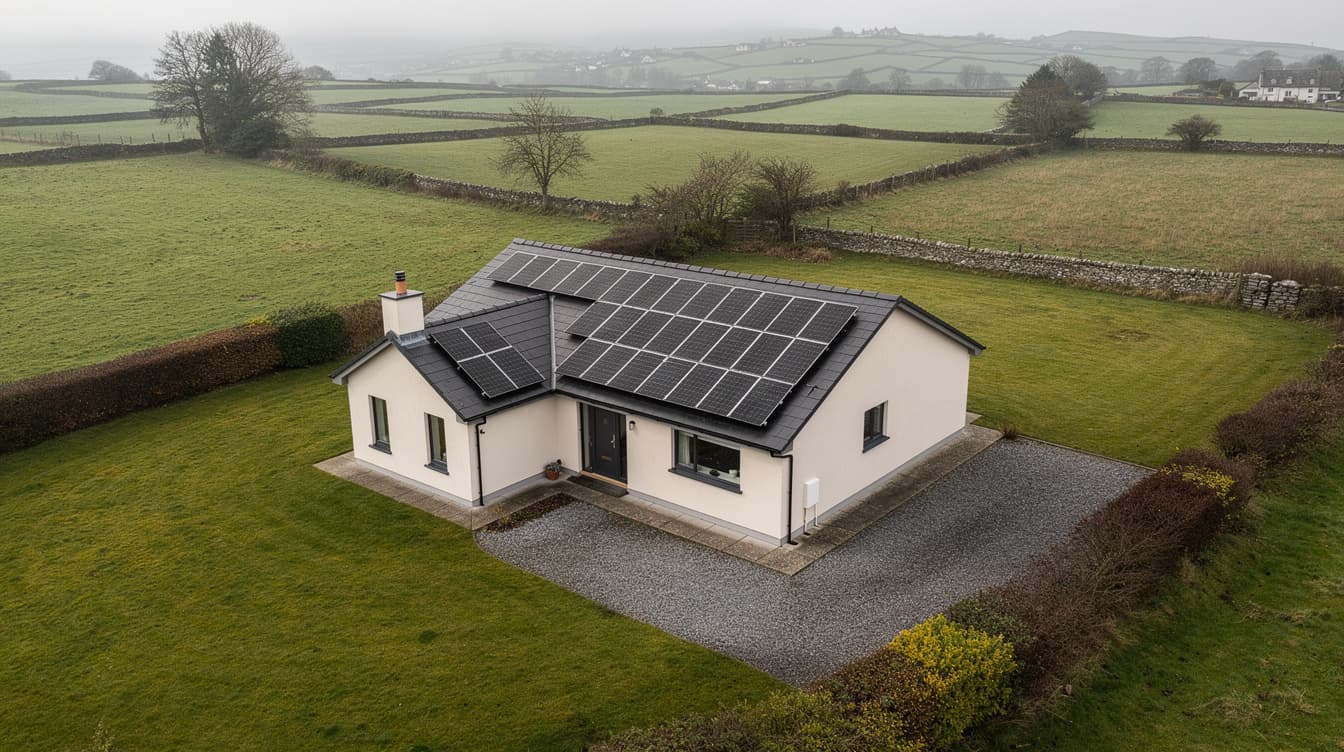
14 Solar Panels Ireland 2026: Cost, kWh Output, Battery & Payback
What 14 solar panels cost in Ireland 2026 (€10.4-12.1k after grant), annual kWh output, roof space, battery pairing and how 14 stacks vs 12 or 16 panels.