
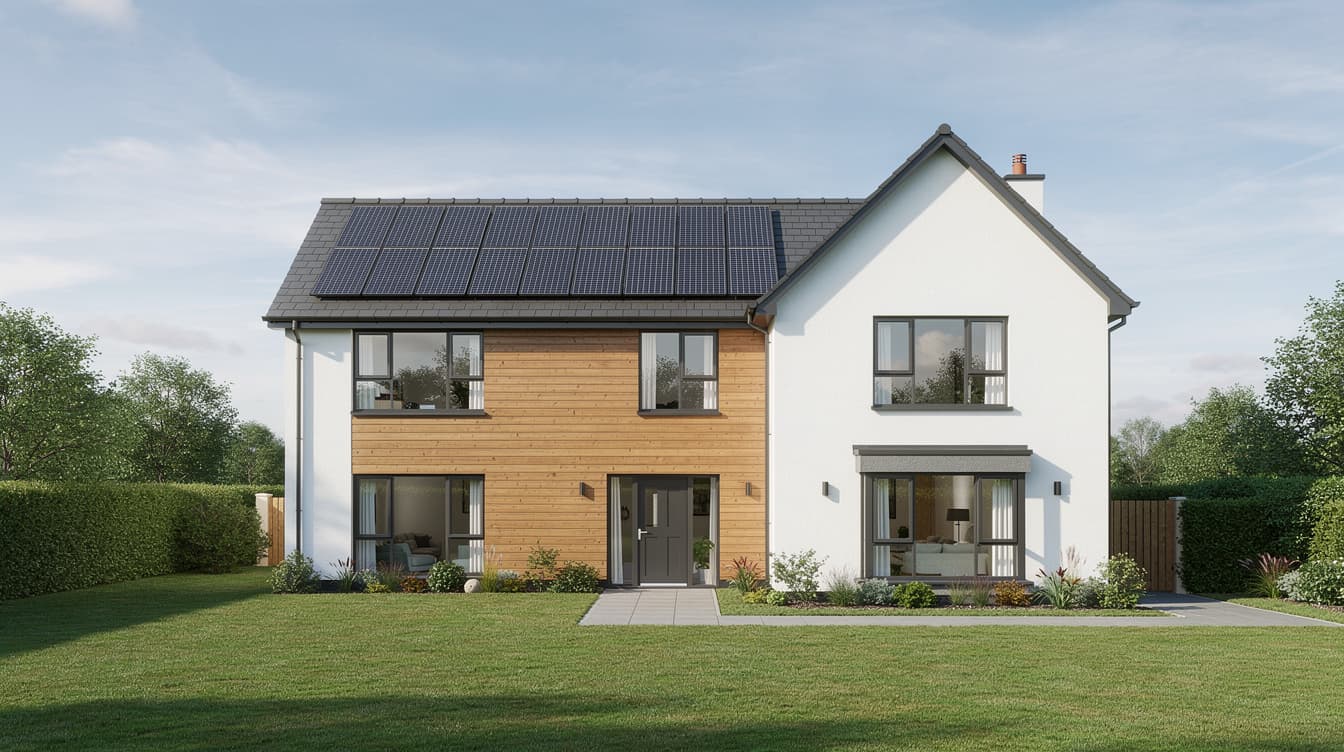
A1, A2, A3 BER Rating Ireland 2026: What Each A-Grade Means & the Cost to Reach One
Reaching an A-rated BER is the top of the Irish energy-efficiency ladder — the level that all new-build homes have been legally required to hit since Part L 2019 came into force, and the aspiration for retrofit projects going through SEAI’s One-Stop-Shop scheme. But there’s a real difference between A1, A2 and A3, and the retrofit cost curve gets steep near the top. This guide explains what each A-grade actually means in kWh/m²/yr, what fabric and heating system you need to reach one, and where the diminishing-returns line sits — because A1 is not always worth the money.
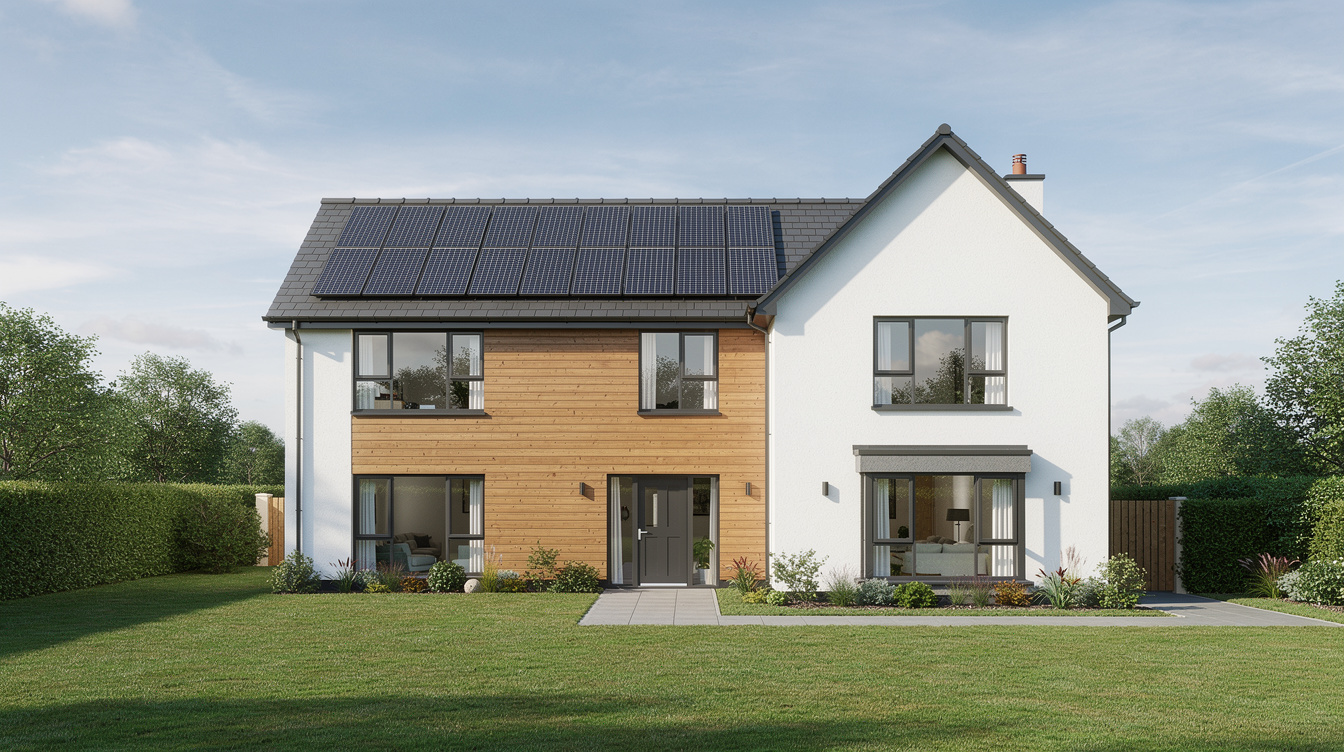
The plain-English numbers
BER measures primary energy in kWh per square metre per year. Lower is better. The A-band is split into three sub-grades and there’s no gap on either side of the A/B boundary — a home at 74 kWh/m²/yr is B1; at 75 it’s A3.
| Grade | Primary energy (kWh/m²/yr) | Typical dwelling | Typical annual energy cost* |
|---|---|---|---|
| A1 | < 25 | Passive-house standard new build with PV, MVHR, triple glazing | €450 – €700 |
| A2 | 25 – 50 | Post-2020 new build to Part L 2019, heat pump + PV + high insulation | €650 – €950 |
| A3 | 50 – 75 | Very deep retrofit (OSS full package) or 2015–2019 new build | €900 – €1,300 |
*Estimates for a 130–150 m² 4-bed detached home at Q3 2026 SSE Airtricity residential rates (42.8c/kWh electricity all-in) with the underlying heat source at typical efficiency. Real bills vary with occupancy patterns.
Where the A-band actually comes from
Historically, almost the only path to an A-rated home in Ireland was a new build. That changed in two waves:
- Wave 1 (2011–2019): Part L 2011 required all new dwellings to hit A3, and the 2019 revision (implementing the EU Nearly Zero Energy Buildings directive) tightened it to A2 with 20% renewables. Anything built after 1 November 2019 to compliant Part L standards is A2 by default. If your new build shows A3 on the cert, the developer likely skimped somewhere.
- Wave 2 (2022–2026): SEAI’s One-Stop-Shop scheme opened up a retrofit path to A-rated for existing homes, blending fabric-first works (attic, cavity, external wall, glazing) with mechanical systems (heat pump, MVHR) and on-site renewables (solar PV). Roughly 6,800 Irish homes reached A-rated via retrofit by end-Q2 2026 per SEAI’s National BER Register — up from 3,900 in Q2 2024.
The National BER Register (accessible at ndber.seai.ie) shows that of all rated Irish dwellings in 2026, only about 8% are A-rated — and of those, roughly 84% are A2, 12% are A3, and just 4% are A1. A1 is genuinely rare.
What it takes to reach each grade
A3 (50 – 75 kWh/m²/yr) — the pragmatic ceiling for most retrofits
For an existing home starting at C or D, getting to A3 typically means:
- Attic insulation to 300–400 mm (u-value 0.13–0.16 W/m²K)
- Cavity wall insulation OR external wall insulation (u-value 0.27 or better)
- New A-rated windows (u-value 1.2–1.4) — not necessarily triple glazing
- Air-to-water heat pump replacing oil or gas boiler
- 4–6 kWp solar PV system
- Draught-sealing and airtightness improvements
Typical whole-package spend before SEAI grants: €42,000 – €58,000. After SEAI OSS grants (bonus 25% attic + wall + heat pump + PV + assessor fee): net cost typically €24,000 – €36,000.
A2 (25 – 50 kWh/m²/yr) — the new-build norm
A2 is standard for anything built after 2019. For retrofit, hitting A2 usually adds:
- External wall insulation (rather than cavity fill) for a much lower wall u-value (0.20–0.24)
- Triple-glazed windows (u-value ≤ 1.0)
- MVHR (mechanical ventilation with heat recovery) if the airtightness improves enough to require it
- 6–8 kWp solar PV or larger, ideally with a battery
- Full airtightness testing (target < 3 m³/h·m² at 50 Pa)
Retrofit spend to hit A2 from C/D: €62,000 – €95,000 before grants, typically €36,000 – €58,000 after OSS.
A1 (< 25 kWh/m²/yr) — passive-house-adjacent territory
A1 is effectively a Passive-House-adjacent build. Retrofitting to A1 is very rare and only economically sensible for architect-led deep-retrofit projects or complete rebuilds. Required elements typically include:
- Wall u-values ≤ 0.15 (thick external wall insulation, often 150–200 mm)
- Roof u-values ≤ 0.12
- Passive-House-certified triple glazing (u-value ≤ 0.8)
- Full airtightness ≤ 1.0 m³/h·m² at 50 Pa
- Certified MVHR unit with > 90% heat recovery efficiency
- Heat pump with COP ≥ 4.0 seasonal average
- Substantial solar PV (typically 8–10 kWp) plus battery
Is A1 worth chasing?
Almost always, no. Here’s the honest analysis for an existing Irish home:
The A3 → A2 → A1 diminishing returns
C rating to B1: €18k – €28k net (after grants), cuts running cost by ~55%.
B1 to A3: €10k – €18k net additional, cuts running cost by another ~20%.
A3 to A2: €12k – €20k net additional, cuts running cost by another ~10%.
A2 to A1: €25k – €60k net additional (unfeasible without demolition), cuts running cost by another ~5%.
Simple payback on the A2 → A1 uplift is 40–90 years at 2026 energy prices — well beyond the useful life of any component involved. The one exception is if you’re architect-designing a new build from scratch, where the incremental cost of hitting A1 during construction (rather than retrofitting later) is much lower — often only €8,000 – €15,000 more than A2.
The role of solar PV in reaching A-band
Solar PV is heavily weighted in DEAP because on-site generation directly reduces the primary-energy demand fed by the grid. Typical band shifts on a 130 m² home:
| Starting rating | + 4 kWp PV | + 6 kWp PV & 5 kWh battery | + 8 kWp PV & 10 kWh battery |
|---|---|---|---|
| B1 (74 kWh/m²/yr) | → A3 | → A3 (low) | → A2 (high) |
| A3 (65 kWh/m²/yr) | → A2 (high) | → A2 | → A2 (mid) |
| A2 (40 kWh/m²/yr) | → A2 (mid) | → A2 (low) | → A1 possible |
PV is the single most cost-effective route to shift up within the A-band. A 6 kWp system currently costs roughly €9,900 gross / €8,100 net after the €1,800 SEAI grant — a fraction of the €18,000–€30,000 spend needed to get the equivalent BER shift from fabric-only works.
Chasing an A-rated home?
Get your free personalised solar PV quote — the cheapest per-BER-point shift you can make in 2026.
Heat pump vs oil/gas at A-rating
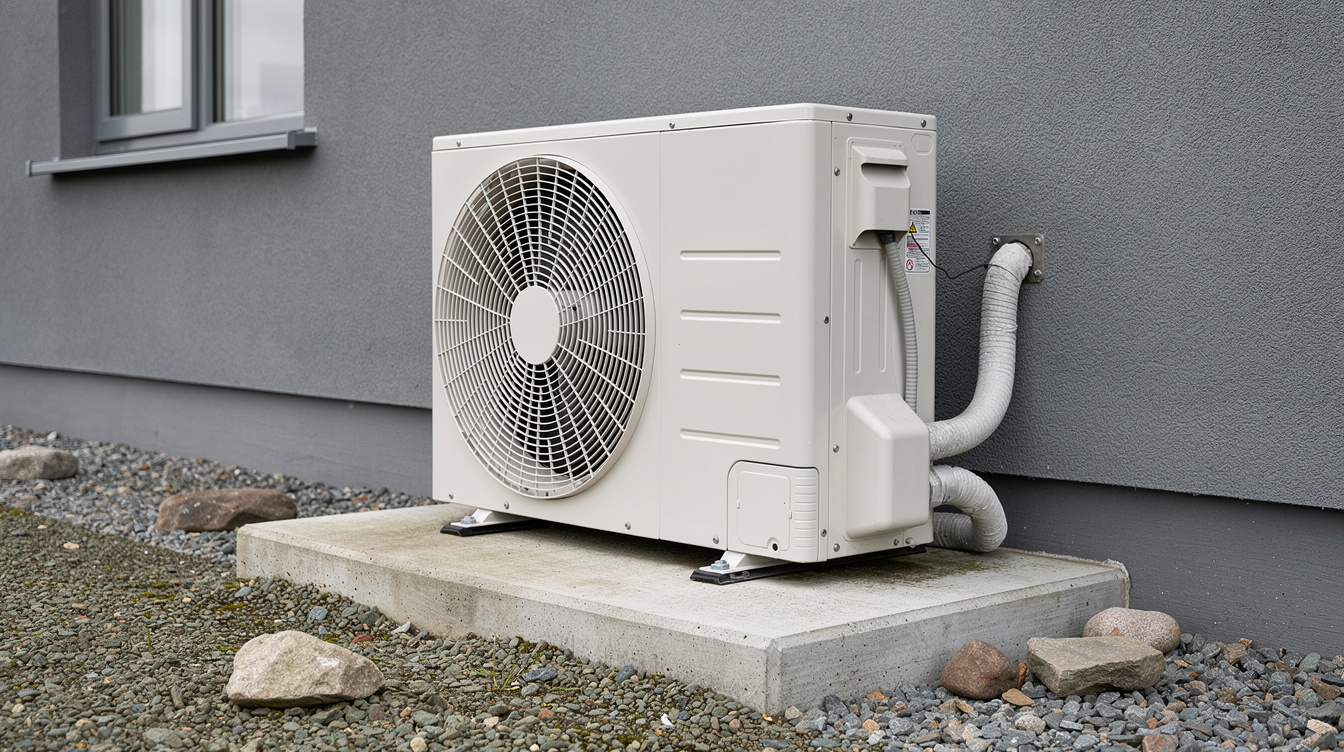
The DEAP methodology heavily penalises fossil-fuel heating in the primary-energy calculation. In practical terms:
- A gas boiler alone — even a top-rated 92% condensing model — caps your achievable BER at roughly B2. It is essentially impossible to reach A-rated with any fossil-fuel heating as your primary source.
- An oil boiler — caps you at roughly B3.
- An air-to-water heat pump with COP 3.5+ opens the door to A3 or better, because the primary-energy factor of grid electricity (2.09 in DEAP 2024) combined with the heat pump multiplier delivers a very low primary-energy figure per kWh of heat.
- Ground-source heat pump with COP 4.0+ is the gold standard for the heating side of A1—but capex is 2–3x an air-source unit, and the extra COP delivers only marginal BER gains over air-source in the DEAP calculation.
What A-rated means for resale value
Central Bank Ireland’s April 2026 research on BER and property prices, combined with MyHome.ie’s Q2 2026 pricing analysis, points to a consistent premium for A-rated homes:
| BER band | Price vs C-rated baseline | Days to sell (median) |
|---|---|---|
| A1 – A2 | +9% to +13% | 28 days |
| A3 – B1 | +6% to +9% | 36 days |
| B2 – B3 | +3% to +5% | 45 days |
| C | Baseline | 58 days |
| D – E | −4% to −8% | 72 days |
On a €450,000 house that means an A2 rating adds roughly €40,000–€59,000 in sale value versus a C-rated equivalent — usually enough to fully recover a deep retrofit cost. A1 does not add materially more than A2 in resale terms; buyers price the A-band as a single tier in most valuations.
Green mortgage rates for A-rated homes
Every mainline Irish mortgage lender now offers preferential green rates for A- and B-rated properties. As of early August 2026:
- AIB Green 4-year fixed: 3.30% for A- and B-rated properties vs 3.65% standard.
- Bank of Ireland Green Mortgage: 3.35% for BER A1–B3 vs 3.70% standard.
- PTSB 4-year fixed green: 3.40% for A- and B-rated vs 3.75%.
- Avant Money One 4-year fixed green: 3.15% for A1–B3.
On a €300,000 30-year mortgage the ~0.35 percentage-point difference is roughly €18 per month or €6,400 over the life of the fixed term. Small individually, meaningful cumulatively — and one more reason the B3 → A3 upgrade tends to pay for itself faster than raw energy savings alone suggest.
Common mistakes in the A-band retrofit push
1. Chasing A1 when A2 is the sensible stopping point
The final push from A2 to A1 costs 3–5x per BER point compared to the earlier bands. Almost every homeowner who reaches A1 through retrofit reports that if they were doing it again they’d stop at A2.
2. Fitting a heat pump before doing the fabric-first works
An air-to-water heat pump installed in a poorly-insulated home runs cold at −3°C because the emitters can’t transfer heat fast enough at low flow temperatures. Fabric first — attic, cavity, glazing, airtightness — THEN the heat pump. Skipping this order is the top complaint SEAI hears in OSS post-works surveys.
3. Under-sizing solar PV
The €1,800 SEAI grant caps at 4 kWp, so many homeowners install exactly 4 kWp thinking that’s the sweet spot. In reality, most Irish roofs can fit 5–6 kWp and the additional 1–2 kWp (paid 100% out of pocket) has a very short payback and moves you a full BER sub-grade up.
4. Skipping the post-works BER
OSS mandates it, but individual grant paths (Better Energy Homes) do not. Skipping it means the SEAI National BER Register still shows your old rating — and estate agents, buyers and lenders look at the register, not your assurances. Budget the €180–€250 for a post-works BER as part of any retrofit.
5. Trusting a builder’s “it’ll come out A2” on a new build
Some developers hit the required A2 by minimum-spec on every element (thinnest allowable insulation, cheapest windows, smallest PV). If any element under-performs the DEAP model on-site, the actual BER may land at A3 or B1. Insist on the Provisional BER at design stage AND the Final BER at completion, and query anything that shifts.
FAQs
Can a 1970s bungalow be retrofitted to A-rated?
Yes, but expect €65,000–€95,000 before SEAI grants. A3 is realistic on a solid-wall bungalow with full external wall insulation, heat pump, PV and window upgrade. A2 requires MVHR + higher-spec everything.
Does a wood stove count as renewable in DEAP?
Only a wood-pellet boiler that’s the primary heat source counts meaningfully. A living-room stove used as secondary heating has minor positive effect but doesn’t open A-band access on its own.
Is a Passive House automatically A1?
Usually yes but not guaranteed. Passive House and BER use different methodologies (PHPP vs DEAP). A certified Passive House almost always reaches A1 in DEAP, but a “Passive standard” build without certification may land at A2 or A3 depending on how it’s modelled.
How much does an A-rated home cost to heat per year?
For a 130 m² A2 home at Q3 2026 rates, expect roughly €850–€1,100 annual heating and hot water bill with a heat pump. Add another €600–€900 for cooking, lighting and appliances, less solar generation credit (typically €1,100–€1,800 offset from a 6 kWp system).
Do I lose my A rating if I add a wood-burning stove?
Adding a supplementary stove doesn’t remove your A rating — it just changes the mix. Removing a heat pump or replacing it with oil/gas would tank the rating.
Are apartments allowed to be A-rated?
Yes and often easier because their heat loss surface area is lower than detached homes. Many post-2020 apartments are naturally A2 without solar, thanks to the shared thermal envelope. Adding balcony solar can push a well-insulated apartment into A2 or A1 in some cases.
Ready to plan your A-band retrofit?
Get your free personalised solar quote — a 6 kWp system currently €8,100 net after grants moves most Irish homes at least one full BER sub-grade.
Related reading
- C1 & C2 BER Rating Ireland 2026: The Middle Band Explained
- B3 BER Rating Ireland 2026: What It Means & How Solar Gets You There
- BER Grades Explained Ireland 2026: All Grades Compared
- BER Assessment Cost Ireland 2026: What You Pay
- Solar Panels for New Builds Ireland 2026: NZEB Rules
- 6 kW Solar System Cost Ireland 2026: The A-band Solar Fit
Related Articles
BER Assessment Cost Ireland 2026: What You Pay, Who Does It & When You Need One
What a BER assessment costs in Ireland in 2026: typical €150-€350 range, what drives the price, when you legally need one, and how to book a SEAI-registered assessor.
C1 & C2 BER Rating Ireland 2026: What It Means, Running Costs & How to Upgrade
C1 and C2 BER ratings explained for Irish homes in 2026: kWh/m²/yr, running costs, retrofit sequence and how solar shifts C1 into B territory.
Green Mortgages Ireland 2026: How Solar Panels Unlock Cheaper Rates from AIB, BOI, PTSB, Haven & Avant
How Irish green mortgages work in 2026, what BER you need, and where a solar install pays back inside the mortgage itself. AIB, BOI, PTSB, Haven, Avant.