
BER Grades Explained Ireland 2026: What A1, A2, A3, B1, B2, B3, C, D, E, F, G Actually Mean
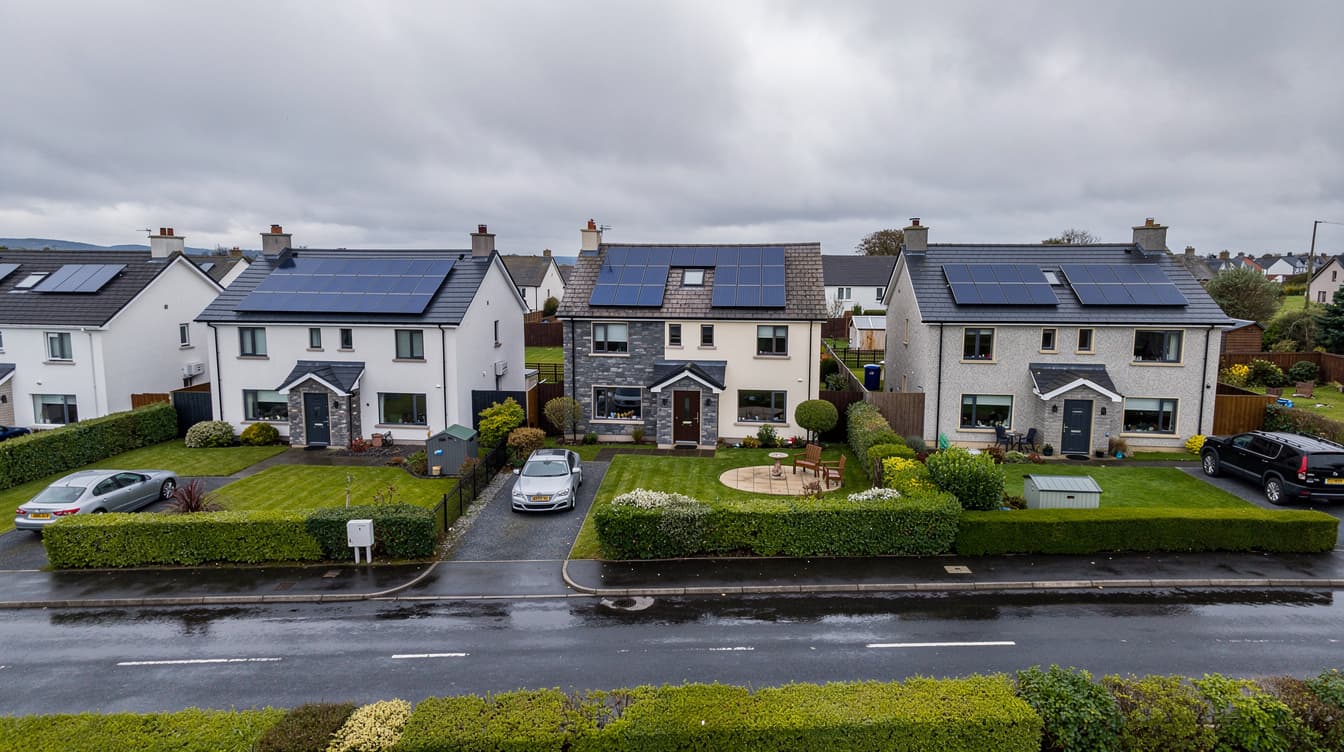
Written 28 July 2026. Ireland’s BER (Building Energy Rating) scale changed on 24 May 2026 – from 15 fine-grained grades to a simpler 8. Most homeowners now hold a cert on the old scale (A1…G) while new certs use the new scale (A0, A, B, C, D, E, F, G). This is a plain-English explanation of what each grade actually means, what a typical Irish house at that grade looks like, and how far solar PV, insulation and a heat pump can move you.
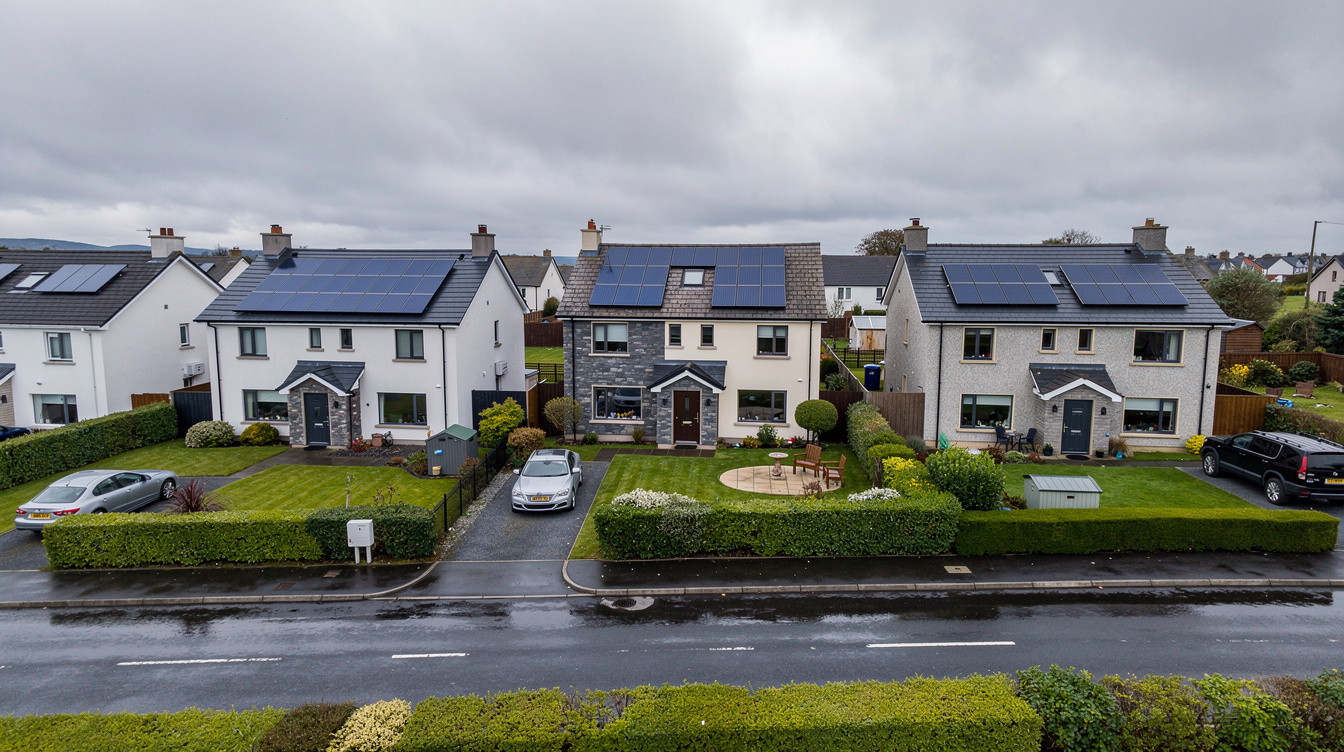
A BER is a measure of primary energy use per square metre per year (kWh/m²/yr). It’s not what you pay on the ESB bill – it’s what a standard family would pay in your building, modelled by an SEAI-registered assessor in the DEAP software. Because the number is fixed to the building fabric, it’s the yardstick banks, buyers, landlords, letting agents and the SEAI grant scheme all use.
The problem is that most Irish homeowners never learned what “B3” or “C1” actually means, and now the scale itself has changed. This article walks through both scales grade by grade so you can read a cert without a translator.
The new 8-grade scale (from 24 May 2026)
| New grade | kWh/m²/yr | Old grades it covers | What it looks like in Ireland |
|---|---|---|---|
| A0 | ≤ 25 | A1 | New nZEB build, heat pump & solar PV, MVHR |
| A | 26 – 75 | A2, A3 | Deep retrofit or 2015-onwards build, heat pump likely |
| B | 76 – 150 | B1, B2, B3 | 2005 build with some upgrades, or older house post-retrofit |
| C | 151 – 225 | C1, C2, C3 | Standard 1990s/2000s Irish house, gas boiler, cavity insulation |
| D | 226 – 340 | D1, D2 | 1970s–80s house, some insulation, oil or older gas |
| E | 341 – 450 | E1, E2 | Poorly insulated older house, oil boiler, single glazing in places |
| F | 451 – 500 | F | Uninsulated period house or bungalow, oil / solid fuel |
| G | > 500 | G | Draughty pre-1970s cottage or ex-rental with open fire |
Any BER certificate issued before 24 May 2026 still uses the old 15-grade labels and remains valid for 10 years from its issue date. So if a house was rated “B3” in 2022, that’s still what shows on the cert until 2032 – even though a new assessment today would say “B”.
The old 15-grade scale (still on most current certs)
Every cert issued between 2007 and May 2026 uses this scale. Because certs are valid for a decade, it’s the scale you’ll see on almost every house sale ad on daft.ie right now.
A grades: the modern standard
| Grade | kWh/m²/yr | Typical Irish home at this grade |
|---|---|---|
| A1 | ≤ 25 | nZEB new build (post 2019 Part L), heat pump, solar PV, MVHR, triple glazing. Rare outside brand-new estates. |
| A2 | 26 – 50 | Modern build 2015–2020 with heat pump, or a deep retrofit of an older home. Green mortgage territory. |
| A3 | 51 – 75 | Turn-key build meeting 2011 Part L, or older home with heat pump + solar. Qualifies for AIB/BOI/PTSB green mortgage. |
B grades: retrofit territory
| Grade | kWh/m²/yr | Typical Irish home at this grade |
|---|---|---|
| B1 | 76 – 100 | 2005+ build with upgraded heating, or 1990s house with external wall insulation, attic top-up and PV. |
| B2 | 101 – 125 | Standard 2000–2010 Irish build in good order, gas condensing boiler, some added insulation. |
| B3 | 126 – 150 | Typical late-1990s / early-2000s semi-detached with cavity insulation, gas boiler, double glazing. Very common in Dublin commuter estates. |
A B3 house is a good starting point – not efficient enough for a green mortgage on its own, but two or three upgrades usually push it to B1 or A3 without needing full external wall insulation.
C grades: the most common Irish rating
| Grade | kWh/m²/yr | Typical Irish home at this grade |
|---|---|---|
| C1 | 151 – 175 | 1990s house with gas boiler, cavity insulation, double glazing. Or a well-kept 1980s house post-retrofit. |
| C2 | 176 – 200 | 1980s semi-D with attic insulation and modern boiler. The single most common BER in Ireland. |
| C3 | 201 – 225 | 1970s bungalow or 1980s house with basic insulation and gas or oil boiler. |
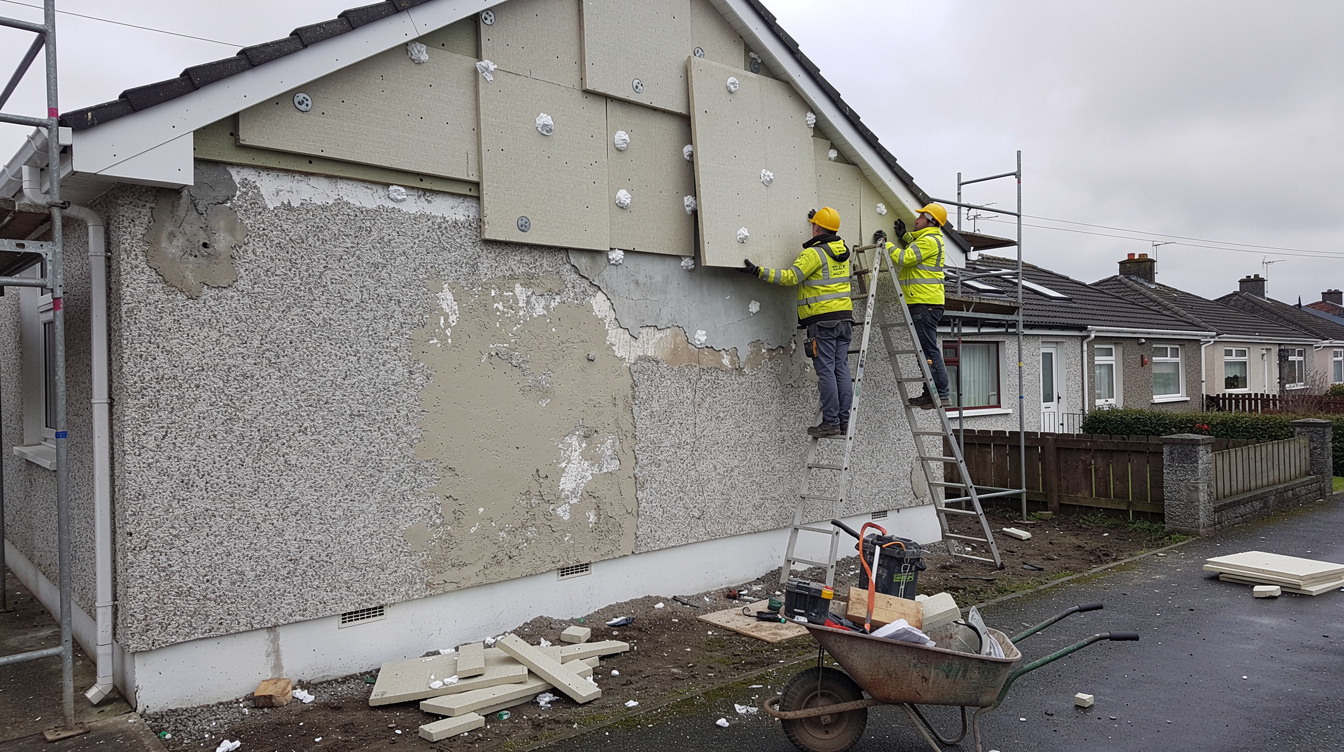
C-rated houses are where the SEAI One-Stop-Shop grants generate the best pound-for-pound uplift. A modest retrofit – attic top-up, cavity fill, heat pump-ready boiler, PV – commonly moves C2 to B1 in a single works package.
D grades: pre-1990s standard
| Grade | kWh/m²/yr | Typical Irish home at this grade |
|---|---|---|
| D1 | 226 – 260 | 1970s house with some insulation, oil or older gas boiler, mixed glazing. |
| D2 | 261 – 340 | 1960s–70s house, minimal insulation, oil boiler, mix of single/double glazing. |
E, F and G grades: pre-regulation stock
| Grade | kWh/m²/yr | Typical Irish home at this grade |
|---|---|---|
| E1 | 341 – 380 | Older semi-detached with limited attic insulation, oil boiler, single glazing in places. |
| E2 | 381 – 450 | Uninsulated bungalow, oil or solid fuel heating. |
| F | 451 – 500 | Uninsulated pre-1970s stone or block-built house, solid fuel or old oil. |
| G | > 500 | Draughty period cottage, open fire, no insulation, single glazing. Common in rural West of Ireland. |
Ready to Go Solar?
Get your free personalised quote from SEAI-registered installers.
What each grade actually costs to run
The kWh/m²/yr figure is where BER meets the ESB bill. On a typical 130 m² three-bed semi-D, gas at roughly 8 c/kWh and electricity at 33 c/kWh, the annual energy bill by grade looks like this:
| Grade | kWh/yr (130 m²) | Approx annual bill |
|---|---|---|
| A2 (heat pump) | ~5,200 | €900 – €1,300 |
| B3 (gas + upgrades) | ~17,000 | €1,500 – €1,900 |
| C2 (typical Irish) | ~24,000 | €2,100 – €2,600 |
| D2 (older oil) | ~35,000 | €3,000 – €3,700 |
| E2 (uninsulated) | ~50,000 | €3,800 – €4,700 |
| G (draughty period) | 70,000+ | €5,500+ |
The point of the BER is not that the number itself matters – it’s that each jump up the scale takes roughly one third off the bill. That’s why banks are willing to knock 0.15–0.30% off green mortgage rates for A- and B-rated stock.
How far each upgrade moves you
The DEAP calculation weights each fabric and services upgrade differently. These are the moves we see most often in Irish grant-funded retrofits – and roughly how many grades they push you.
| Upgrade | Typical grade shift (from C2 baseline) | Approx cost after SEAI grant |
|---|---|---|
| Attic insulation (300mm) | C2 → C1 | €800 – €1,400 net |
| Cavity wall insulation | C2 → C1 | €600 – €1,200 net |
| 4 kWp solar PV + €1,800 grant | C2 → B3 | €5,600 – €6,800 net |
| Air-to-water heat pump (replaces oil) | C2 → B1 | €9,000 – €13,000 net |
| External wall insulation (EWI) | C2 → B2 | €14,000 – €20,000 net |
| Full deep retrofit (One-Stop-Shop) | C2 → A3 | €35,000 – €55,000 net |
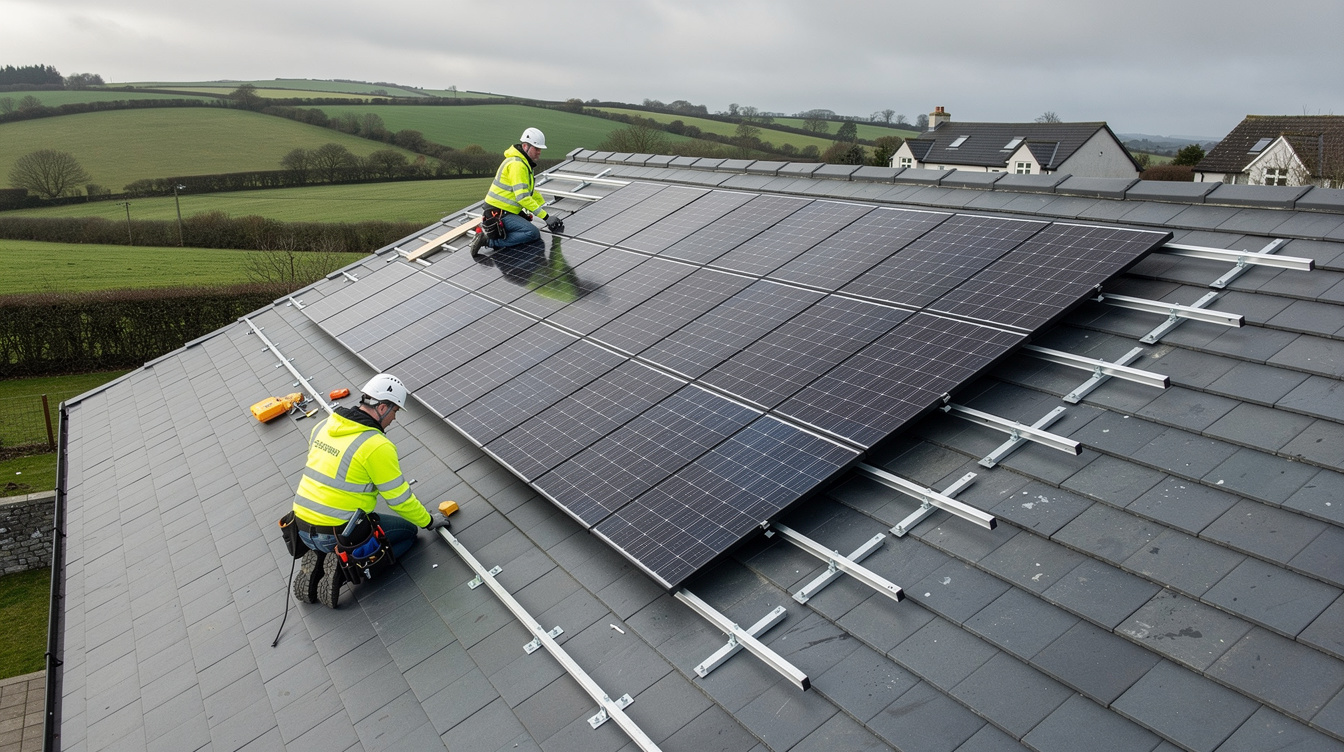
Solar PV is unusually good value in BER terms – it pushes you a full sub-grade for well under €7,000 net, and unlike insulation it also pays you back in cash through the Clean Export Guarantee. That’s why almost every retrofit package we see includes it.
Common BER questions people actually ask
Is B3 a good BER rating?
Yes, for most Irish stock. B3 (126–150 kWh/m²/yr) is above the national average, qualifies you for landlord letting under RTB rules, and is one grade below green-mortgage territory. If you’re selling, a B3 is a positive line in the ad – and one modest upgrade (typically PV or a heat pump) will push you to B2 or B1.
What’s the difference between B3 and C1?
Only one grade band – B3 tops out at 150 kWh/m²/yr, C1 starts at 151. In real houses this is often a single upgrade: attic top-up, cavity insulation, or PV. Banks treat B3 and C1 identically in most cases, but a few green mortgage products draw the line at B3 as the minimum.
What’s the average BER rating in Ireland?
According to SEAI’s own quarterly figures, the average of all certificates issued to date sits around C1–C2 – a legacy of Ireland’s big stock of 1960s–1990s houses. New builds since 2019 must be A2 or better, and the average new cert is now A2.
How long does a BER cert last?
Ten years from the date of issue – provided no material change is made to the fabric or services. Adding solar PV, changing the boiler, replacing windows or insulating walls invalidates the old cert. You’ll need a new BER before selling or letting the property.
How much does a BER cert cost in 2026?
Typical fees are €150–€250 for a standard three-bed semi-D, €250–€400 for a larger detached or period property. Assessors on the SEAI register at ndber.seai.ie set their own prices.
Will solar panels always improve my BER?
In practice, yes. A typical 4–6 kWp roof-mounted array shaves around 25–40 kWh/m²/yr off the primary energy figure – enough to move most homes one full sub-grade (e.g. C2 → C1 or B3 → B2). The exact uplift depends on orientation, shading and whether a battery is included. See our detailed guide on solar and BER uplift for worked examples.
Can I refuse a BER assessment when selling?
No. A valid BER cert is legally required to advertise or sell any property in Ireland (with narrow exemptions for protected structures being sold as-is and buildings for demolition). Trying to sell without one exposes the vendor to fines of up to €5,000.
Which grade should you aim for?
The honest answer depends on why you’re asking:
- To qualify for a green mortgage: B3 minimum (most Irish banks), B1 or A for the best rates.
- To let the property as a landlord: currently B or better for new tenancies from 2028 under the draft Minimum BER regulations – retrofit now while grants are open.
- To sell in the next 12–24 months: C1 or better closes a lot faster than a D. Buyers with mortgage approvals filter listings on BER.
- To reduce your bills: aim for B2 or higher – that’s where combined solar + insulation typically halves your annual energy spend.
- To future-proof against gas-boiler bans: A3 or better with a heat pump, since new gas boiler installs are due to be phased out from 2030.
Not sure how much a jump in your BER would cost?
Get a free personalised solar quote from SEAI-registered installers – most Irish homes gain a full sub-grade for under €7,000 net after grants.
Related reading
- BER Rating Calculator Ireland 2026: How to Estimate Your Home’s Energy Rating
- BER Rating Ireland 2026: Scale, Cost & How Solar PV Boosts Your Rating
- Green Mortgages Ireland 2026: How Solar Panels Unlock Cheaper Rates
- Selling a House With Solar Panels in Ireland 2026
- Solar Panels vs Heat Pumps: Which Should You Install First?
Related Articles
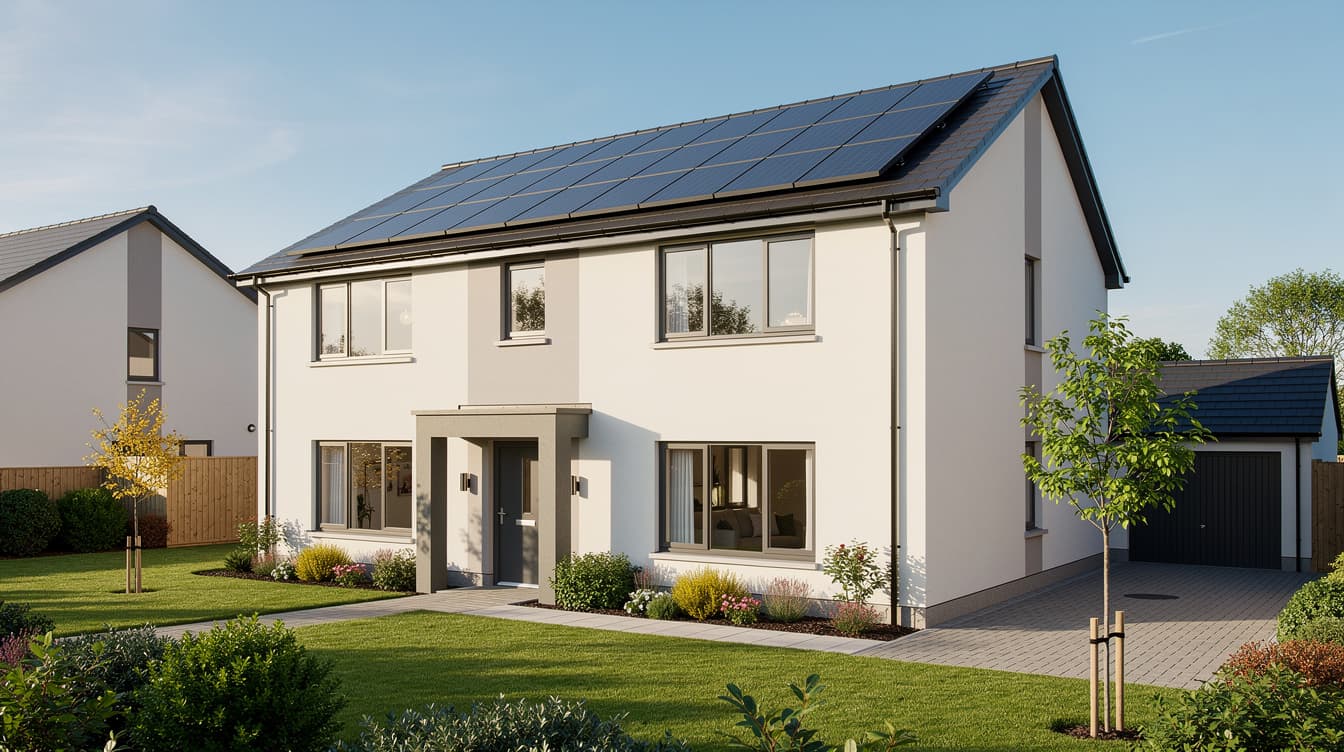
B3 BER Rating Ireland 2026: What It Means, What It Costs to Reach, How Solar Gets You There
B3 BER rating explained for 2026 Ireland: what 125-150 kWh/m2/yr actually means, retrofit costs by starting grade, and how solar panels lift you one full grade.
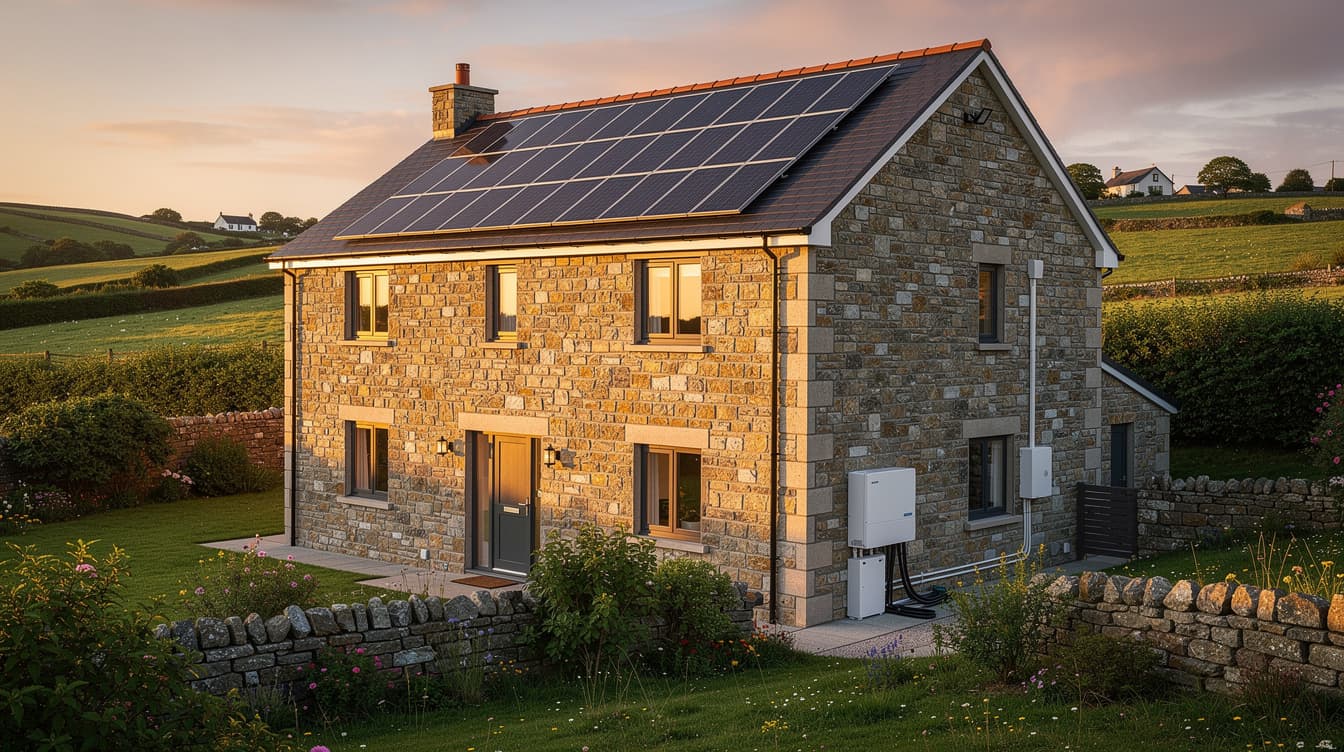
Best Solar Setup Ireland 2026: Complete System Design Guide
The best solar setup for Ireland 2026 — panels, inverter, battery, diverter and installer — with 4 real-world configurations, prices and paybacks.
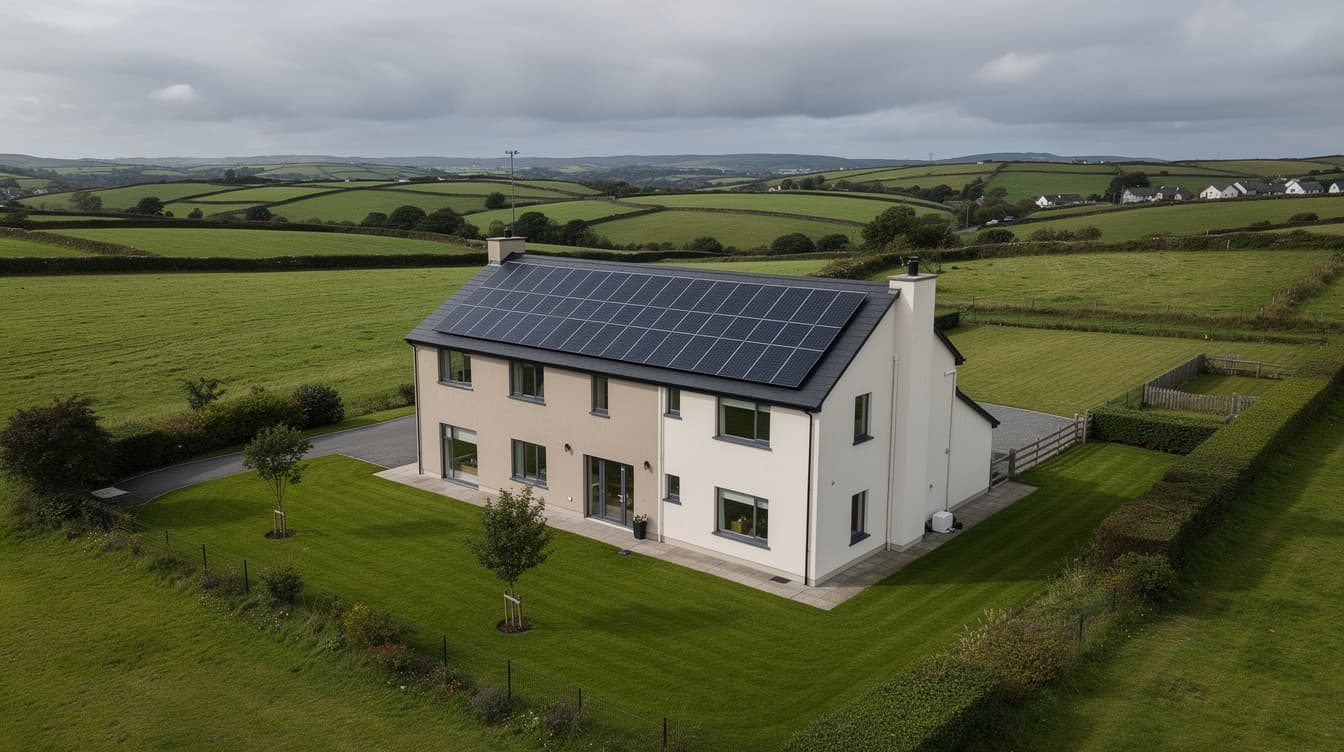
20 Solar Panels Ireland 2026: Cost, Output, Battery & Payback
What 20 solar panels cost in Ireland 2026 (€12.7-18.6k net after grant), 7,600-8,100 kWh output, roof space, battery choice and payback vs 10 or 14 panels.