
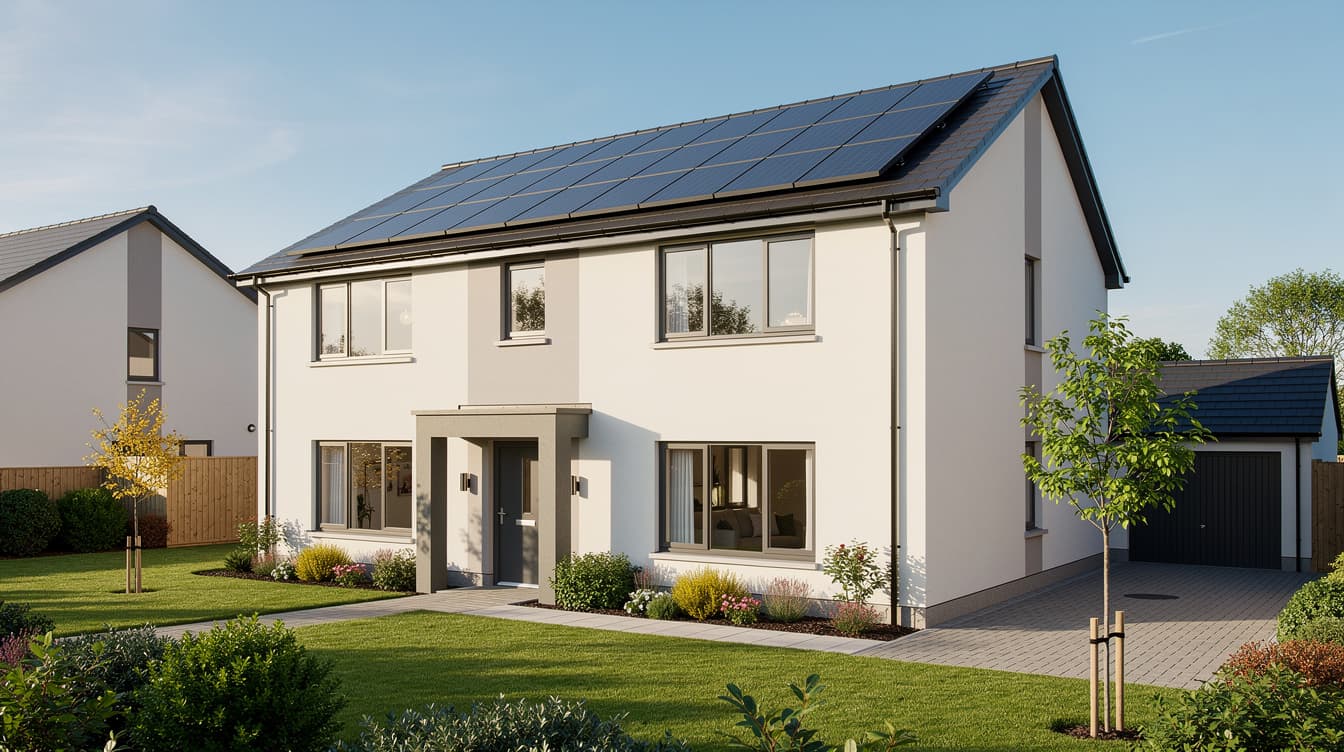
B3 BER Rating Ireland 2026: What It Means, What It Costs to Reach, How Solar Gets You There
If your BER cert says B3, you’ve landed exactly where every new-build in Ireland has to reach and where most retrofits stop when the money runs out. It’s the last grade before you’re considered legally “NZEB” on paper. It’s the grade Central Bank green mortgages give a discount for. And it’s the grade an oil-heated 1990s bungalow can reach with about €35,000 of retrofit — or, if you time it right, closer to €18,000 after stacking SEAI grants.
Here’s what a B3 BER rating actually means in Ireland in 2026, what it costs to reach, why solar panels alone won’t get you there, and how to know if you’re one or two upgrades away from crossing the line.
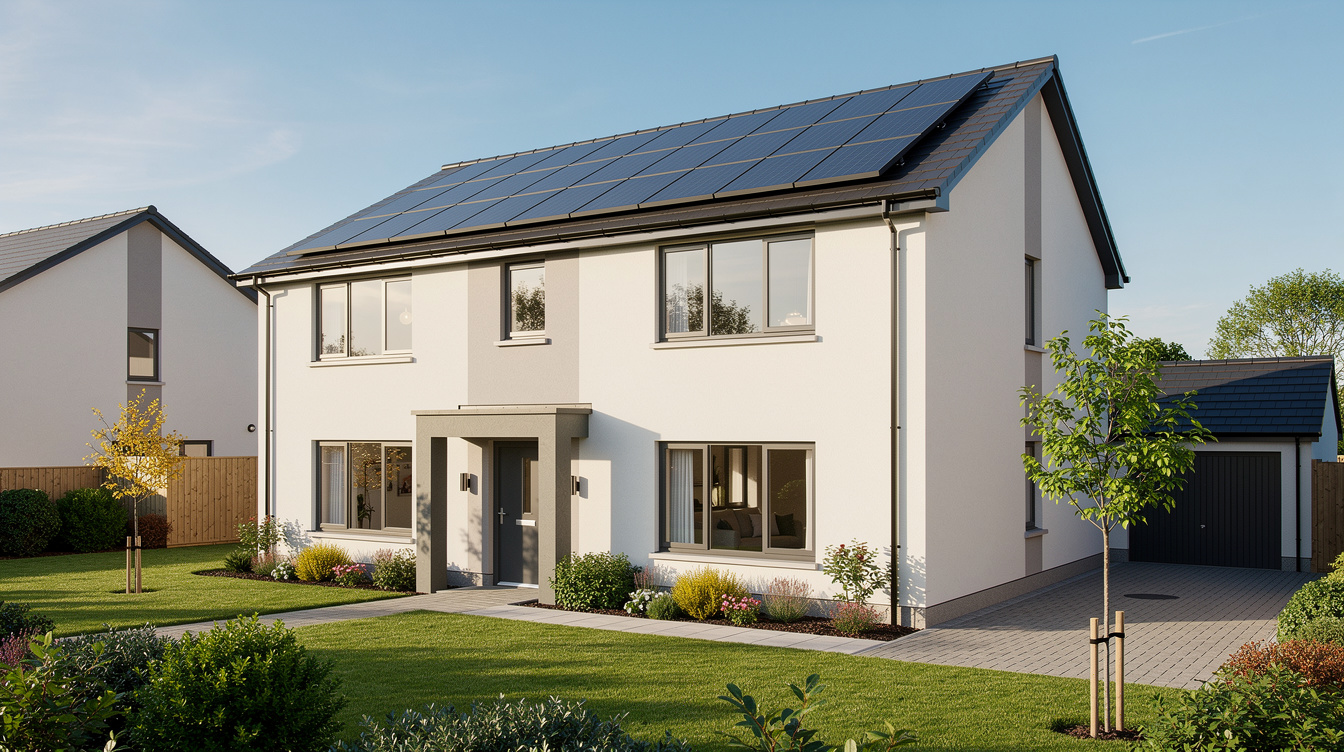
The 30-second answer
B3 means your home uses 125–150 kWh per square metre per year in energy for space heating, hot water, ventilation, lighting and pumps. That’s about half what a typical D2 “untouched” 1980s house uses (240–280 kWh/m2/yr) and roughly a third of what an F-rated house eats (400+ kWh/m2/yr).
It’s the minimum grade allowed for any new home built in Ireland since 2019 (NZEB regulations). It’s also the grade most Central Bank “green mortgage” discounts kick in at — below B3 you pay the standard rate; B3 and above you can save 0.15–0.30% on your mortgage APR.
Want to Boost Your BER With Solar?
Get a free personalised solar quote — adds roughly one BER grade per install.
Where B3 sits on the scale (both the old and the new)
SEAI moved to a new 8-grade BER scale on 24 May 2026, but any cert issued before that date still reads on the old 15-grade scale. Here’s where B3 sits on both:
| Old scale (pre-24 May 2026) | Energy use kWh/m2/yr | New scale (from 24 May 2026) | Rough share of Irish stock |
|---|---|---|---|
| A1 | <25 | A+ | <1% |
| A2 | 25–50 | A | ~4% |
| A3 | 50–75 | A | ~9% |
| B1 | 75–100 | B | ~6% |
| B2 | 100–125 | B | ~7% |
| B3 | 125–150 | B | ~11% |
| C1 | 150–175 | C | ~14% |
| C2 | 175–200 | C | ~12% |
| C3 | 200–225 | C | ~9% |
| D1–G | 225–450+ | D / E / F / G | ~27% |
Under the new 8-grade scale (A+, A, B, C, D, E, F, G), B3 becomes just “B” along with B1 and B2. But on any BER cert issued before 24 May 2026, B3 is still shown as its own tier — and both are legally valid for another 10 years.
What a B3 home actually looks like
Typical B3 building fabric in 2026 Ireland looks like this:
- Walls: filled cavity or external wall insulation, U-value 0.27–0.35 W/m2K
- Roof: 300+ mm attic insulation or fully insulated warm roof, U-value 0.16–0.20 W/m2K
- Windows: A-rated double glazing (argon-filled) or triple glazing, U-value 1.2–1.4 W/m2K
- Floor: insulated concrete or well-insulated timber, U-value 0.20–0.25 W/m2K
- Heating: condensing gas boiler with weather compensation, or an early-generation air-source heat pump
- Hot water: hot water cylinder with 80–100 mm factory insulation and thermostatic controls
- Ventilation: demand-controlled ventilation (DCV) or a modest MVHR system
- Air-tightness: 3–5 m3/h/m2 at 50 Pa (measured on completion of a new build)
You can hit B3 without a heat pump and without solar panels — a well-built cavity home with a modern condensing boiler and good windows will land there. But the newest B3 new-builds usually stack a heat pump plus solar because that’s what NZEB compliance requires, and B3 is the floor for that requirement.
Why B3 matters specifically
B3 is the Irish energy code’s equivalent of “good enough.” A few things happen when your home crosses that line:
- Green mortgages open up. AIB, Bank of Ireland and PTSB all offer discounted mortgage rates (0.15–0.30%) for homes with a BER of B3 or better. On a €350,000 mortgage that’s roughly €525–€1,050 saved per year in interest.
- New-build compliance. Every home built since 2019 has to reach at least B3 (usually a low-B3 or high-B2 depending on how the NZEB calculation lands). Older homes upgraded to B3 don’t become “new-build compliant” but they cross the same fabric threshold.
- Resale value. Property Price Register data from 2024–25 shows B3-rated homes sell for a 4–7% premium over otherwise-comparable C-rated homes, and about 12–18% over D/E-rated homes.
- Rental market. The Residential Tenancies Board is phasing in minimum BER standards; any home rented out will need to hit at least a C1 by 2028 and B3 by 2031 under the current draft regulations.
How much does it cost to reach B3?
It depends entirely on your starting grade. Here are honest 2026 costs based on retrofit quotes we’ve tracked from SEAI-registered One Stop Shop providers:
| Starting BER | Typical works needed for B3 | Before grants | After SEAI grants |
|---|---|---|---|
| C1 (150–175) | Attic top-up + solar PV or heat pump swap | €12,000–€18,000 | €5,500–€10,500 |
| C2 (175–200) | Cavity fill + attic + heat pump + solar | €22,000–€32,000 | €10,500–€18,000 |
| C3 (200–225) | Above + external or internal insulation on gables | €30,000–€44,000 | €15,000–€24,000 |
| D1–D2 (225–280) | Full external wall insulation + windows + heat pump + solar | €48,000–€72,000 | €25,000–€42,000 |
| E–G (280–450) | Deep retrofit: fabric + heating + ventilation + PV | €65,000–€110,000 | €35,000–€60,000 |
The 2026 SEAI grant stack for reaching B3 (via the One Stop Shop route): up to €27,500 in grants across attic (€1,700), cavity (€1,700), external wall (€10,000), internal wall (€4,500), heat pump (€6,500), solar PV (€1,800), heating controls (€700) and bonus grant (€2,000 for reaching B2 or better) — not all of these apply to every house, but a C-to-B3 retrofit typically claims €9,000–€15,000 of it.
Solar panels: how much do they boost your BER?
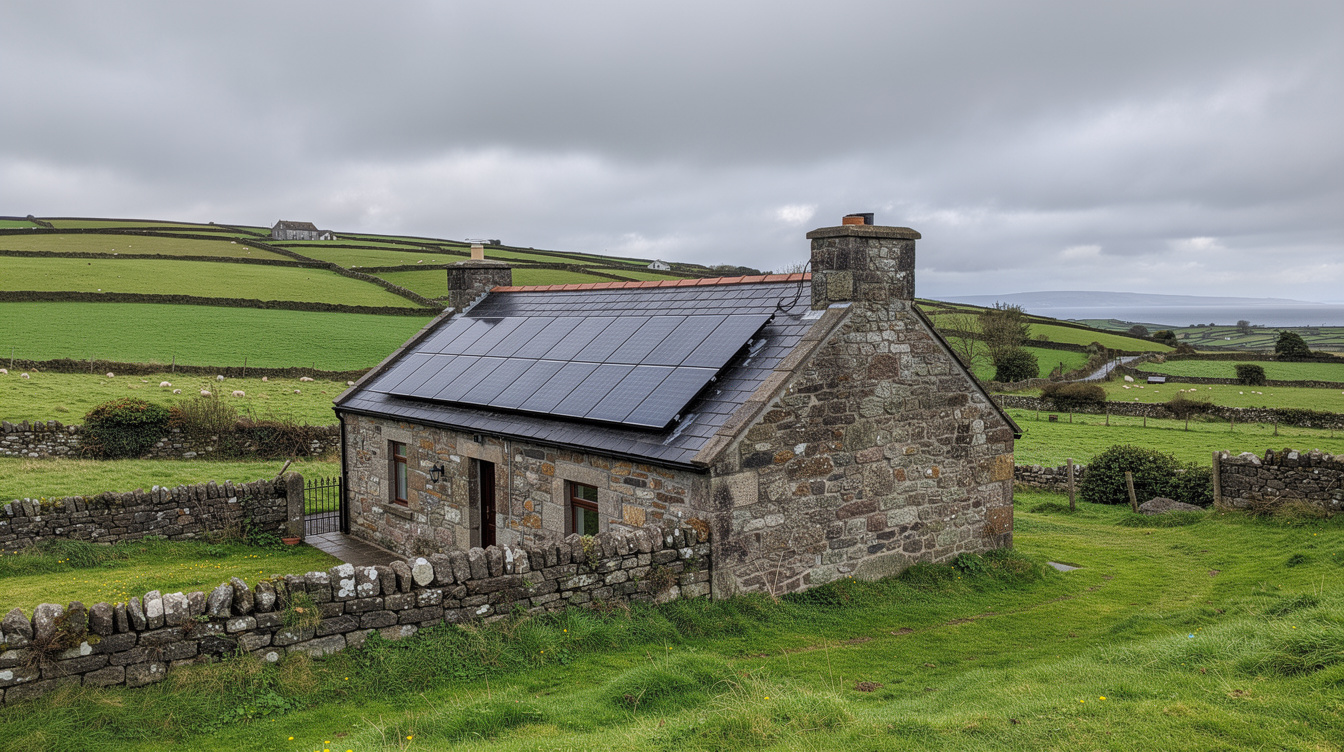
A 4 kWp solar PV system is the SEAI-grant-qualifying size and it typically shifts BER by one full grade — a C1 home becomes a B3, a C2 becomes a C1, a B2 stays a B2 (you can’t “improve” a home that’s already efficient much through PV alone).
The maths on why: 4 kWp produces roughly 3,700 kWh/yr in Ireland. On a 130 m2 detached house, that’s about 28 kWh/m2/yr — enough to lift the primary energy calculation by roughly one full grade band (25 kWh/m2/yr per band).
If you’re a high-C1 (say, 152 kWh/m2/yr) and you install 4 kWp of solar, you’ll typically drop to a B3 (around 124 kWh/m2/yr in your recalculated BER). That’s the single cheapest way most Irish homeowners move from C to B3: about €9,050 after grant, one step of grade improvement.
One BER Grade for €9,050
Free solar quote — the fastest, cheapest step from C1 to B3 for most Irish homes.
What solar panels won’t do for your BER
Solar can’t push you all the way from D or E to B3 on its own. The BER calculation caps the credit for renewable generation: even if you installed 20 kW of panels, you’d only knock about 45 kWh/m2/yr off the number, and a lot of that credit gets diluted if you’re heating with oil or LPG.
The reason is technical: BER uses “primary energy” not delivered energy. Electricity has a primary energy multiplier of 2.08 (down from 2.37 pre-2022 as the grid decarbonised), oil is 1.10 and gas is 1.10. So on the input side, oil and gas heating consume much less primary energy per kWh delivered than electric resistance heating — which is why upgrading your heating source often does more for BER than adding another 2 kW of solar.
If you’re heating with electric storage heaters or an old plug-in immersion, adding solar has a much bigger BER impact because it directly offsets high-primary-energy electric consumption.
The B3-to-B2 bonus grant trap
SEAI pays an extra €2,000 “bonus grant” if a One Stop Shop retrofit lands you at B2 or better. Sound good? Kind of — but the trap is if your retrofit lands you at high-B3 (say, 128 kWh/m2/yr), one extra measure (usually a heat pump upgrade or additional solar) can push you into B2 and unlock the bonus.
Cost-benefit: adding a 2 kWp solar top-up (going from 4 kWp to 6 kWp) costs about €3,500 net after grant increment. If that pushes you to B2 you get €2,000 back — net cost €1,500 for another 1,800 kWh/yr of generation. That’s a good deal. But paying €8,000 for a heat pump swap just to unlock a €2,000 bonus when you’re already at B3 is not a good deal unless you were replacing the heating anyway.
How to know if your home is close to B3
If your BER cert is more than 10 years old, get it recalculated — every measure you’ve added since (attic insulation, new windows, condensing boiler, cavity fill) will bump the score without you knowing. Ballpark self-check:
| Home age & type | Untouched likely BER | If cavity filled + attic + condensing boiler |
|---|---|---|
| Pre-1978 solid wall | F–G | D1–D2 (needs EWI + heat pump + solar for B3) |
| 1978–1991 cavity block | D2–E1 | C2–C3 (heat pump + solar likely bridges to B3) |
| 1992–2005 built to 1997 regs | D1–C3 | C1–B3 (solar alone often gets you there) |
| 2006–2011 built to 2005 regs | C1–B3 | B3 or better with solar |
| 2012–2018 built to 2011 regs | B2–B3 | Already B3 or better |
| 2019 onward NZEB | A3 or B1 | Already comfortably past B3 |
What a new BER assessment costs in 2026
A domestic BER assessment costs €150–€280 from an SEAI-registered assessor in 2026. Prices vary by county (Dublin €220–€280, rural €150–€200). You need one when you’re selling, renting, or claiming an SEAI grant — and the pre-works and post-works BERs are usually bundled by One Stop Shop providers, so you don’t pay separately.
A BER cert is valid for 10 years. If you retrofit and don’t get a new BER, your improved home is still legally recorded as its old grade.
Quick FAQ
Is B3 good enough? Yes for green-mortgage discounts, resale value and legal compliance for new builds. If you want to keep going, B2 or B1 costs more but unlocks the €2,000 SEAI bonus and drops your bills a further 10–18%.
Do I need a heat pump for B3? No. A well-insulated home with a modern condensing gas boiler can reach B3. A heat pump is required to reach A3 or better in most 1990s–2000s builds.
Will solar panels alone get me to B3? Yes if you’re at C1 or high-C2 already. No if you’re at D or lower — you’ll need fabric upgrades first.
Does B3 on my cert automatically mean lower bills? Kind of. BER is a modelled figure based on the building — not your actual usage. A B3 home with the heating on 24/7 and windows open will use more than a C1 home with careful control. But at equal use patterns, a B3 will typically cost 30–45% less to heat than a C1.
Bottom line
B3 is the Irish energy code’s pass grade — the minimum for new-builds since 2019, the trigger for green mortgage discounts, and the point where resale value starts to move up. Most Irish homes built between 1992 and 2005 are one solar install away from crossing it. Older homes need fabric plus heating plus solar, in that order.
Related reading: the full BER grade explainer, estimate your BER online, how solar affects your BER, and do solar panels change your BER cert.
Get a Free Solar Quote
The single fastest step from C1 to B3 — about €9,050 after grant.
Related Articles
Best Solar Setup Ireland 2026: Complete System Design Guide
The best solar setup for Ireland 2026 — panels, inverter, battery, diverter and installer — with 4 real-world configurations, prices and paybacks.
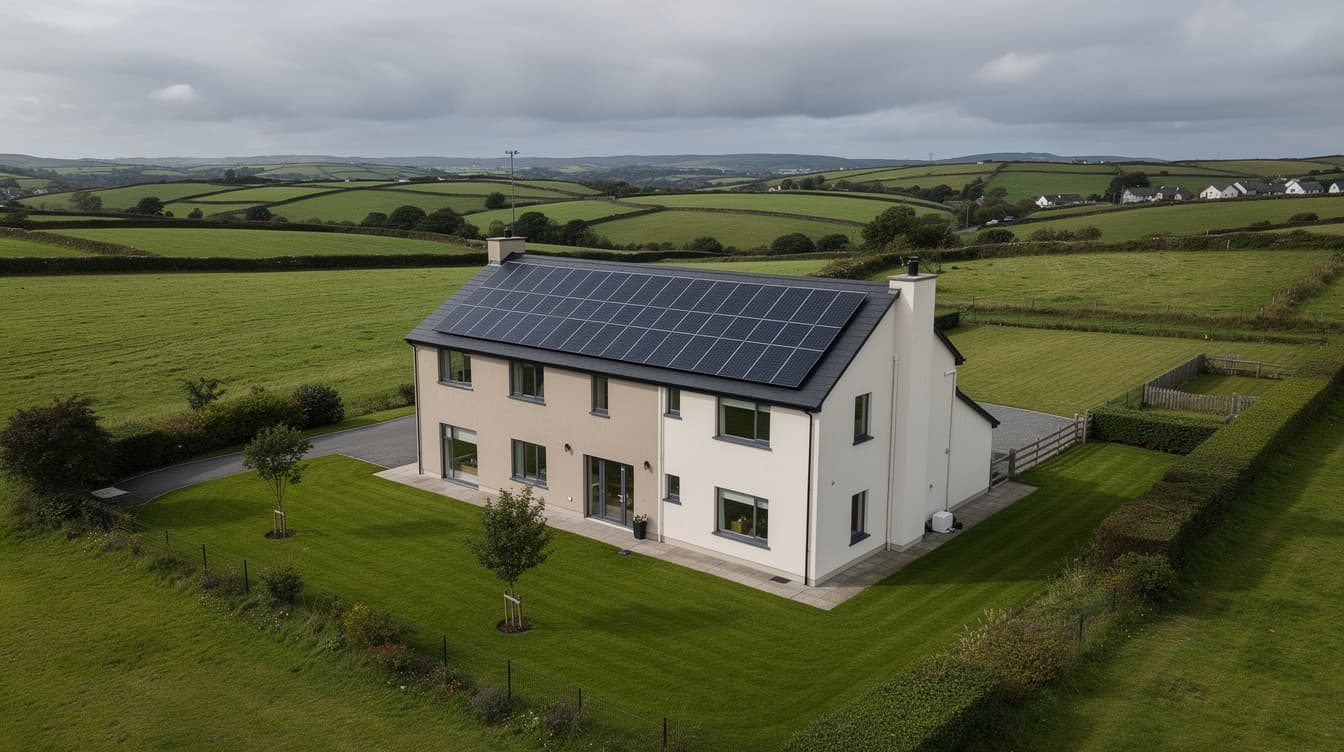
20 Solar Panels Ireland 2026: Cost, Output, Battery & Payback
What 20 solar panels cost in Ireland 2026 (€12.7-18.6k net after grant), 7,600-8,100 kWh output, roof space, battery choice and payback vs 10 or 14 panels.
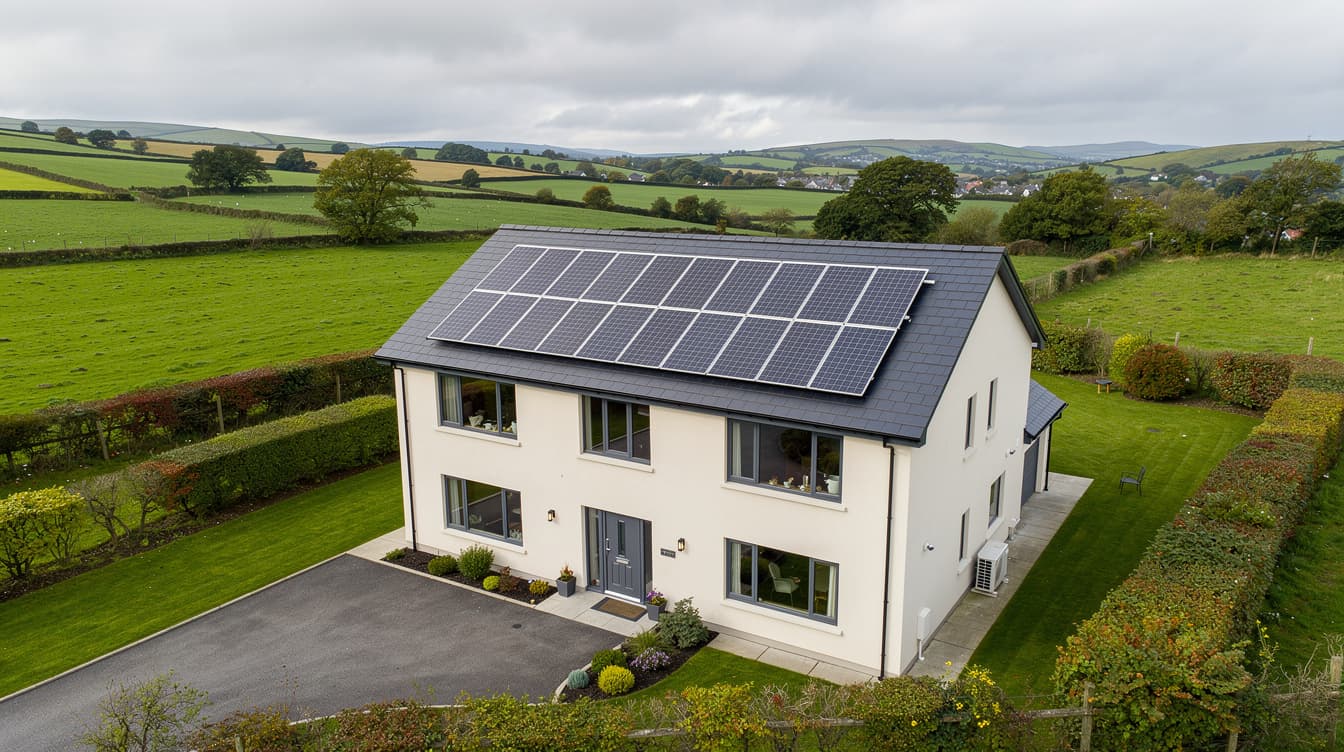
12 Solar Panels Ireland 2026: Cost, Output, Battery & Payback
What 12 solar panels cost in Ireland 2026 (€9.1-10.8k after grant), annual kWh output, battery sizing, roof space needed and how 12 stacks vs 10 or 14 panels.