
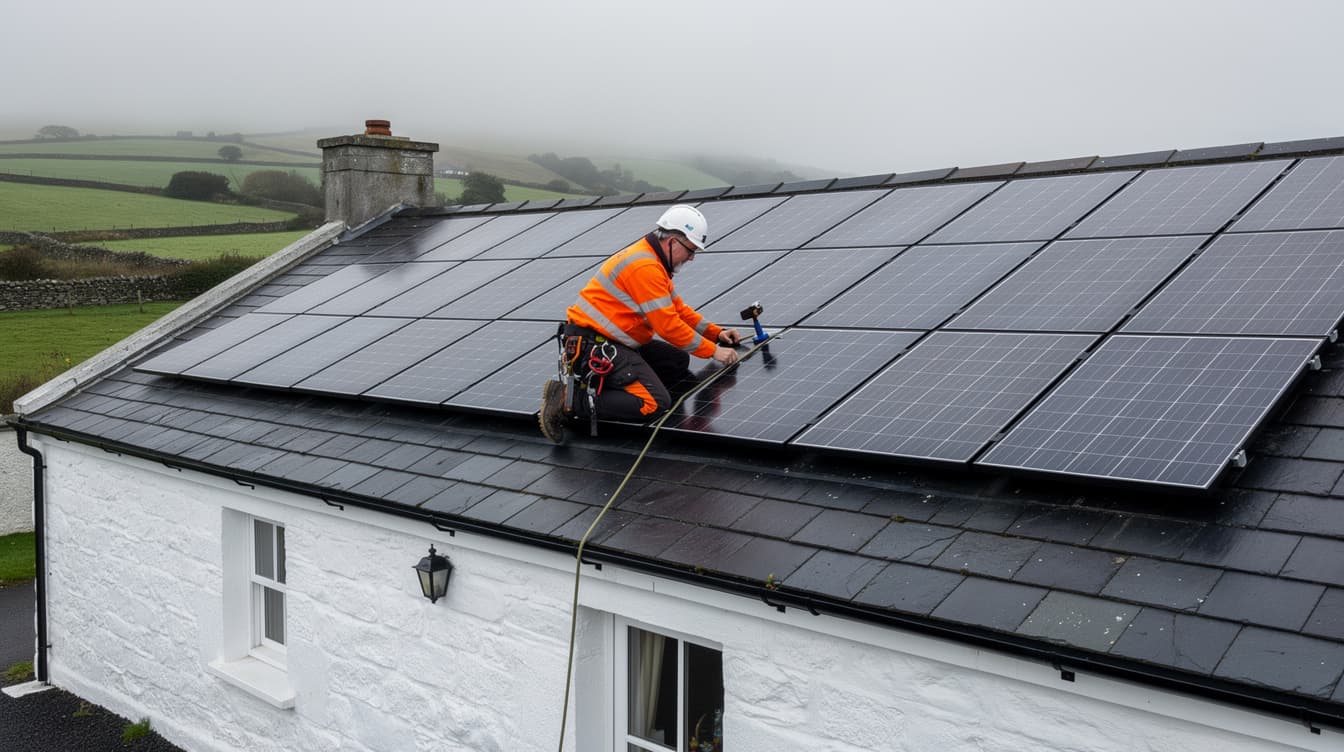
Can I Install Solar Panels Myself in Ireland 2026? The Honest DIY Guide
Quick Answer: Can you legally install solar panels yourself in Ireland?
No — not if you want to connect them to your home’s wiring or the grid. Irish law requires a Safe Electric Ireland (RECI) registered electrician to certify any solar PV installation that ties into your consumer unit, and ESB Networks won’t accept your NC6/NC7 grid-connection application without a registered installer’s sign-off. You also forfeit the €1,800 SEAI grant and most panel/inverter warranties. What you can DIY: plug-in “balcony” solar units, off-grid systems for sheds and caravans, and portable battery stations — covered in detail below.
It’s the question every cost-conscious Irish homeowner asks once they see a €10,000+ quote for a 6kWp PV system: “Can I just buy the panels and put them up myself?” Watching American YouTubers bolt panels to their barn roofs makes it look approachable. The honest answer for Ireland in 2026 is nuanced — partly yes, mostly no — and the difference comes down to four hard regulatory walls: Safe Electric, ESB Networks, SEAI, and your home insurer.
This guide walks through exactly what’s legal, what voids your warranty, what kills your grant, what triggers a Building Control issue, and the handful of genuinely DIY routes that work without breaking any of them.
The four regulatory walls a DIY grid-tied install hits in Ireland
| Wall | What it requires | Can a homeowner DIY past it? |
|---|---|---|
| Safe Electric Ireland (RECI) | A registered electrical contractor must complete and certify any electrical work tying into the consumer unit, including PV inverter wiring, AC isolators, and earth bonding. | No. Self-certifying is not permitted for fixed installations. |
| ESB Networks NC6/NC7 | Generator notification form before energising. NC6 for ≤11kVA single-phase, NC7 for larger. Both require an installer number from the Safe Electric register. | No. Without an NC6 your system can’t legally export and you forfeit Clean Export Guarantee payments. |
| SEAI grant (€1,800) | Installation must be carried out by a Solar PV Registered Company on the SEAI list. BER assessment by an SEAI-registered assessor before and after. | No. DIY automatically disqualifies the grant. |
| Manufacturer warranties | Most panel (25yr) and inverter (10-12yr) warranties require “qualified installation per manufacturer guidelines.” Some explicitly require MCS or local equivalent. | Usually no. You can buy panels privately but lose claim rights if installed by non-qualified person. |
Hit any one of these and the system can still work. Hit all four and you’ve built something that’s technically illegal to export from, ineligible for the €1,800 grant, and unsupported if a single MC4 connector arcs and torches your roof in year three. None of that is a theoretical risk — ESB Networks does run audit sweeps and can issue de-energisation notices, and home insurers have refused claims on unlicensed PV work.
Why DIY costs more than it saves on a grid-tied system
Run the actual numbers for a typical 6kWp Irish install:
| Cost line | Professional install | “DIY” estimate (still legal-ish) |
|---|---|---|
| Panels (12 × 500W tier-1) | €1,800–€2,400 | €1,800–€2,400 (same) |
| Hybrid inverter 6kW | €1,400–€1,900 | €1,400–€1,900 |
| Mounting, cabling, isolators, DC/AC kit | €800–€1,200 | €1,100–€1,600 (retail markup) |
| Scaffolding (mandatory above 4m) | Included | €500–€900 hire |
| Safe Electric contractor (mandatory commissioning) | Included | €1,200–€2,000 (most won’t certify someone else’s work) |
| Roof labour | Included | Your weekend |
| SEAI €1,800 grant | −€1,800 | €0 (ineligible) |
| Net cost to homeowner | €8,200–€9,700 | €6,000–€9,800 |
Two things jump out: most Safe Electric contractors won’t certify work they didn’t supervise (it puts their RECI registration on the line for someone else’s torque values), and once you lose the grant the “savings” collapse to a few hundred euro — not enough to justify a weekend on a wet Wexford roof in October. Try several of our shortlisted SEAI-registered installers and you’ll usually see professional quotes converge around €8,500–€9,500 for a 6kWp post-grant.
Ready to Go Solar?
Get your free personalised quote from SEAI-registered installers.
What you CAN legally DIY in Ireland
The rules above all apply to grid-tied systems — PV that’s wired into your house’s consumer unit and exports to the network. There are four genuinely DIY-legal categories that bypass most of the regulatory perimeter because they never tie into the main wiring.
1. Plug-in “balcony” solar kits
A single 300–800W panel paired with a microinverter that plugs directly into a 3-pin domestic socket. Lidl, Aldi and various Amazon resellers stock them at €299–€699 a kit. Strictly speaking the socket and the spur it feeds need to be inspected by a Safe Electric contractor (because the inverter is back-feeding the ring), and the small NC6 still applies. In practice tens of thousands of these are running un-notified across Europe and Irish enforcement has been near-zero so far. The cleanest legal route: pay a Safe Electric for one hour to certify the socket and file the NC6, then plug and play.
See our full breakdown in the plug-in solar Ireland guide and the Lidl plug-in review.
2. Off-grid systems for sheds, garden buildings, polytunnels
A panel-to-charge-controller-to-battery-to-12V/24V-load setup, never touching mains, is fully homeowner-installable. Common scope:
- Garden shed lighting and a 12V fridge: 200–400W panel, 100Ah lithium battery, MPPT charge controller. Total kit cost €400–€900.
- Polytunnel ventilation and pump: 400–800W panel, 200Ah battery, €800–€1,500.
- Stables, workshop, allotment cabin: 1–2kW panel array on a freestanding frame, 5kWh battery, 12V or 24V system. €2,000–€4,000.
No Safe Electric, no NC6, no grant (the grant requires grid-tie), no insurance complication so long as it’s in a detached outbuilding. This is the genuine sweet spot for the “I want to learn solar by doing” homeowner.
3. Caravan, motorhome, boat and trailer installs
Mobile systems are explicitly outside the fixed-electrical-installation rules. A 200–400W roof panel on a campervan, wired to a leisure battery via an MPPT controller and inverter, is a standard hobbyist project. Common Irish-context examples: a 400W kit for a Hymer or Adria caravan parked at the Wild Atlantic Way, a 200W panel for a Westerly sailing boat in Crosshaven. Kit cost €500–€1,500.
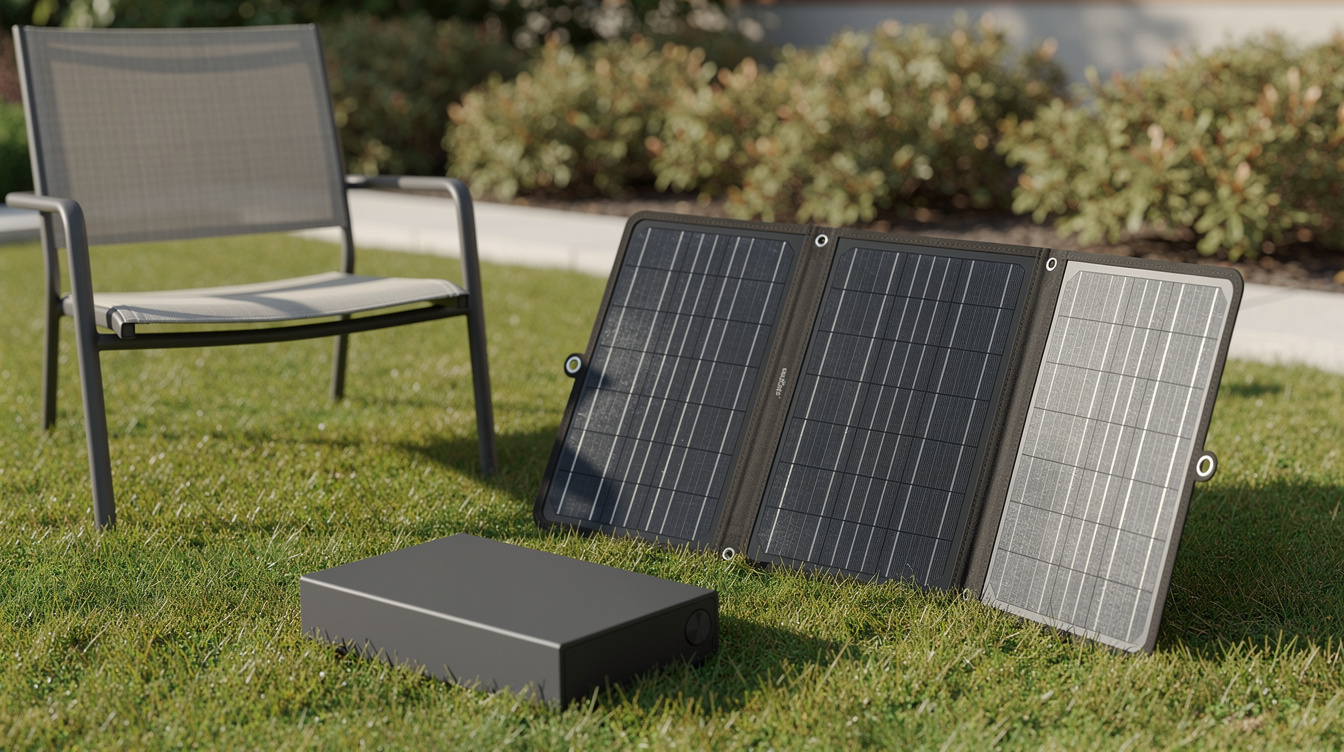
4. Portable battery stations + folding panels
Brands like Bluetti, EcoFlow, Jackery and Anker sell self-contained battery boxes (1–5kWh capacity) with built-in inverters, MPPT input, and AC sockets. A 200–400W folding panel charges them from the garden. Total kit cost €700–€2,400. Fully homeowner-friendly because nothing is hard-wired — the battery box is a portable appliance, not a fixed electrical installation. Useful for power outages, garden offices, EV top-ups and camping. Our apartment solar guide covers the portable route in more detail.
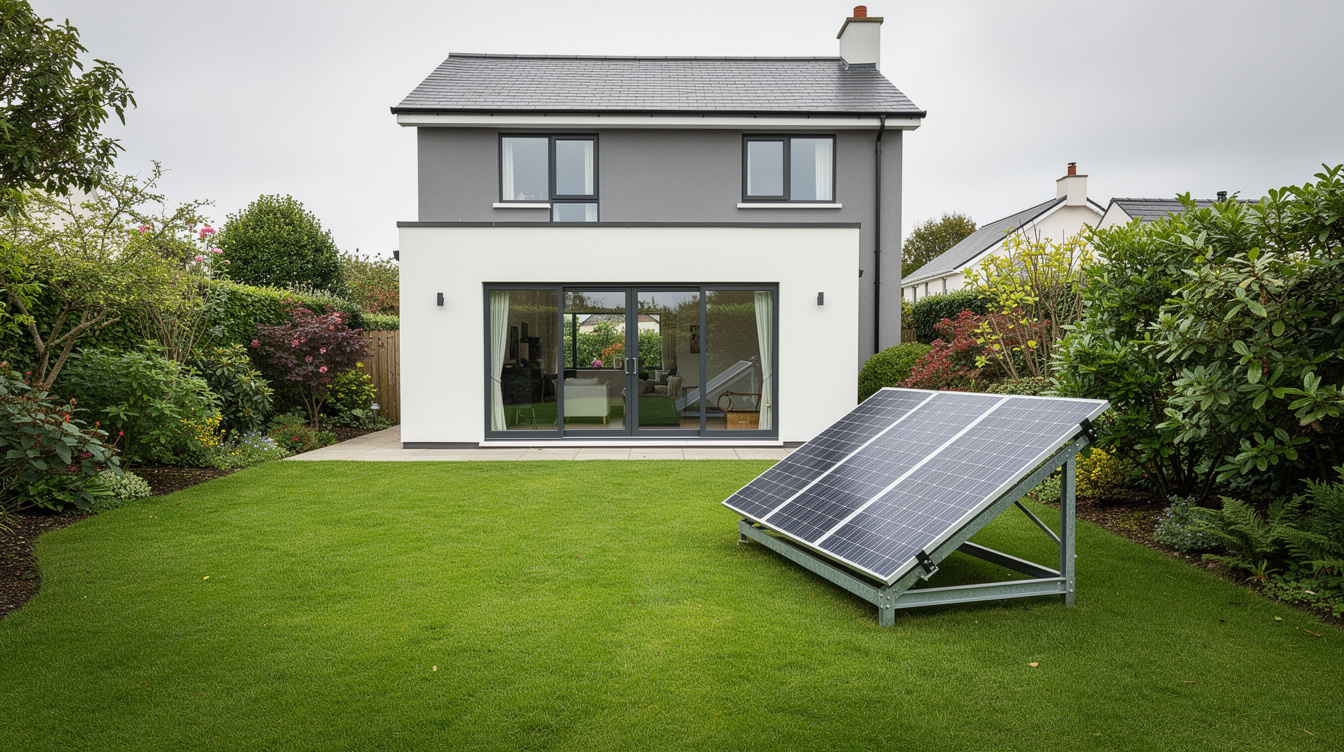
The grey area: ground-mounted DIY in your back garden
A few Irish homeowners build their own ground-mount frames in side gardens or paddocks — usually 8–16 panels on a galvanised steel structure — and then hire a Safe Electric contractor to come in for the wiring side. This is fine in principle and saves about €1,500–€2,500 on labour. Two practical issues most DIYers underestimate:
- Planning permission. Garden ground-mount arrays larger than 60m² or visible from a road frontage may need planning. The 2022 Class 56 exemption (extended to 2026) covers most rooftop and some ground-mount, but read it before pouring concrete.
- Contractor pickup rate. Many Safe Electric firms will quote €1,500+ to commission a homeowner-assembled array because they have to re-verify every torque, MC4 crimp and earth bond before signing.
See our garden solar panels guide for the planning specifics.
What about the “90% DIY with installer commissioning” route?
A small but growing number of UK and Irish installers offer a “design and commission” service where you do panel mounting, cable routing and conduit yourself, and they handle final wiring, inverter setup, and NC6 paperwork. Expect to pay €2,000–€3,000 for the installer side, which typically nets you a €1,000–€1,500 saving versus a full-service quote — but only if you don’t fall off a roof, miscount your strings, or void the warranty on a panel by stepping on the centre rail.
Bear in mind: this route still preserves the SEAI grant only if the registered company is contracted for the full installation under their BER assessment. Most installers will not stick their grant claim under a customer-led job.
Insurance: the under-talked-about DIY killer
Irish home insurance policies typically require that any electrical work added to the property be certified to Safe Electric standards. A DIY grid-tied install that arcs and starts a fire gives the insurer a clear basis to refuse the claim — in some cases for the entire dwelling, not just the PV portion. Two insurers we spoke to (FBD and Aviva Ireland) confirmed they require an active RECI certificate for any added PV system before they’ll cover damages or third-party liability. This is the silent risk that turns a €2,000 “saving” into a €200,000 problem.
The honest verdict
| Scenario | DIY recommended? |
|---|---|
| Main house roof, grid-tied, 4–8kWp | No. The maths doesn’t work once you lose the €1,800 grant and pay retail for parts. |
| Plug-in balcony or terrace kit (≤800W) | Yes, with a one-hour Safe Electric socket check for legal cover. |
| Garden shed, polytunnel, workshop off-grid | Yes, fully homeowner-installable. Best value DIY route in Ireland. |
| Caravan, motorhome, sailing boat | Yes. Standard hobbyist install, no Irish regulatory friction. |
| Portable Bluetti/EcoFlow + folding panel | Yes. Zero fixed-wiring, fully portable, no certification required. |
| Ground-mount in back garden with hired commissioning | Maybe. Saves €1–2K labour, voids grant, hard to find contractor pickup. |
Solar PV is one of the few home upgrades in Ireland where doing it yourself actively costs you money. The €1,800 SEAI grant, free 0% VAT, manufacturer warranty cover and an insurer-friendly paper trail are all gated behind “a registered installer did this.” If your goal is to learn the technology and tinker, the off-grid shed/caravan/portable routes scratch that itch for €500–€2,500 without the risk. If your goal is to power your house, hire a pro and put the saved weekend into something else.
Get 3 Free Quotes from SEAI-Registered Installers
Compare prices, panel brands and warranty terms before you commit. No obligation, no spam.
Frequently asked questions
Is it illegal to install solar panels yourself in Ireland?
Mounting panels physically isn’t illegal, but any electrical work that ties into the consumer unit or grid is restricted by Irish Wiring Rules (ET 101) to Safe Electric registered contractors. Without their certification you cannot file an ESB Networks NC6 notification, cannot legally export, and your home insurer may refuse claims.
Can I buy panels and an inverter privately and hire someone just to wire it?
You can, but most Safe Electric contractors will not commission a system they didn’t supervise, and the ones that do typically charge €1,500–€2,500 for the verification work. You also forfeit the €1,800 SEAI grant and most manufacturer warranties.
What about the SEAI grant if I do it myself?
The €1,800 SEAI Solar PV grant explicitly requires installation by a Solar PV Registered Company on the SEAI panel. A DIY install of any size disqualifies you from the grant, even if you employ a Safe Electric contractor for the wiring. See our SEAI grant guide for the full eligibility list.
Will my home insurance still cover the house if I DIY a solar install?
Insurance policies vary, but the major Irish providers (FBD, Aviva, Allianz, AXA) require Safe Electric certification for any added fixed PV system. Without it they have grounds to refuse claims for fire, electrical, or third-party damages traceable to the install — potentially affecting the entire dwelling.
Are plug-in solar kits like the Lidl one legal in Ireland?
The kit itself is legal to sell and buy. The legality of plugging it in depends on whether the socket and ring circuit have been certified by a Safe Electric contractor for back-feeding (most haven’t) and whether an NC6 form was filed with ESB Networks. Enforcement has been minimal so far. The cleanest route: pay a Safe Electric for a one-hour inspection and NC6 file.
Can I install solar panels myself on a shed or garden building?
Yes, fully — as long as the system is off-grid (panel → charge controller → battery → 12V/24V load) and never touches your house mains. This is the most homeowner-friendly route in Ireland and ideal for shed lighting, polytunnel ventilation, allotment cabins and workshop power.
What about portable battery stations with folding panels?
Fully legal homeowner-installable. Brands like Bluetti, EcoFlow, Jackery and Anker are sold as portable appliances, not fixed electrical installations, so no certification is required. Pair a 1–5kWh battery box with a 200–400W folding panel and you have flexible solar power for power cuts, EV top-ups, garden offices and camping.
Could I take an online course and become a certified installer myself?
The route exists. Solas and SEAI accredit installer training, the main qualification being the QQI Level 6 Solar PV Installation course (~€1,200–€1,800, about 4–6 weeks part-time). You then need to register with Safe Electric (RECI) as a contractor, which carries annual fees and audit obligations. If you’re planning to install for yourself plus family and a few neighbours, the maths can work. For a single self-install only, it’s not worth it.
Related Articles
Solar Panel System Cost by Number of Panels Ireland 2026: 8, 12, 14, 20, 24 Panel Prices
What 8, 12, 14, 16, 20 or 24 solar panels actually cost in Ireland 2026 — net after €1,800 SEAI grant & 0% VAT, output kWh, roof area & battery add-ons.
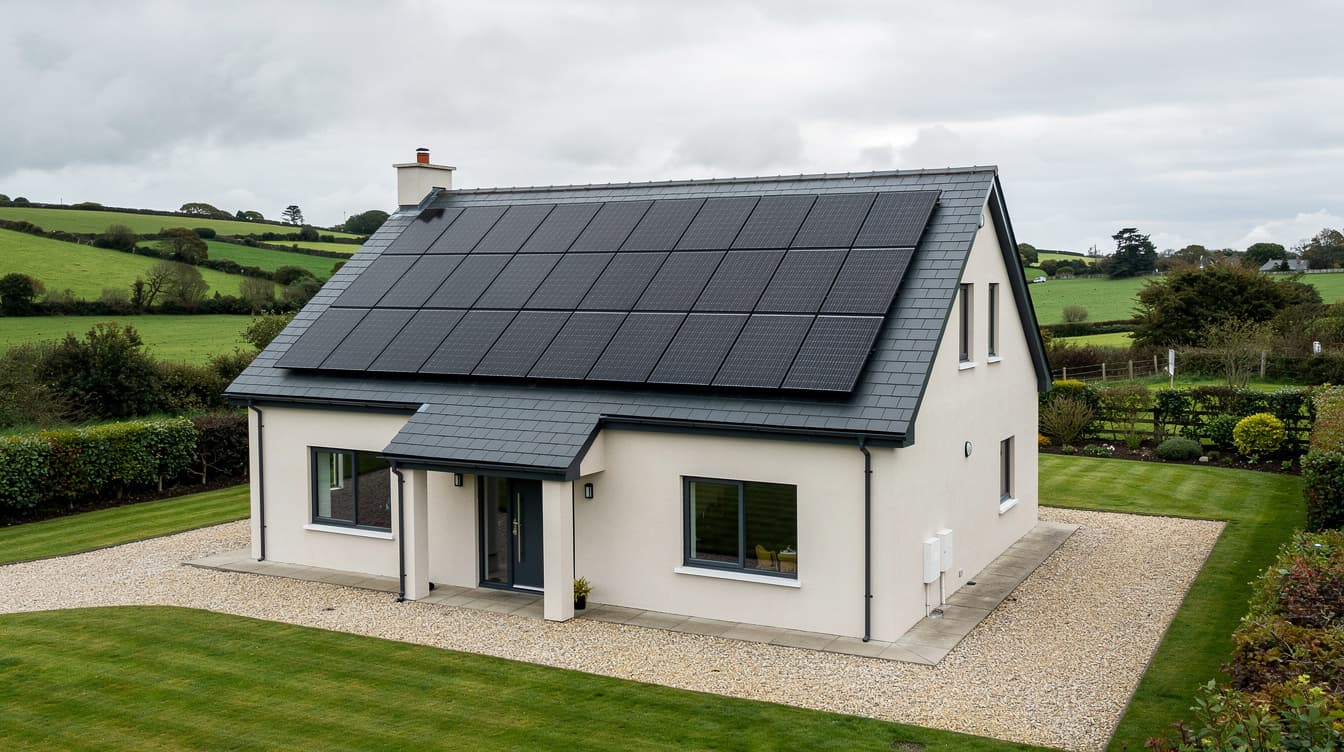
6kW Solar System Cost Ireland 2026: Real Prices, Output & Payback
6kW solar costs €7,700–€10,500 net after the €1,800 SEAI grant and 0% VAT in Ireland 2026. Real quote, 5,270 kWh/yr output, EV/battery ROI.
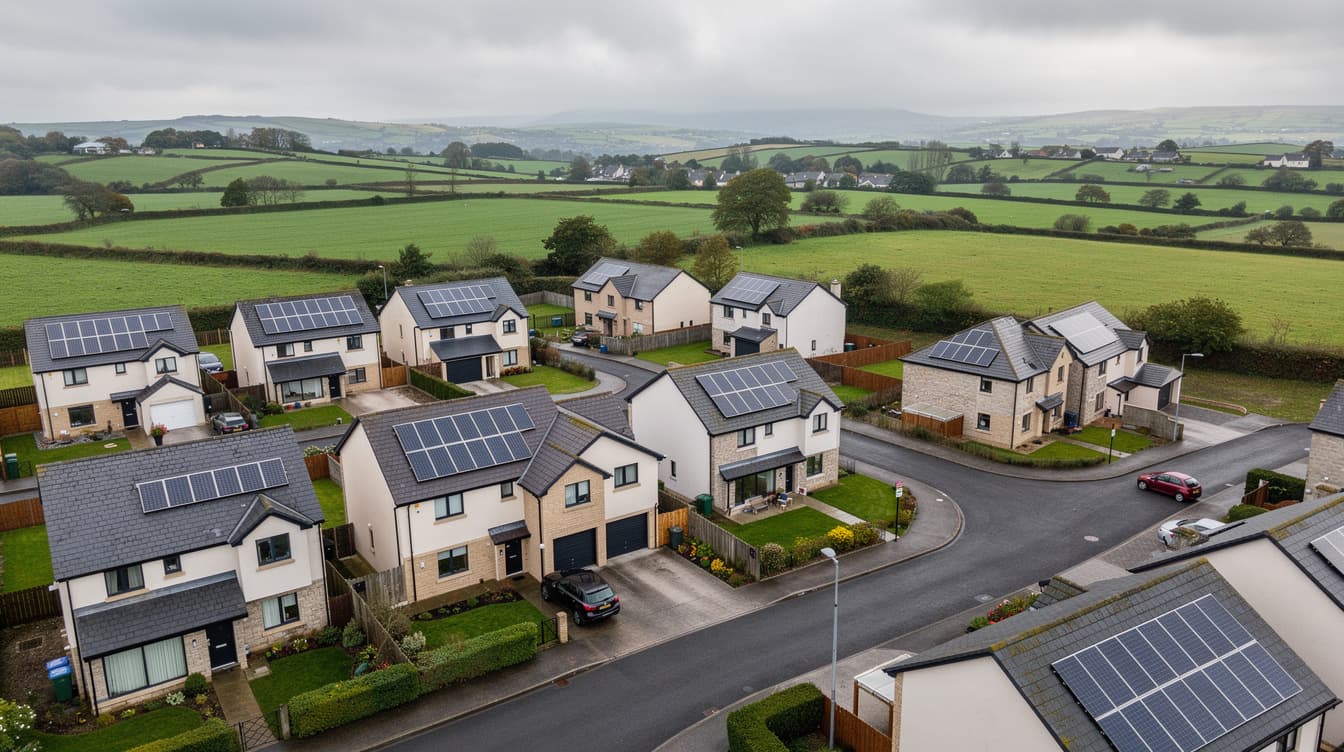
Average Cost of Solar Panels Ireland 2026: What Homeowners Really Pay
Real 2026 Ireland solar prices by kW size, region and battery option. Average 5kW after SEAI grant: €7,100-€9,000. Full breakdown inside.