
How Many Solar Panels Do I Need Ireland 2026? Complete Sizing Guide
Search "how many solar panels do I need Ireland" and you'll get answers ranging from "six" to "twenty-five" without anyone explaining how they got there. The honest truth is that there is no universal number — it depends on your annual electricity use, your roof area, how much of your bill you want to wipe out, and whether you're adding a battery.
The good news: there's a simple three-step calculation that gets you within one or two panels of the right answer. We'll walk through it with real Irish kWh assumptions, then give you a household-size lookup table, a roof-space rule of thumb, and three worked examples (3-bed semi, 4-bed detached, 5-bed large home). By the end you'll know exactly how many panels to ask installers to quote for — and how to spot a quote that's oversized or undersized.
Quick Answer: How Many Solar Panels for an Irish Home?
Most Irish homes need 8 to 14 solar panels (a 3.6 kWp to 6.3 kWp system) to cover around 60–80% of their annual electricity use.
- 3-bed semi (~3,500 kWh/yr): 8–10 panels (3.6–4.5 kWp)
- 4-bed detached (~4,800 kWh/yr): 10–14 panels (4.5–6.3 kWp)
- 5-bed large home (~6,500 kWh/yr): 14–18 panels (6.3–8.1 kWp)
Quick math: 1 modern 450W panel produces roughly 380 kWh per year in Ireland. Divide your annual kWh by 380 to estimate panel count for 100% offset (but most homes only self-consume 30–40% without a battery, so size for what you'll use, not what you generate).
Step 1: Find Your Annual Electricity Use (in kWh)
Open your most recent ESB Networks bill, Electric Ireland statement, or whoever supplies you. Look for the line that says "units used" or "kWh consumed." Add up the last four bills (or 12 months if you have it). That's your annual consumption — the foundation of every solar sizing decision.
Most Irish homes fall in one of three bands:
| Household Profile | Annual kWh (Typical) | Drivers |
|---|---|---|
| 1–2 person, terraced or apartment | 2,200–3,000 kWh | No electric heating, modest appliance use |
| Family of 3–4, 3-bed semi | 3,200–4,200 kWh | Gas boiler, normal appliance load |
| Family of 4–5, 4-bed detached | 4,500–5,500 kWh | Larger home, possibly some immersion use |
| 5+ person, 5-bed or large detached | 5,500–7,500 kWh | Multiple zones, more cooking/laundry |
| Any home with heat pump | +2,500–5,000 kWh | Air-to-water heat pump replaces gas/oil |
| Any home with EV charging at home | +2,000–3,500 kWh | 12,000–15,000 km of EV driving per year |
If you're planning to add a heat pump or EV in the next 2–3 years, size your solar for the future kWh, not today's. Adding panels later costs more per kWp because installers price the trip + scaffolding once, then per-panel charges are minimal.
Step 2: Decide What Percentage of Your Bill You Want to Offset
This is where most homeowners get the maths wrong. Solar panels in Ireland don't reduce your bill by the same percentage as their size to your usage — they reduce it by how much electricity you actually consume while the sun is shining.
Without a battery, the average Irish home self-consumes around 30–40% of what solar produces. The rest is exported to the grid for a Clean Export Guarantee payment of roughly 18–22 cent per kWh. With a battery, self-consumption rises to 70–90%.
Here's how the maths plays out for a typical 4 kWp system on a 4,000 kWh home:
| Setup | Solar Generated | Self-Consumed | % of Bill Cut |
|---|---|---|---|
| 4 kWp, no battery | ~3,400 kWh/yr | ~1,200 kWh (35%) | ~30% direct + CEG income |
| 4 kWp + immersion diverter | ~3,400 kWh/yr | ~1,800 kWh (53%) | ~45% direct + CEG income |
| 4 kWp + 5 kWh battery | ~3,400 kWh/yr | ~2,700 kWh (80%) | ~65% direct + smaller CEG |
Translation: If you want to wipe out 80%+ of your bill, you need either a much larger system OR a battery. Either way, you size your panels to cover your annual kWh — the battery and diverter just shift more of that production into your house instead of the grid.
Step 3: Convert kWh Target to Panel Count
Here's the calculation Irish installers actually use:
The Three-Number Calculation
1. Annual kWh you want to generate (e.g. 4,000 kWh)
2. Divide by 850 (kWh per kWp produced annually in Ireland on a south-facing roof at 30°) → system size in kWp (4,000 ÷ 850 = 4.7 kWp)
3. Divide kWp by 0.45 (most current panels are 440–460W = 0.45 kWp) → panel count (4.7 ÷ 0.45 = 10.4 panels → round to 11)
That single 850 kWh/kWp figure comes from SEAI's DEAP software methodology and matches real Irish installation data from 2023–2025. It bakes in our cloudy summers, short winter days, and average panel orientation losses. East- or west-facing roofs produce about 15–20% less; north-facing roofs around 35% less.
Step 4: Check You Have the Roof Space
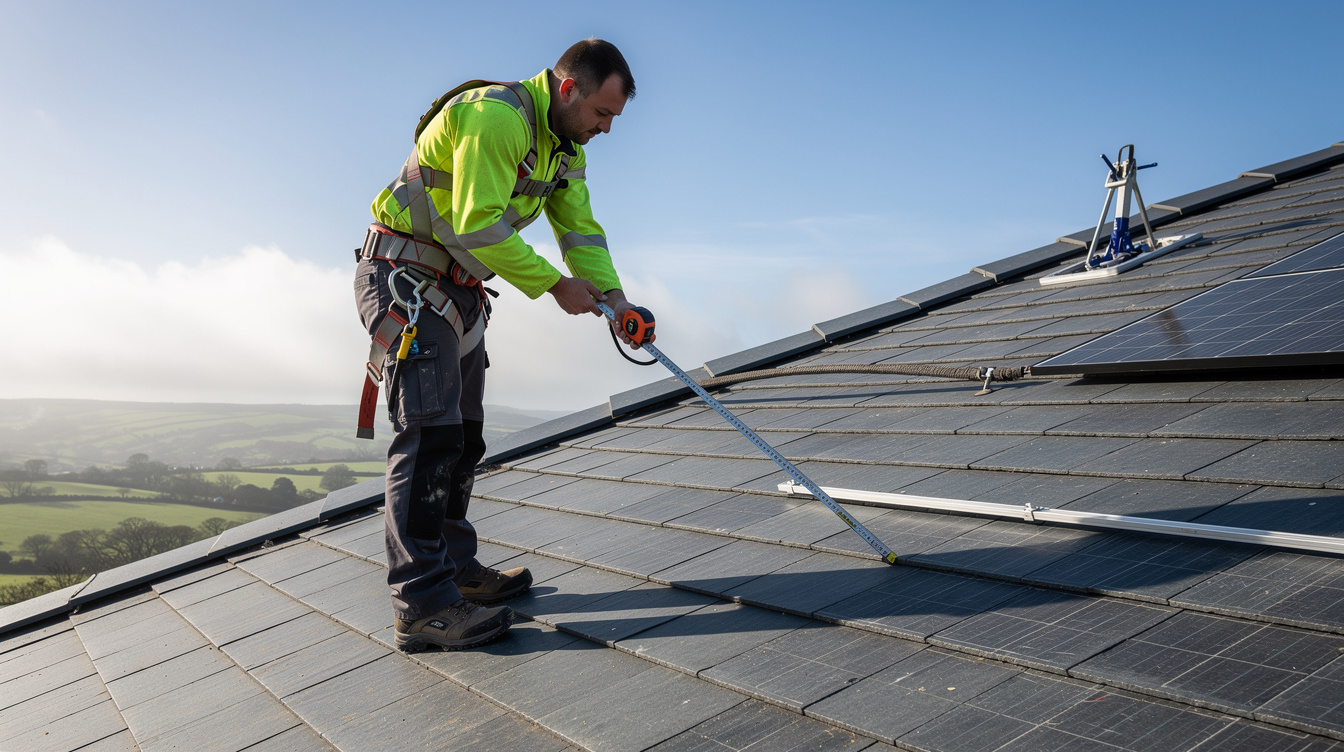
A modern 450W solar panel is approximately 1.95m tall × 1.13m wide = 2.2 m². Allow extra for edge gaps and roof obstructions. Working rule of thumb:
| System Size | Panel Count | Roof Area Needed (Minimum) | Typical Roof |
|---|---|---|---|
| 2 kWp | 4–5 panels | ~10 m² | Apartment / small terraced |
| 3.6 kWp | 8 panels | ~18 m² | 3-bed mid-terrace |
| 4.5 kWp | 10 panels | ~22 m² | 3-bed semi-detached |
| 5.4 kWp | 12 panels | ~27 m² | 4-bed detached |
| 6.3 kWp | 14 panels | ~31 m² | 4-bed detached + EV |
| 8.1 kWp | 18 panels | ~40 m² | Large 5-bed detached |
Quick measurement at home: Walk outside and pace the length of the south-facing slope of your roof. Each long stride is roughly 1 metre. Multiply length by the slope height (use a smartphone tape-measure app or guess from window heights). That gives you usable roof area — minus any chimneys, vents, dormers or skylights you'll need to keep clear (usually 30–40 cm gap).
If you're tight on south-facing roof, ask your installer about split East-West arrays. They lose ~15% yield but often double your usable surface area.
Not sure how much roof you have?
Our SEAI-registered partners do a free remote site survey using satellite imagery before quoting. No on-site visit needed for the first estimate.
Three Worked Examples
Example 1: 3-Bed Semi in Dublin (Family of 4)
Annual usage: 3,800 kWh (gas central heating, normal appliances, no EV yet). South-facing rear roof, 28 m² available, no shading.
- Target: 100% kWh-match (will only self-consume ~35%, rest exports for CEG income)
- Calculation: 3,800 ÷ 850 = 4.5 kWp → 4.5 ÷ 0.45 = 10 panels
- Cost (2026): ~€9,800 — SEAI grant €1,800 = €8,000 net
- First-year saving: €320 self-consumption + €420 CEG export = ~€740/yr
- Payback: ~10.5 years (faster if EV added later)
Example 2: 4-Bed Detached in Cork (Family of 5, EV Coming)
Current usage: 4,600 kWh (gas heating, two adult drivers planning EV within 2 years → future load ~7,000 kWh). Two roof slopes: 18 m² south, 16 m² west.
- Target: Size for the future load. Aim for ~6.3 kWp.
- Calculation: 14 panels — 8 on south roof, 6 on west roof (west yields ~85% of south)
- Cost (2026): ~€13,500 — SEAI grant €1,800 = €11,700 net
- Battery option: Add 5 kWh battery (~€3,800 extra) to capture EV overnight surplus
- First-year saving: ~€1,100 (rising once EV arrives)
- Payback: ~10–11 years
Example 3: 5-Bed Large Home in Galway (Family of 5 with Heat Pump)
Annual usage: 7,200 kWh (air-to-water heat pump + electric immersion + family of 5). South-facing roof slope 45 m², no shading.
- Target: Cover ~75% of usage (heat-pump homes self-consume more — 50–60% even without battery)
- Calculation: 5,400 ÷ 850 = 6.4 kWp → 14 panels — but with roof space spare, going to 18 panels (8.1 kWp) adds €1,500 cost for €200–250 extra annual saving
- Cost (2026): ~€15,200 for 18-panel system — SEAI grant €1,800 (capped at 2 kWp regardless of size) = €13,400 net
- First-year saving: ~€1,450 (heat pump consumes most generation directly)
- Payback: ~9 years
Common Sizing Mistakes Irish Homeowners Make
| Mistake | Why It's Wrong | Better Approach |
|---|---|---|
| Sizing to today's bill exactly | Heat pumps and EVs lift kWh by 50%+. Adding 4 panels later costs 2× per panel. | Size for 3-year projected load if heat-pump or EV is on the cards. |
| "I want a 2 kWp system because I'm only home weekends" | Per-panel cost is much lower at 4–6 kWp than at 2 kWp. The fixed installer call-out is the same. | Minimum economic size in Ireland is 3.6 kWp (8 panels). Below this the per-kWh cost shoots up. |
| "I want max panels to cover 100% of my bill" | Without a battery, you can't physically use most of the extra. CEG export pays less than your import rate. | Size to roof or to ~120% of annual kWh — whichever is smaller. Add battery if you want higher offset. |
| Ignoring chimney/dormer shading | A chimney can knock 20% off a string in winter. Microinverters or optimisers cost more but protect yield. | Ask installer to shade-model the roof. If shading is present, insist on module-level optimisation. |
| Trusting "we get the SEAI grant for free panels" pitches | Grant is €1,800 max, paid to homeowner after install. The installer pricing €15k for what should be €9k pockets the difference. | Cross-check against 3 quotes. See how to compare solar quotes. |
The 30-Second Sizing Checklist Before You Ask for Quotes
- I've totalled my last 12 months of kWh from bills: ____ kWh/year
- I've added projected load if heat pump or EV is coming: ____ kWh/year (target)
- I've divided by 850 to get target kWp: ____ kWp
- I've divided by 0.45 (W per panel) to get panel count: ____ panels
- I've checked usable south/east/west roof area in m²: ____ m²
- I've decided whether I want a battery (for >65% bill offset) or diverter (cheaper, covers hot water only)
- I've decided whether the roof has shading and will ask for shade modelling
With these seven answers, you can pick up the phone to three SEAI-registered installers and get like-for-like quotes. Any installer who asks you "how many panels do you want?" instead of asking your kWh use is not the one to trust.
Frequently Asked Questions
How many solar panels for a 3-bed house in Ireland?
Most 3-bed homes need 8 to 10 panels (3.6–4.5 kWp) to cover 60–80% of typical 3,000–4,200 kWh annual use. With a 5 kWh battery, you can push self-consumption above 75%.
How many solar panels for a 4-bed house in Ireland?
Most 4-bed homes need 10 to 14 panels (4.5–6.3 kWp) for a typical 4,500–5,500 kWh use. Heat pump or EV plans push the recommendation toward 14 panels.
How many solar panels do I need for 4,000 kWh?
4,000 ÷ 850 = 4.7 kWp = roughly 10 to 11 panels at 450W each. Self-consumption (without battery) covers 30–40% of those kWh from solar; the rest exports via Clean Export Guarantee.
What's the maximum number of panels the SEAI grant covers?
The €1,800 grant requires a minimum 2 kWp system but caps at 2 kWp for grant calculation — you get the full €1,800 whether your system is 2 kWp or 12 kWp. There is no maximum panel count for grant eligibility.
Can I add more panels later?
Yes, but it's around 50–70% more expensive per kWp than the original install (no scale economies, separate scaffolding trip, potentially upgrading the inverter). Better to size right the first time.
What if my roof faces east or west, not south?
East- and west-facing arrays produce roughly 80–85% of a south-facing array's yield. Multiply your target kWp by 1.18 to compensate. Two roof orientations (e.g. east + west) is often the best solution for Irish homes.
Are 9 panels better than 10?
Inverters in Ireland are typically sized at 3, 3.6, 5, 6, or 7 kW. Picking an odd panel count can leave the inverter undersized or oversized. Always let the installer balance the array to the inverter — don't fixate on panel-count odd/even.
Ready to Get the Right Size System?
Our SEAI-registered partners run free DEAP-software sizing calculations based on your actual kWh, roof orientation, and 3-year load projections — not generic "1-panel-per-300W" rules.
Related reading: Solar Panel System Sizes Ireland 2026 · Best Solar Panels Ireland 2026 · SEAI Solar Grant Ireland 2026 · Solar Panel Calculator
Related Articles
Best Solar Setup Ireland 2026: Complete System Design Guide
The best solar setup for Ireland 2026 — panels, inverter, battery, diverter and installer — with 4 real-world configurations, prices and paybacks.
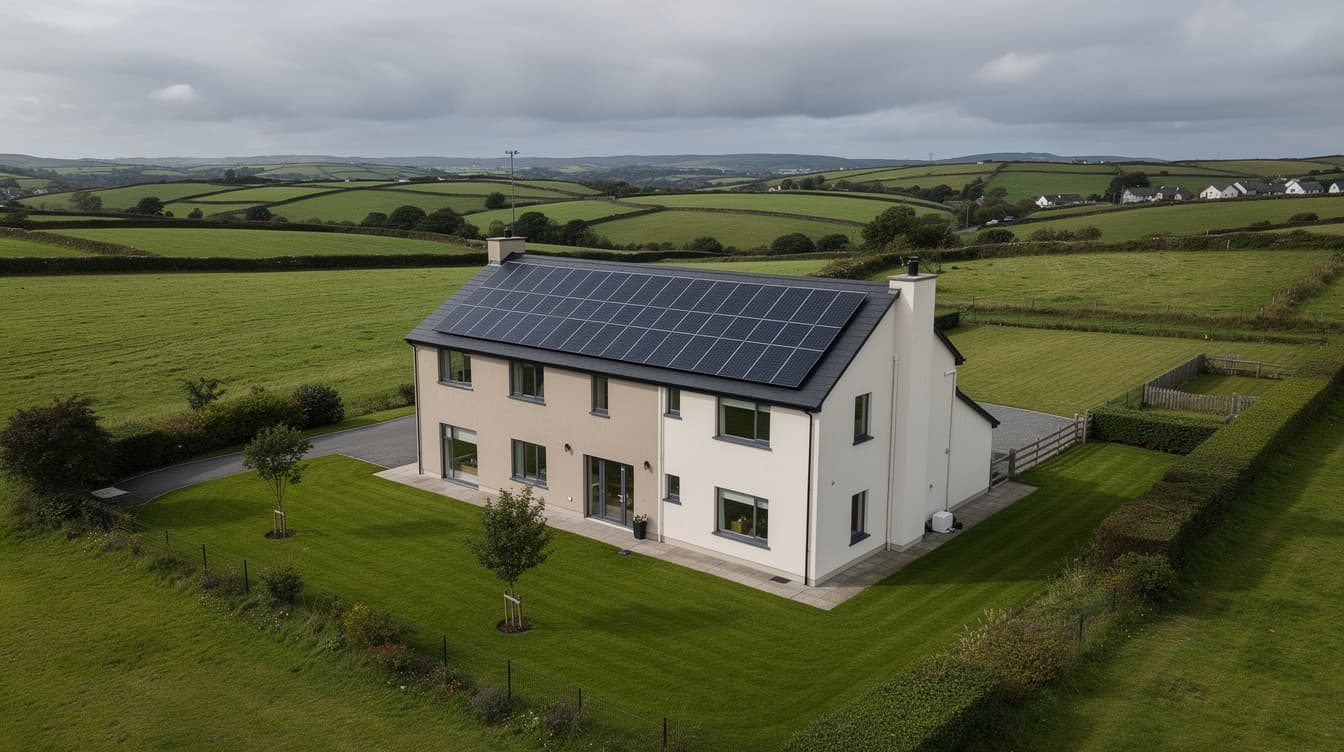
20 Solar Panels Ireland 2026: Cost, Output, Battery & Payback
What 20 solar panels cost in Ireland 2026 (€12.7-18.6k net after grant), 7,600-8,100 kWh output, roof space, battery choice and payback vs 10 or 14 panels.
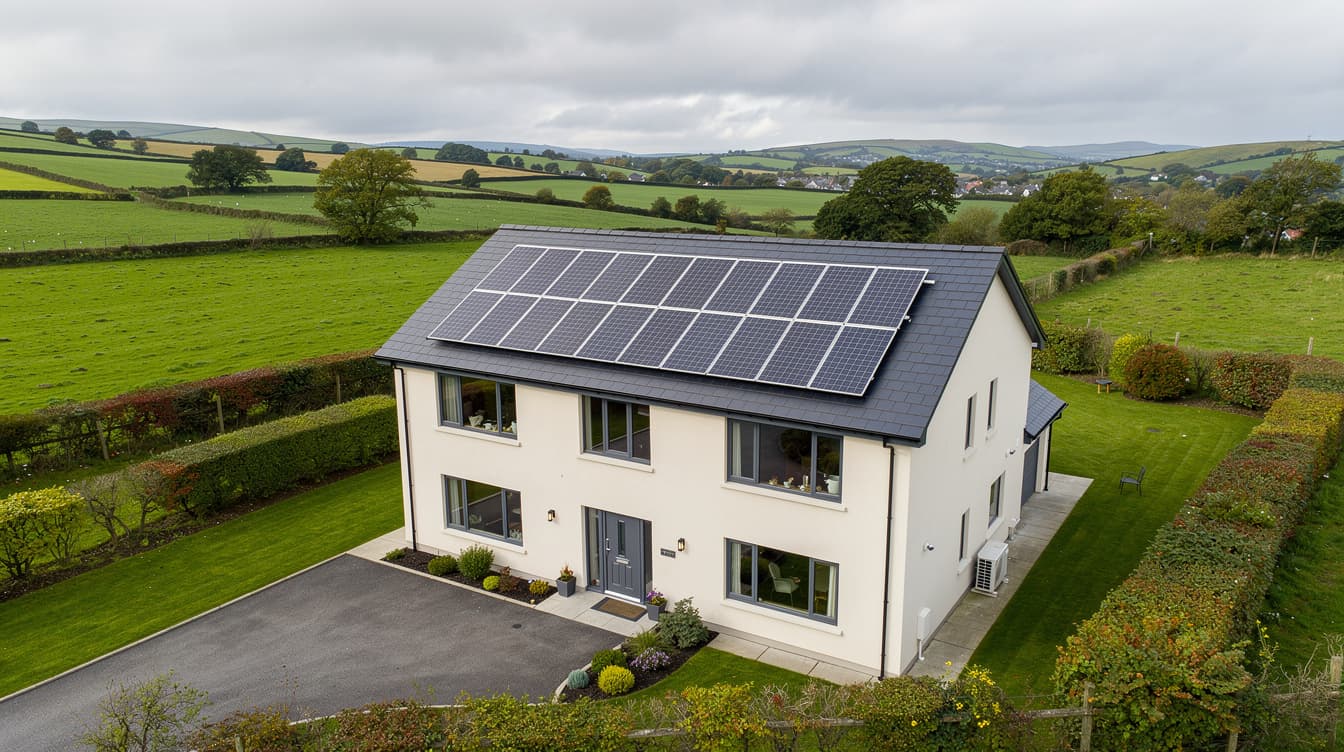
12 Solar Panels Ireland 2026: Cost, Output, Battery & Payback
What 12 solar panels cost in Ireland 2026 (€9.1-10.8k after grant), annual kWh output, battery sizing, roof space needed and how 12 stacks vs 10 or 14 panels.