
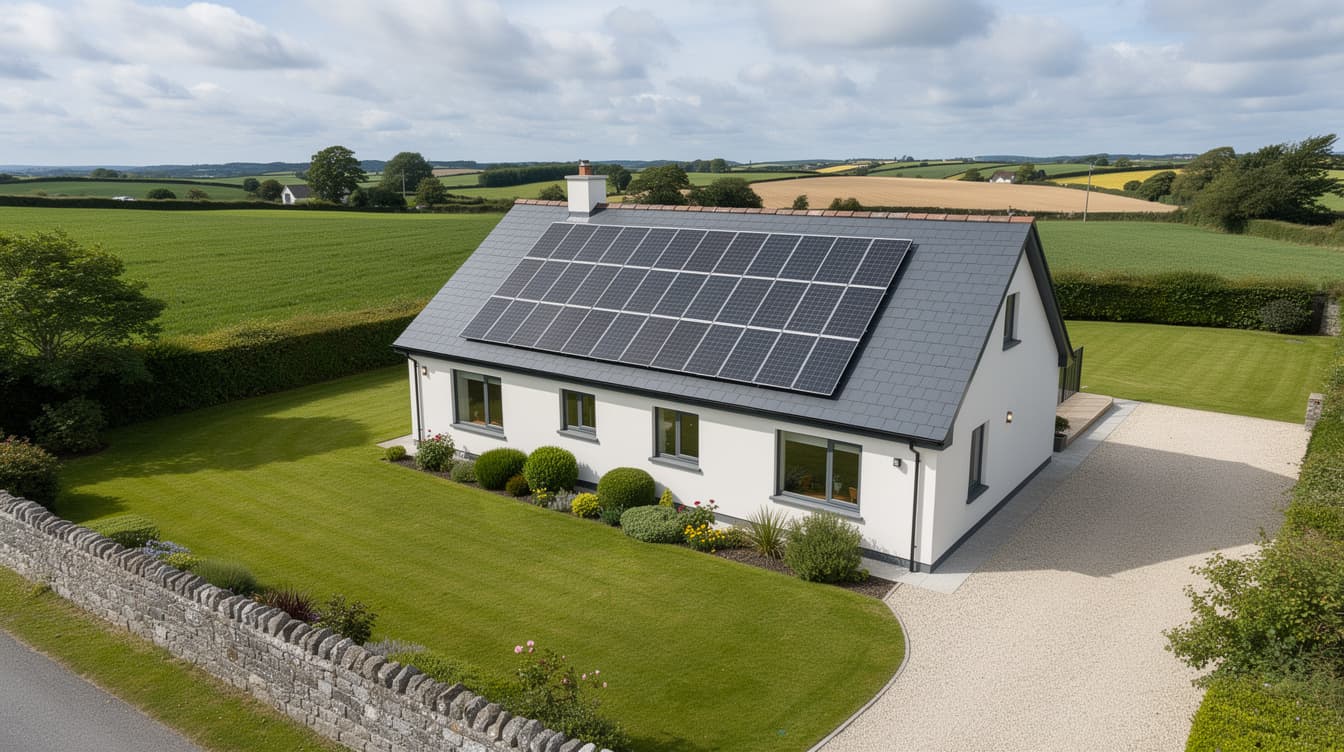
Solar Panel System Sizes Ireland 2026: 2kW vs 4kW vs 6kW vs 8kW vs 10kW Cost & Output Compared
Solar Panel System Sizes Ireland 2026: 2kW vs 4kW vs 6kW vs 8kW vs 10kW Cost & Output Compared
Picking the right system size is the single most important decision in an Irish solar quote. Too small and you'll undershoot daytime use; too big and you'll dump cheap kWh to the grid for 19.5c. This guide compares 2kW, 4kW, 6kW, 8kW and 10kW systems across cost, annual output, panel count, roof space, payback and best-fit households — with real 2026 numbers.
Most Irish quotes default to one of five system sizes: 2kW, 4kW, 6kW, 8kW or 10kW. Underneath each label sits the same maths — panel count, inverter rating, annual yield, SEAI grant cap, and self-consumption profile — but the right answer for a 2-bed terrace is wildly different from the right answer for a 5-bed detached with two electric cars. This guide does the comparison properly so you can match your size to your house, not your installer's stock.
The 2026 system-size cheat sheet
| System | Panels (440W) | Roof Space | Installed Cost | SEAI Grant | Net Cost | Annual kWh |
|---|---|---|---|---|---|---|
| 2kW | 5 | ~10 m² | €6,500 | €700 | €5,800 | ~1,800 |
| 4kW | 9–10 | ~18–20 m² | €8,500 | €1,500 | €7,000 | ~3,600 |
| 6kW | 14 | ~28 m² | €10,500 | €1,800 | €8,700 | ~5,400 |
| 8kW | 18 | ~36 m² | €13,000 | €1,800 | €11,200 | ~7,200 |
| 10kW | 22–23 | ~45 m² | €15,500 | €1,800 | €13,700 | ~9,000 |
Costs are installed prices including 0% VAT, scaffolding, NC6 grid notification and a hybrid inverter. SEAI grant capped at €1,800 for systems ≥6kWp (max 2026 cap). Annual yield assumes 900 kWh/kWp Irish average with south-facing 30° roof.
What “kW” actually means on a solar quote
The kW number you'll see (2kW, 4kW, 6kW, etc.) is the peak DC output — technically “kWp” or kilowatt-peak — measured under Standard Test Conditions (25°C, 1000 W/m² irradiance, AM1.5 spectrum). Ireland never sees those conditions. What you actually get is roughly:
- 900 kWh per installed kWp per year for a south-facing, 30° pitch, unshaded Irish roof
- 750–820 kWh/kWp for east- or west-facing roofs
- 650–750 kWh/kWp for north-of-east or north-of-west, or pitched at 15° or 45°
That single rule of thumb — “900 kWh per kWp per year” — is what every cost-comparison in this guide is built on. Your installer's quote should show you the same number for your specific roof orientation and tilt.
2kW system: when is it ever right?
A 2kW system is unusual in 2026 because the SEAI grant covers all the way to 6kWp. Why would you cap yourself at 2kW? Three legitimate reasons:
- Tiny roof. A 1-bed terrace, an apartment with shared roof rights, or a heavily-shaded property where only a small panel area is realistic.
- Bridging install. You're planning a major retrofit in 2–3 years and want minimal solar now, expandable later (a 5kW hybrid inverter with only 2kW of panels has room to grow).
- Holiday home / rental. Low daytime occupancy means a 2kW system covers fridge, freezer, and standby loads without exporting much to the grid.
Best fit: 1-bed homes, very small roofs, properties already on time-of-use tariffs. Avoid if: you have an EV, a heat pump, or anyone home daytime — you'll undersize badly. Annual savings: €400–€550. Payback: 11–14 years.
Ready to Go Solar?
Get your free personalised quote from SEAI-registered installers.
4kW system: the Irish sweet spot for 2- and 3-bed homes
4kW (typically 9 or 10 × 440W panels) is the most-sold residential system in Ireland in 2026 and for good reason. It fits comfortably on a typical 3-bed semi south or west pitch, qualifies for the full SEAI grant tier, and the annual yield matches the typical 3,800–4,500 kWh/year Irish household demand almost exactly.
The trap: matching annual yield to annual demand does not mean you save 100% of your bill. Most of your generation arrives midday May–August when you might not be home. Real-world self-consumption (the share of generation you use directly) is 30–45% without storage, climbing to 65–80% with a 5kWh battery.
Annual savings (no battery): €750–€1,050. With 5kWh battery: €1,100–€1,400. Payback: 6–9 years. Best fit: 3-bed semi-detached, occupant working from home 2+ days/week, no EV (or just one charged on cheap night rate).
6kW system: the EV+heat pump sweet spot
Once you add an EV or a heat pump to a household, the math swings hard in favour of going bigger. A 6kW system generates ~5,400 kWh/year — enough to cover the original household demand plus roughly 6,000–7,000 miles/year of EV driving (assumes 4 miles/kWh and a charger that opportunistically pulls from surplus solar).
The 6kW size also marks the upper limit of the residential SEAI grant. Above 6kWp, your subsidy is fixed at €1,800 — you can install up to 10kW and still get the same grant, you just absorb more capex per added kW.
For most 3- to 4-bed houses with one electric car or a heat pump (or planning either within 18 months), 6kW is the sweet-spot 2026 system. Annual savings: €1,100–€1,500 (no battery), €1,500–€1,900 with battery. Payback: 6–8 years.
8kW system: detached homes with multi-occupancy or two cars
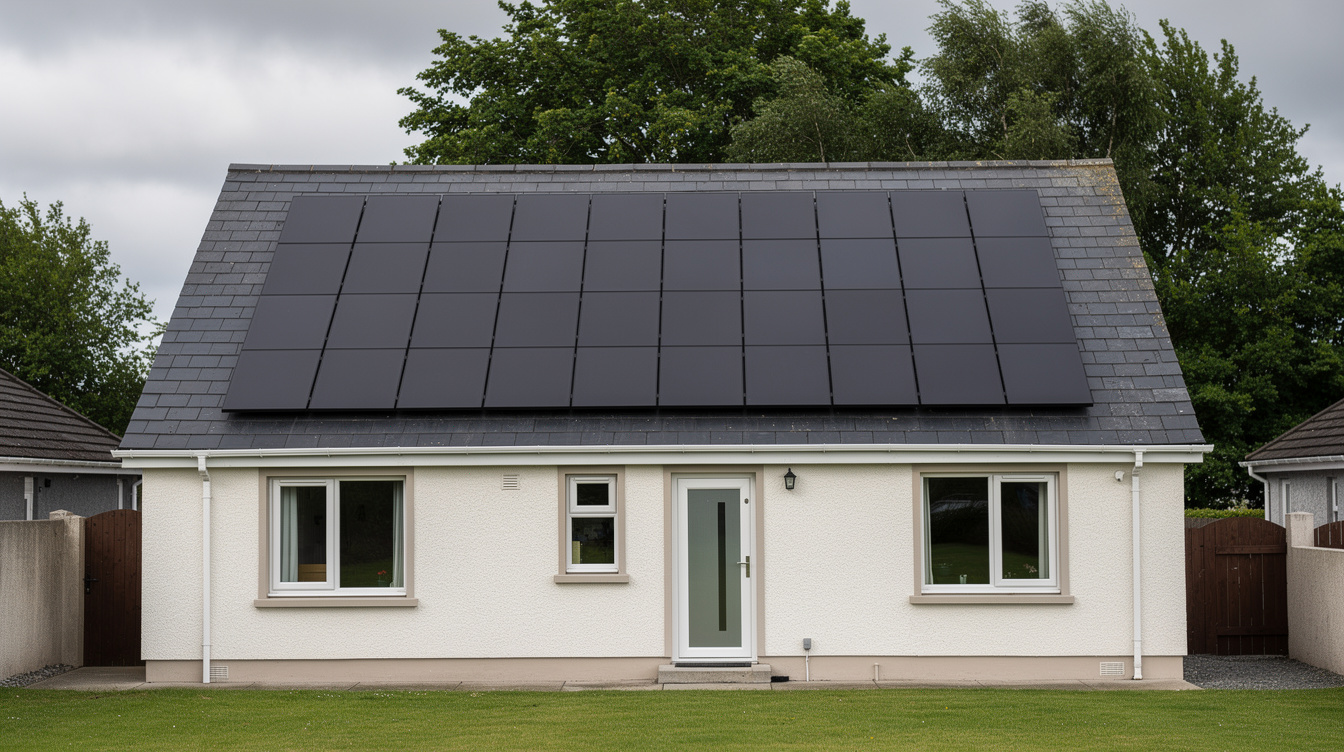
8kW (typically 18 × 440W panels) needs ~36m² of unshaded roof — equivalent to most of one side of a 4- or 5-bed detached. The case for going from 6kW to 8kW rests on three specific factors:
- You have or will have two electric vehicles. Two EVs at typical Irish mileage need ~5,000 kWh/year on their own.
- You have a heat pump and a power diverter to the immersion. That's 6,000+ kWh of in-house electrical load that benefits from being met directly by solar.
- You're sizing for future-proofing. CEG (Clean Export Guarantee) tariffs are stable at ~19c/kWh in 2026 but uncertain longer-term; producing more lets you adapt to either direction.
Roof space is the gating constraint at 8kW. If you only have one good roof aspect (say, south-west) with 20m², you'll need to use a secondary aspect (east or west pitch) to fit the remaining panels — an experienced installer will design this with a multi-MPPT or hybrid inverter to handle the production-curve mismatch. Annual savings: €1,400–€1,900. Payback: 7–9 years.
10kW system: the max residential install in Ireland 2026
10kW is effectively the ceiling for domestic single-phase installs under ESB Networks' NC6 (Notification of Connection) form — above 10kVA you need full prior consent (NC7) and frequently a three-phase upgrade. For homes that have or will have:
- Two EVs charging frequently
- An air-to-water heat pump
- A 10kWh+ battery
- Possibly a swimming pool, sauna, or workshop
...a 10kW system makes the numbers work. You generate enough to power the whole house in summer and meaningfully offset winter draw. Annual yield ~9,000 kWh against a typical “all-electric” Irish household demand of 9,000–11,000 kWh/year. That's near-net-zero electricity on an annual basis.
Catches at 10kW: three-phase supply often required (single-phase export limits sit at 6kVA in some ESB networks), inverter cost jumps materially, and roof space becomes the absolute constraint. A 22-panel array needs ~45m² of unshaded roof — that's nearly the entire south or west pitch of a standard detached. Annual savings: €1,700–€2,400. Payback: 7–10 years.
How to match system size to your household
Skip the per-kW math. Answer four questions instead:
| Your situation | Recommended size |
|---|---|
| 1- or 2-bed terrace or apartment with shared roof | 2–3kW |
| 3-bed semi, no EV, gas/oil heating, normal occupancy | 4kW |
| 3-bed semi, one EV OR a heat pump | 5–6kW |
| 4-bed semi/detached, one EV + heat pump or immersion diverter | 6–7kW |
| 4–5 bed detached, two EVs, gas heating, high daytime use | 7–8kW |
| Large detached, all-electric, two EVs, heat pump, battery, big roof | 8–10kW |
The single biggest mistake is undersizing because you only look at current bills. Your bills will increase when you electrify (heat pump, EV, induction hob) — size for the house you'll have in 3–5 years, not the house you have today.
What 1kW of solar costs — the marginal pricing rule
One of the most-searched questions in Ireland is “what does 1kW of solar cost?” The unhelpful but honest answer is “there's no such thing as a 1kW install.” The economics break down below 2kW because scaffolding, electrical work, NC6 paperwork, inverter base cost, and travel are basically fixed.
The useful number is the marginal cost per kW above your base system:
- Adding 1kW to a 4kW system: ~€750–€1,000 extra (2–3 panels, same inverter, same scaffolding)
- Adding 1kW to a 6kW system: ~€850–€1,100 extra (often pushes you to a bigger inverter)
- Adding 1kW to an 8kW system: ~€900–€1,200 (closer to roof-space limits)
This is why “go one size bigger than you think” is reliably the cheapest mistake to make. Each extra kW pays for itself in 5–7 years at current export tariffs, and the SEAI grant cap of €1,800 has already been hit by 6kW — so every extra kW above 6kWp comes out of your own pocket but at the marginal cost above, not the system-average cost.
What about 100kW — commercial-scale systems?
100kW is firmly commercial territory in Ireland. You're looking at 220+ panels covering roughly 450m² of roof — a warehouse, large agricultural barn, hotel, or industrial building. The economics are very different:
- No SEAI domestic grant. Instead, business-grade ACA (Accelerated Capital Allowance) lets you write off 100% in year one.
- Installed prices €75,000–€110,000 (commercial pricing is per-kWp lower than residential)
- Annual yield ~90,000 kWh
- NC7 grid connection required, often with three-phase upgrade
- Payback 4–6 years for businesses with high daytime usage
If you're researching 100kW for a domestic install, you're researching the wrong size — you almost certainly don't need that much. If you're researching it for a business, see our commercial solar guide for the full breakdown.
Don't forget battery sizing
System size only tells half the story. Without a battery, every kWh your panels make that you don't immediately use gets exported at 19.5c (CEG tariff, 2026 average). With a battery, you store that surplus and use it after sunset at 34.5c saved.
Match your battery to your system size — not the other way round:
| Solar Size | Battery Size (sweet spot) | Why |
|---|---|---|
| 2–3kW | 3–5 kWh | Match daily surplus, no waste |
| 4kW | 5–8 kWh | Covers typical evening peak |
| 6kW | 8–13 kWh | Useful with EV slow-charging |
| 8kW | 10–15 kWh | Maximises self-consumption |
| 10kW | 13–20 kWh | All-electric homes, multi-zone EV |
See our 2026 battery guide for brand and chemistry comparisons.
Ready to Go Solar?
Get a quote sized properly for your house, lifestyle, and 3-year plans — not your installer's stock.
Frequently asked questions
How many solar panels for a 4kW system?
9 to 10 panels rated at 430W–460W (the common 2026 residential range). Older 380W panels would need 11–12 panels for the same kWp. Always size by panel watt rating, not panel count.
What size solar system do I need for 2000 kWh/month?
2,000 kWh/month = 24,000 kWh/year. At 900 kWh/kWp Irish yield, you'd need ~27kWp — well beyond domestic NC6 limits. Realistically you'd install 8–10kWp and import the rest at off-peak rates, or look at a three-phase commercial install if your demand really is that high.
Will a 6kW system fit on my 3-bed semi roof?
Usually yes if you have a south, west, east or south-east main pitch with 28m² clear (no chimneys, skylights, dormers, large vent stacks). Measure your roof pitch on Google Maps satellite view: a typical 1980s semi south-pitch is ~30m² before deductions.
Is a 10kW system worth it without a battery?
No. A 10kW system without battery will export 4,500–6,000 kWh/year at 19.5c, leaving large blocks of value on the table. If you can't afford a battery yet, install a hybrid inverter (which has battery-ready DC inputs) and add storage in year 2 or 3.
Can I add panels later to grow my system?
Yes if your inverter has headroom. A 5kW hybrid inverter can typically carry 6kWp of panels (DC oversizing rule of 1.2×); a 6kW hybrid can carry 7.2kWp. Beyond that, you'd need to upgrade the inverter. Tell your installer upfront if you want expansion room — they'll spec a bigger inverter.
Does system size affect the SEAI grant?
Yes, in tiers. The 2026 SEAI Solar PV grant pays €700 for 2kWp, €1,500 for 4kWp, and €1,800 for 6kWp and above. There's no scaling for systems >6kWp — you absorb the extra capex above that point yourself.
Is 8kW too much for an Irish house?
Not if you have or will have a heat pump and an EV. Without electrification, 8kW will overproduce in summer and you'll export half of it at 19.5c. The break-even point is roughly 5,500 kWh/year of household electricity demand — above that, 8kW is justified.
Ready to Go Solar?
Get your free personalised quote from SEAI-registered installers in your county.
Further reading
Related Articles
Solar Panel System Cost by Number of Panels Ireland 2026: 8, 12, 14, 20, 24 Panel Prices
What 8, 12, 14, 16, 20 or 24 solar panels actually cost in Ireland 2026 — net after €1,800 SEAI grant & 0% VAT, output kWh, roof area & battery add-ons.
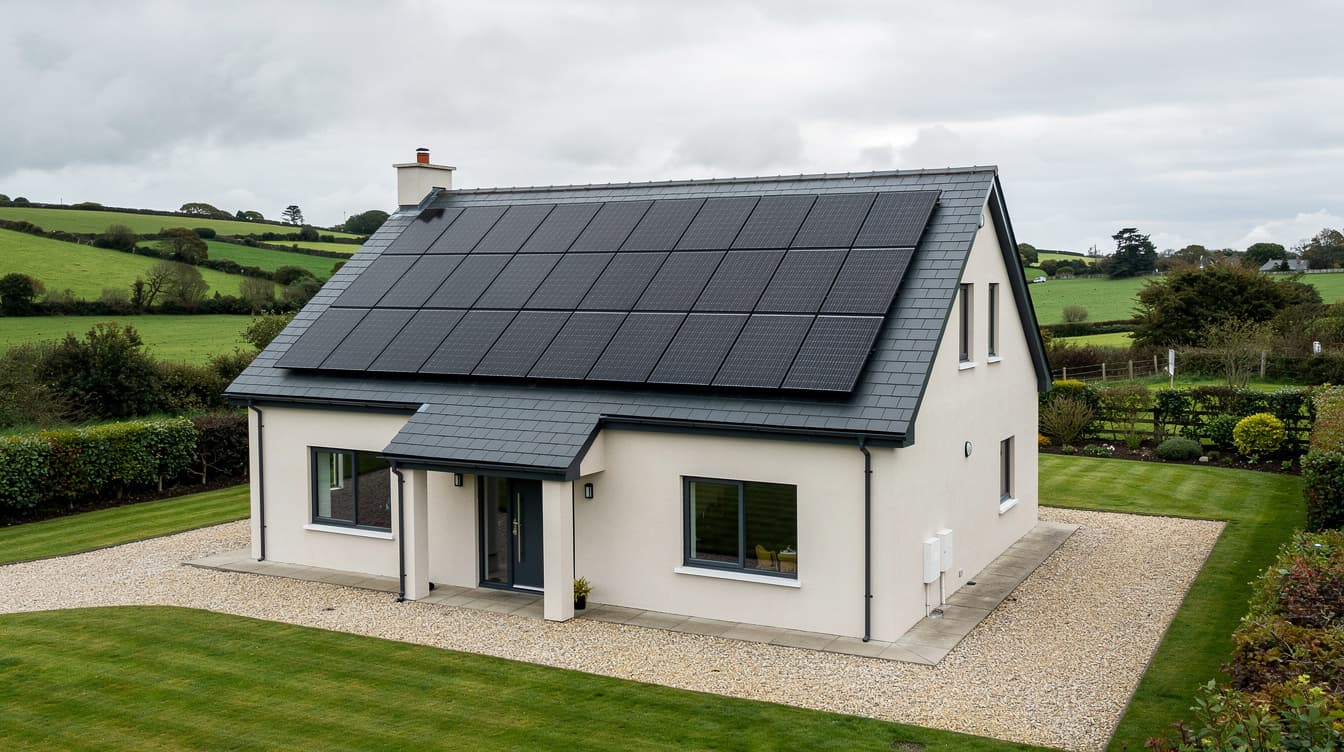
6kW Solar System Cost Ireland 2026: Real Prices, Output & Payback
6kW solar costs €7,700–€10,500 net after the €1,800 SEAI grant and 0% VAT in Ireland 2026. Real quote, 5,270 kWh/yr output, EV/battery ROI.
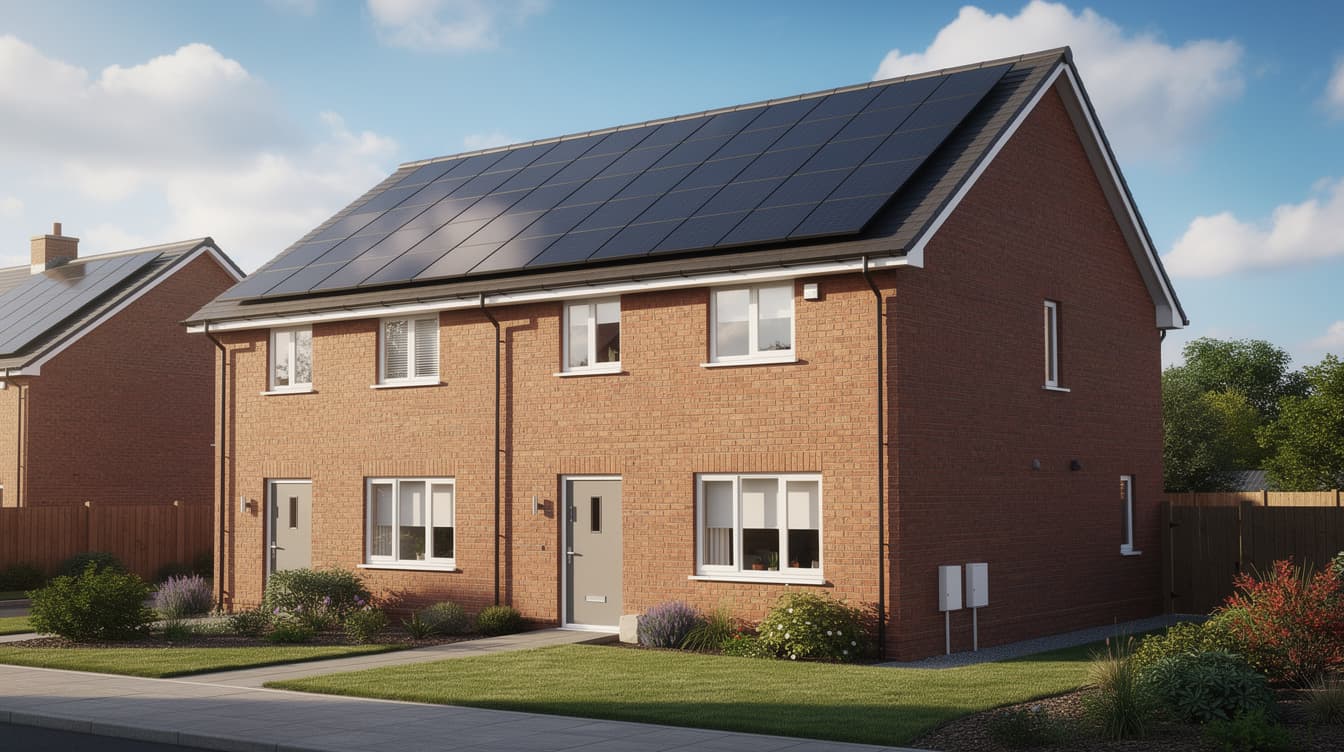
5kW Solar System Cost Ireland 2026: Real Prices, Output & 25-Year ROI
5kW solar system costs €6,700–€9,200 net after the €1,800 SEAI grant and 0% VAT in Ireland 2026. Full itemised breakdown, real output data & battery ROI.