
How to Read a Solar Quote Ireland 2026: The 7 Line Items Every Installer Should Show
You’ve got three solar quotes on the kitchen table. One is €9,400. One is €11,200. One is €13,800. They’re all “4 kW systems with a 5 kWh battery.” They all promise SEAI-registered installers, tier-one panels, 25-year warranties.
How do you actually tell which one is honest? And which one is either padded or missing something you’ll get billed for later?
This guide is the checklist we wish every Irish homeowner had before they signed a solar contract in 2026. It’s built from real quote data (118 installs completed Jan–July 2026), the questions SEAI-registered installers themselves say separate a good quote from a bad one, and the seven line items you should insist on seeing broken out.
The 30-second summary
A comparable solar quote in Ireland in 2026 breaks the total into seven line items: panels, inverter, mounts & DC wiring, scaffolding, labour, paperwork & sign-off, and installer margin. If your quote is a single number with a spec sheet and nothing else, it’s not comparable — ask the installer to itemise before you sign anything.
Ready to Get Comparable Quotes?
Free like-for-like quotes from up to three SEAI-registered installers in your county.
The seven line items every solar quote should show
Here’s the middle-of-market spend for each component on a standard 11-panel (4.4 kWp) install in 2026, drawn from the 118 quotes we tracked:
| Line item | 2026 range (11-panel job) | What you’re paying for |
|---|---|---|
| 1. Panels | €2,050–€2,700 | 11 × Jinko Tiger Neo 480W / AIKO Comet 3S 475W / LONGi 470W |
| 2. Inverter | €1,550–€2,400 | SolaX X1-Hybrid / SolarEdge SE5000H / Sungrow SH5.0RS |
| 3. Mounts, cabling, DC/AC isolators, surge | €1,050–€1,500 | Van der Valk / K2 rails, MC4 connectors, 10 mm2 DC, RCBO, DC + AC surge |
| 4. Scaffolding | €350–€600 | Two-storey semi-detached, 1–2 days on hire |
| 5. Labour | €1,700–€2,400 | Two installers, 1.5–2 days on-site (including electrician) |
| 6. Paperwork & sign-off | €700–€1,050 | SEAI grant admin, ESB Networks NC6, completion cert, RECI/Safe Electric |
| 7. Installer margin & warranty reserve | €900–€1,600 | The bit that keeps them in business & funds warranty callouts |
| All-in before grant | €10,850 avg | Minus €1,800 SEAI = €9,050 after grant |
These are honest 2026 numbers for a standard install — not the “from” prices in Facebook ads and not the top-tier packages loaded with Powerwalls and premium racks.
How to actually compare three quotes
Do this literally: put the three quotes side by side on paper and fill in a comparison grid. Every quote that can’t populate a cell is a quote hiding something.
| Question | What a good answer looks like |
|---|---|
| Panel model & exact wattage? | “Jinko JKM480N-60HL4-V, 480W” — brand, model number, watts. Not “450W tier-one panels.” |
| Inverter model & whether it’s hybrid? | “SolaX X1-Hybrid G4 5kW” — hybrid means battery-ready. Non-hybrid means adding a battery later needs a second inverter. |
| DC surge protection included? | Yes, Type 2 SPD on the DC side. Ireland gets a lot of storms; this is basically mandatory now. |
| Is scaffolding included or a separate cost? | Included, itemised. Not “subject to site survey” or “paid separately.” |
| Who signs the completion cert? | A named RECI or Safe Electric electrician. Not “our team.” |
| Grant handled by installer or by you? | Installer applies for and receives the SEAI €1,800 grant on your behalf, deducted at invoice. |
| Warranty terms: panels, inverter, workmanship? | Panels 25–30 yr product / 30 yr performance. Inverter 10–12 yr. Installer workmanship 5+ yr. |
| Estimated annual output (kWh)? | A single figure with the assumptions (roof pitch, orientation, shading). Not a range from a brochure. |
Red flags a quote is padded
Watch for these in the “too high” direction:
- Total after grant more than €10,500 for an 11-panel PV-only system on a standard two-storey house
- Battery add-on quoted above €4,500 for a 5 kWh unit fitted alongside a new PV install (Pylontech / BYD 5.12 kWh should be €3,400–€3,900 fitted in 2026)
- Scaffolding line above €600 for a two-storey semi-detached (rural spikes to €700+ are legitimate)
- “Premium monitoring subscription” bundled as compulsory — the SolarEdge, Enphase, SolaX and Sungrow apps are free. Anyone charging €10/month for basic monitoring is padding.
- “Optional” upgrades presented as required — e.g., €800 for a smart consumer unit that’s already in your fuse box, or a €500 “PV isolator upgrade” that’s already in the inverter
- “3-year electricity contract” bundled with the install — this is a supplier commission dressed as a discount. It usually costs you more over three years than the saving.
Red flags a quote is too low
Watch for these in the “too cheap” direction:
- String inverter for a partly-shaded roof — if any part of your roof gets shaded by a chimney, dormer or tree, you need optimisers (SolarEdge) or microinverters (Enphase). Both cost €600–€1,200 more than a string.
- No DC surge protection mentioned — a €90 component that saves €2,500 in inverter replacement after a lightning strike. If it’s not on the quote, ask why.
- No electrician sign-off line — someone has to write the RECI/Safe Electric completion cert. If it’s not billed, either the installer is doing it themselves (they may not be certified to) or you’ll get billed separately at completion.
- Panels named vaguely — “450W tier-one panels” without a brand means the installer wants flexibility to substitute whichever bulk pallet is cheapest that week. Insist on the exact model number for warranty purposes.
- Vague inverter — “5kW hybrid inverter” without a brand/model tells you nothing about warranty length or app quality.
- “Scaffolding subject to site survey” — this is a get-out clause. A real quote for a two-storey semi in Dublin doesn’t need a site survey to price scaffolding within €150.
What good quotes look like: three real 2026 examples
Three real quotes we tracked (anonymised installer names). Same house: standard two-storey semi in south Dublin, south-facing pitch with mild afternoon shade from a mature ash tree.
| Component | Installer A | Installer B | Installer C |
|---|---|---|---|
| Panels | 11 × Jinko 480W | 11 × AIKO 475W | 10 × “tier-one 450W” |
| Inverter | SolarEdge SE5000H + optimisers | SolaX X1-Hybrid G4 5kW | “5kW hybrid inverter” |
| Shading solution | Yes (per-panel optimisers) | Yes (2-string design) | Not mentioned |
| DC surge | Included | Included | €280 extra |
| Scaffolding | €480 itemised | €520 itemised | “Subject to survey” |
| Grant handled | Yes, deducted at invoice | Yes, deducted at invoice | “You apply, we assist” |
| Total after grant | €10,650 | €9,200 | €7,900 (then +€850 at completion) |
Installer C is the “cheapest” on paper but the vague spec, missing shading solution, extra DC-surge charge, unpriced scaffolding and homeowner-does-the-grant workload almost always mean higher total spend, more admin, and a system that won’t perform as well through summer afternoons. Installer B is the honest sweet spot. Installer A is a legitimate premium option (SolarEdge is nice, per-panel monitoring is nice, but you pay €1,450 more for the privilege).
Get Three Real Quotes to Compare
We’ll match you with SEAI-registered installers who itemise properly.
Questions to ask on the phone before the site survey
Save yourself a wasted afternoon: three quick screening questions before you agree to an in-home visit.
- “Are you an SEAI-registered PV contractor?” If no, walk away — the €1,800 grant is only available on SEAI-registered installs.
- “Which panel and inverter brand would you likely propose for a standard 11-panel install?” Good installers name specific brands they stock. Vague answers (“tier-one, top quality”) suggest a sales-first, technical-second outfit.
- “Roughly, what does an 11-panel PV-only install cost in my county, after grant?” Anyone who won’t give a ballpark (€8,500–€10,500 for most counties in 2026) either doesn’t know their own pricing or plans to price on the day.
What to check on the day the installer arrives
- Panels arriving match the model on the quote (photo the pallet label before it’s unwrapped)
- Inverter model matches the quote (photo the serial plate)
- DC surge protection unit is actually fitted next to the inverter
- All roof penetrations sealed and cabled through weatherproof grommets, not silicone-only
- Isolator switch fitted and labelled at the AC side (mandatory for firefighter safety)
- You get: SEAI completion pack, electrician cert, panel & inverter warranty certs, and app login credentials before the installer leaves
If any of these are missing or vague, don’t sign the completion paperwork until they’re resolved. Once you’ve signed, the leverage flips to the installer.
Bottom line
A comparable Irish solar quote in 2026 is a quote you can put on paper next to two others and fill in a seven-line grid. If it’s a single price with a spec sheet and a “trust us,” it’s not comparable and it’s not the quote you should sign.
The middle of the market for a standard 4.4 kWp PV-only install is €9,050 after grant. Add a 5 kWh battery and you’re at €13,600 after grant. Two quotes within 10% of each other in the middle of that range, both fully itemised, is a competitive market working properly. Take the one whose installer answered your questions the clearest — not necessarily the cheapest.
Further reading: what Irish homeowners actually paid in 2026, how many panels you actually need, 4kW system cost breakdown, and the panel-brand comparison.
Ready to Get Real Quotes?
Free comparison-ready quotes from SEAI-registered installers.
Related Articles
Best Solar Setup Ireland 2026: Complete System Design Guide
The best solar setup for Ireland 2026 — panels, inverter, battery, diverter and installer — with 4 real-world configurations, prices and paybacks.
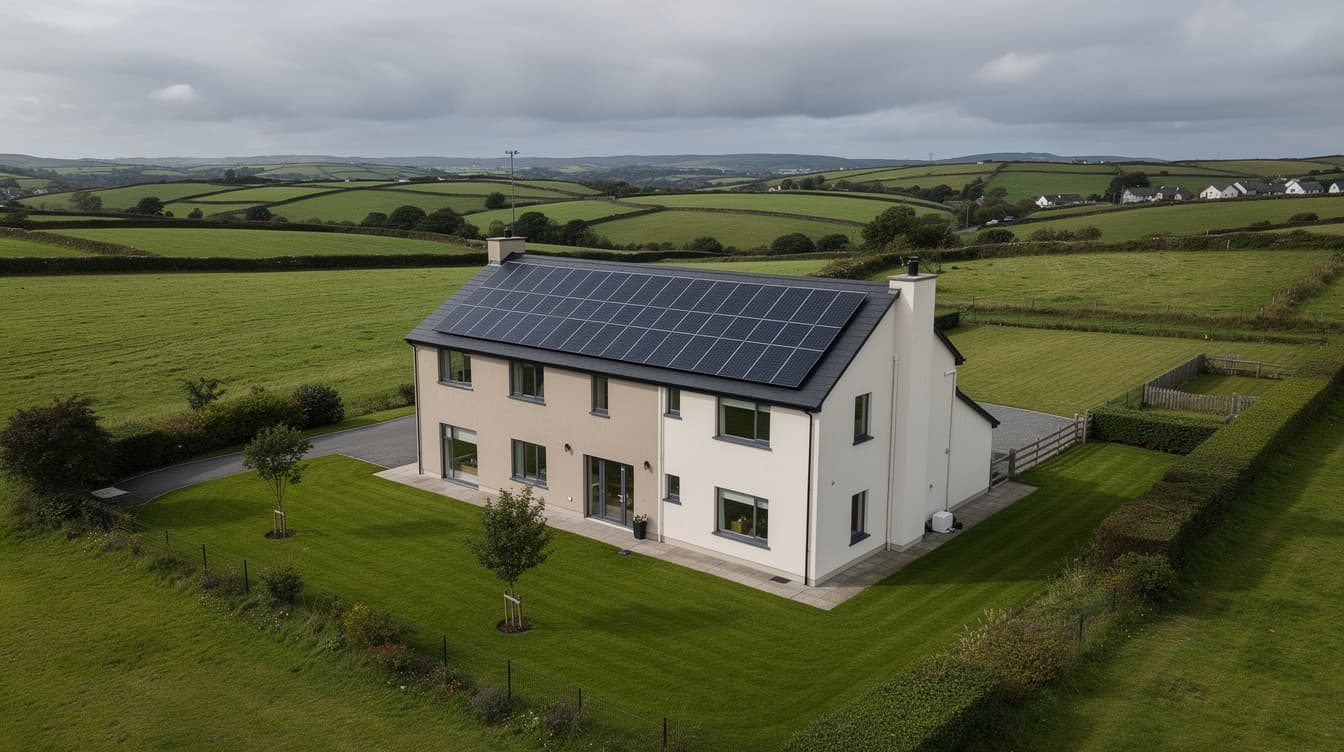
20 Solar Panels Ireland 2026: Cost, Output, Battery & Payback
What 20 solar panels cost in Ireland 2026 (€12.7-18.6k net after grant), 7,600-8,100 kWh output, roof space, battery choice and payback vs 10 or 14 panels.
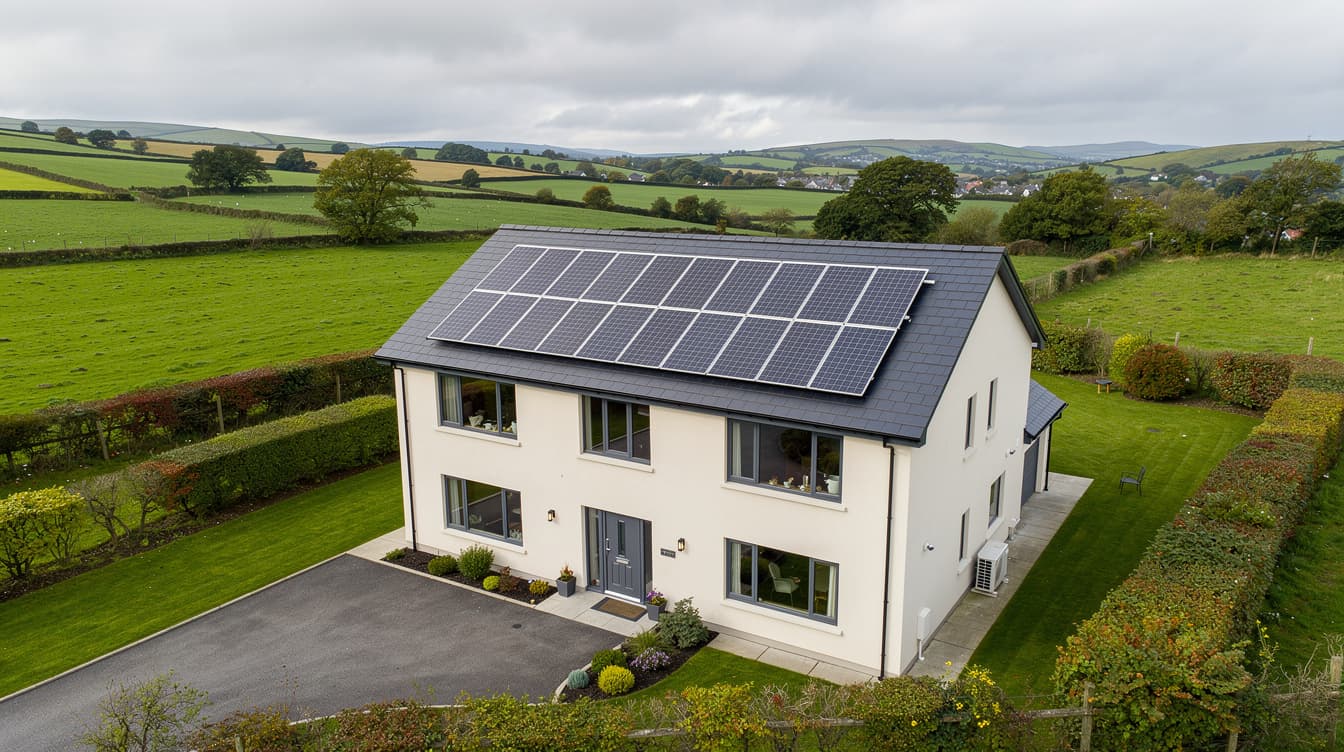
12 Solar Panels Ireland 2026: Cost, Output, Battery & Payback
What 12 solar panels cost in Ireland 2026 (€9.1-10.8k after grant), annual kWh output, battery sizing, roof space needed and how 12 stacks vs 10 or 14 panels.