
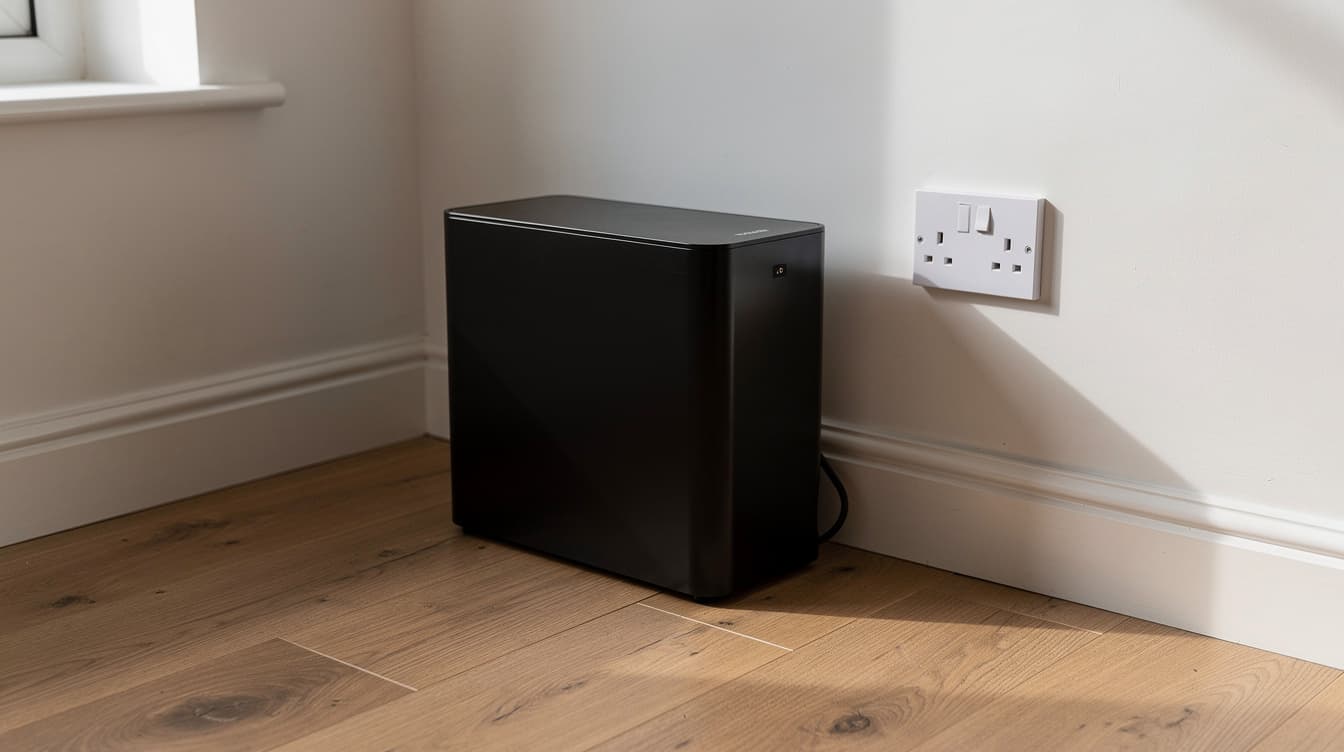
Lidl Solar Batteries Ireland 2026: €299 Tronic Battery, NC6 Hurdles & When It Lands
In May 2026, Lidl Germany did something most of the solar industry didn’t see coming: it dropped a 2.24 kWh plug-in lithium iron phosphate battery on its shelves for €299. Stock sold out in days. Three weeks later, the search query “lidl introduces affordable solar batteries despite regulatory hurdles in ireland” started showing up in Irish Google Search Console data at over 900 impressions a month. Irish households were paying attention.
So here’s the honest 2026 answer: you cannot buy the Lidl Tronic 2.24 kWh battery in Ireland yet, and even if Lidl Ireland did stock it tomorrow, you couldn’t legally connect it to your house wiring in the same plug-and-play way Germans can. The reason is a piece of paperwork called the NC6, and it’s the same regulatory wall that’s held back the Lidl plug-in solar panels Irish shoppers have been asking about for two years.
This guide explains exactly what the Lidl Tronic battery is, what it’s technically capable of, why it can’t arrive on Irish shelves without a regulatory shift, and — most usefully — what your three practical options are if you actually want home battery storage in Ireland right now in 2026.
The Lidl Tronic 2.24 kWh battery: what Germany got
The unit launched on 21 May 2026 across Lidl’s German stores under Lidl’s own “Tronic” private-label brand. It’s explicitly designed to pair with the “Balkonkraftwerk” (balcony solar) market that’s exploded in Germany since the country legalised wall-socket grid-tied solar in 2024.
| Spec | Lidl Tronic Solar Battery 2.24 |
|---|---|
| Usable capacity | 2.24 kWh (LFP — lithium iron phosphate) |
| Solar input | 1,000 W DC (designed for 800–1,000 W of plug-in panels) |
| AC output | 800 W via standard Schuko socket |
| Chemistry | LFP — 6,000+ cycle rating, low fire risk vs NMC |
| Dimensions / weight | 310 × 170 × 350 mm / 19.8 kg |
| Connectivity | Bluetooth 4.2, 2.4 GHz WiFi, “Lidl Home” app |
| Price (Germany, May 2026) | €299 base / €199 with Lidl Plus app discount / +€100 for app-controlled version |
| Inverter included? | No — battery only. Microinverter + panels sold separately. |
| Microinverter compatibility | Compatible with ~99% of common balcony-solar microinverters |
Let’s put that €299 number in context. A standalone 2.24 kWh of LFP capacity bought through a normal Irish installer in 2026 will cost you somewhere between €1,400 and €2,100 fitted — even before the SEAI grant. Lidl is selling the same chemistry for under a fifth of that price, with two huge caveats: (1) it’s small — a normal Irish home uses 8–14 kWh a day, so 2.24 kWh handles a single evening’s lighting, fridge cycling and a kettle’s worth of cooking, no more; and (2) in Germany it plugs into a wall socket because German law allows that. Ireland’s law doesn’t.
Why the Lidl battery can’t legally land in Ireland yet
This is the part nobody on the Irish side of the conversation explains clearly. Here’s how it actually works.
Any device that pushes electricity into an Irish house’s wiring through a socket — not just a fixed inverter on a wall, but anything that can output into the AC ring main — is treated by ESB Networks as a microgenerator. Microgenerators on Irish low-voltage networks are governed by the NC6 form: a mandatory notification, signed by a Safe Electric-registered electrician (RECI/ECSSA), declaring the device, its inverter, its anti-islanding protection, and the homeowner’s MPRN.
The NC6 process exists for two real reasons:
- Line worker safety. If the grid goes down for maintenance, every microgenerator on that line must instantly stop exporting. ESB linemen need to assume a dead line is genuinely dead. Without anti-islanding circuitry signed off by a qualified electrician, you can kill someone.
- Local network capacity. ESB Networks needs to know how much micro-generation is on each LV transformer so it can stop overloading the grid in solar-rich neighbourhoods.
The Lidl Tronic in its German configuration exports up to 800 W into the ring main through a Schuko plug. That technically makes it a microgenerator. The CE-marked unit does have anti-islanding built into its inverter logic — Germany requires it — but Irish law doesn’t care about CE marking on this point. The grid operator wants an electrician’s signature on an NC6 form, a system-specific witness test, and a microgen registration tied to the MPRN. None of that happens when you walk a 19.8 kg cardboard box out of Lidl.
So even if Lidl Ireland imported pallets of these tomorrow and put them on the “Middle of Lidl” aisle, every Irish customer would either need to (a) pay an electrician €200–€400 to fill in an NC6, witness-test the device and update their microgen registration, which destroys most of the €299 price advantage, or (b) use the battery completely off-grid — charging it from a balcony panel and powering loads from it without it ever touching the house wiring. Option (b) is legal but limits the battery to standalone appliances on an extension lead.
Want a Battery That Actually Connects to Your Home?
SEAI-registered installers can size a proper 5–10 kWh battery for your usage pattern and handle the NC6 paperwork. Get a free, no-obligation quote.
The Schuko socket question: what “plug-in” actually means
A lot of the Irish search interest around the Lidl battery comes from a misunderstanding of the German market. In Germany, you legally can buy a balcony solar kit, plug it into your kitchen Schuko socket, and watch your meter spin backwards while the sun shines. The 2024 German “Solarpaket I” legislation made this explicit: balcony solar up to 800 W AC is exempt from the standard grid-connection process. The Lidl Tronic 2.24 kWh battery is just the next logical product — store the daytime balcony surplus, push it back into the ring main at sunset.
Ireland never passed an equivalent exemption. Plug-in solar in Ireland is still treated under the standard microgenerator framework. The Commission for Regulation of Utilities (CRU) is currently consulting on a simplified pathway for sub-800 W devices — that consultation is the regulatory event most likely to unlock the Lidl battery for Irish retail. Until it concludes (best estimate: late 2026 or Q1 2027), the legal status hasn’t changed.
So when does the Lidl battery actually arrive in Ireland?
Three realistic windows:
| Window | What needs to happen | Probability |
|---|---|---|
| Q4 2026 (Sep–Nov) | Lidl Ireland stocks it as an “off-grid only” SKU, with explicit packaging warning against socket connection. Same approach Lidl has trialled with portable power stations. | Medium — possible but legally awkward |
| Q1–Q2 2027 | CRU publishes its revised microgen framework. ESB Networks introduces a simplified sub-800 W self-certify pathway. Lidl Ireland imports the full Tronic SKU. | High — most likely realistic scenario |
| 2027+ | No regulatory movement. Lidl Ireland never stocks the product. Irish households continue buying through specialist solar shops with installer-fitted batteries. | Low |
Two things make the Q1–Q2 2027 scenario most credible. First, the CRU’s 2024 microgeneration capacity raise (which lifted the single-phase limit to 6 kW and three-phase to 11 kW) demonstrated that the regulator is willing to update the framework when there’s public pressure. Second, balcony solar and plug-in batteries have already become a measurable line of public Oireachtas correspondence in 2026.
Three options if you actually want battery storage in Ireland right now
If your reason for searching for the Lidl battery was “I want to store cheap night-rate electricity or solar surplus and use it later,” you have three real paths in 2026.
Option 1: Wait for Lidl (probably 2027)
If your electricity bill is moderate (under €150/month) and you’re renting or living in a small home, waiting until the CRU consultation concludes and the Tronic legitimately arrives in Lidl Ireland is a perfectly defensible choice. You’re foregoing maybe 18–30 months of storage benefit — on a 2.24 kWh battery shifting one evening’s worth of cheap-rate night electricity (let’s say 4 kWh/day at a 22c day vs. 11c night spread), that’s a foregone saving of roughly €160–€240/year. Worth the wait if cash flow matters.
Option 2: Buy a proper hybrid battery from a SEAI installer (best for owner-occupiers with high usage)
If you own your home, use 10+ kWh a day and have either solar panels already or are getting them, a proper 5–10 kWh hybrid battery from a SEAI-registered installer is dramatically more useful than a 2.24 kWh plug-in. Typical 2026 pricing:
- 5 kWh DC-coupled (e.g. GivEnergy, Huawei LUNA, Sungrow): €3,800–€5,200 fitted, including NC6, witness test and warranty registration.
- 10 kWh DC-coupled (e.g. Tesla Powerwall 3, Huawei LUNA stacked, Pylontech): €7,800–€11,500 fitted.
- AC-coupled retrofit on existing PV: €3,400–€6,000 for 5–6 kWh depending on inverter compatibility.
Yes, that’s 12–40× the Lidl price. But you’re storing 2–5× the energy, the battery is integrated into your home wiring (so it powers your full house, not just appliances on an extension lead), and you’re moving 8–12 kWh of grid-import to night-rate or to solar self-consumption, not 2 kWh. Real payback on a 10 kWh battery for a household using 14+ kWh/day with solar is currently 6–8 years in Ireland, well within the 10-year battery warranty.
Option 3: Off-grid battery from a balcony panel (for renters and apartment dwellers)
You can legally buy a portable power station (EcoFlow, Bluetti, Anker, Jackery) of similar capacity to the Lidl Tronic today. Pair it with a balcony solar panel that charges the battery via its DC input. Then run lamps, laptop, phone chargers, even a small fridge from the battery’s built-in AC outlet via an extension lead. Nothing connects to your house wiring. No NC6 needed. Fully legal.
Pricing for the equivalent off-grid setup (1.5–2.5 kWh portable battery + 200–400 W balcony panel): €850–€1,400 in 2026. More expensive than the Lidl Tronic will be when it lands, but available now and immune to whatever the CRU does next year. Our plug-in solar panels Ireland guide and our dedicated apartment solar guide cover this path in detail.
Lidl Tronic vs. a proper home battery: head-to-head
| Lidl Tronic 2.24 kWh | SEAI-installed 10 kWh hybrid | |
|---|---|---|
| Capacity | 2.24 kWh | 10 kWh (4.5× bigger) |
| Daily cycling potential | ~2 kWh/day stored | 8–10 kWh/day stored |
| House integration | No (off-grid only in Ireland) | Yes — powers full home circuits |
| Time-of-use shifting | Limited to extension-lead loads | Whole house night-rate to day shift |
| Solar surplus capture | Up to 1,000 W input | Up to inverter rating (typ. 5–6 kW) |
| Warranty | 2 years (Lidl standard) | 10 years on cells, throughput-based |
| Upfront cost | ~€299–€500 once Irish-available | €7,800–€11,500 fitted |
| Annual savings (typical Irish home) | €80–€160 | €1,100–€1,700 |
| Payback | 2–4 years (small absolute saving) | 6–8 years (large absolute saving) |
Both products make sense for different households. The Lidl battery is the right call for renters, small apartments, and anyone whose electricity bill is already under €100/month. The full hybrid system is the right call for any owner-occupier already running €150+ a month and is the only path if you actually want backup power during outages (almost no plug-in battery has true islanding mode, while every modern hybrid does).
What about the regulatory hurdle — is this changing?
The CRU’s microgeneration framework was last comprehensively updated in 2021 with the introduction of the Clean Export Guarantee, then partially extended in late 2024 to raise the export-power limits. The 2026 consultation that’s currently open (closing later in 2026) explicitly considers:
- A simplified self-notification pathway for sub-800 W AC microgenerators (the Lidl Tronic falls into this category).
- Whether type-tested, CE-marked plug-in units with built-in anti-islanding can bypass the witness-test requirement.
- Whether Schuko-socket grid-tied solar and batteries should be permitted on a permanent basis, conditional on registration via a simpler online process tied to MPRN.
None of this is decided. But the framing — treating plug-in solar and storage as a low-risk consumer category rather than a microgenerator category — is what would unlock Lidl-Ireland-scale retail. The CEER (the EU regulator forum) has also flagged Ireland as one of the last EU member states without a simplified balcony-solar pathway, which adds external pressure.
Sizing a Battery for Your Actual Home Usage?
Use our calculator to estimate the system size, battery capacity and payback for your specific eircode and electricity usage.
Frequently asked questions
Can I import the Lidl Tronic battery from Lidl Germany myself?
Technically yes — you can have it shipped to an Irish address through a parcel-forwarding service for around €180–€240 in shipping and forwarding. But you still can’t legally plug it into a Schuko socket connected to your house wiring. You can only use it standalone, charged from a balcony panel and powering devices via extension lead. At that point you’re carrying 19.8 kg of LFP across Europe for a use case a much smaller portable power station already handles.
Does Lidl Ireland sell any home battery storage in 2026?
No. As of mid-2026, Lidl Ireland’s “Middle of Lidl” non-food range includes small portable power banks, USB power stations, and inverter generators — none of which are home battery storage. Lidl Ireland’s social team has confirmed (October 2025 X reply to a customer query) that they have “passed interest to the buying team” for plug-in solar but have no confirmed date.
What’s the cheapest legal way to add storage to an existing Irish solar system?
An AC-coupled retrofit battery on an existing PV inverter. A 5–6 kWh AC-coupled battery (GivEnergy AC3, Sigenergy, Tesla Powerwall 3 acting as AC-coupled) fitted by a SEAI installer typically lands at €3,400–€5,200. Your existing inverter and panels stay as they are; the battery sits between them and the grid. No need to replace the inverter. See our guide to the best solar batteries available in Ireland in 2026.
Will the Lidl battery qualify for the SEAI grant?
No. The SEAI Solar PV grant of €1,800 covers panels and inverter only, and only when fitted by a SEAI-registered installer using SEAI Triple-E listed equipment. The Lidl Tronic is not on that list and isn’t designed to be installed by SEAI registered installers. If you want grant-eligible storage, it has to be an installer-fitted SEAI-listed system.
Is the LFP chemistry safe in a home?
LFP (lithium iron phosphate) is the safest mainstream lithium battery chemistry. It has dramatically higher thermal-runaway thresholds than NMC (the chemistry in most consumer electronics) and self-extinguishes rather than propagating fire. Every major Irish home battery sold by SEAI installers in 2026 uses LFP. The Lidl Tronic uses the same chemistry. The safety question is therefore not about the cell — it’s about the absence of a witness test and electrical inspection that would catch faulty wiring or a damaged unit.
What happens to my CEG export payments if I add a battery?
Adding a battery typically reduces your Clean Export Guarantee export volume, because your battery captures surplus that would otherwise have gone to the grid. That sounds like a bad thing — it isn’t. The export tariff (18–25c/kWh depending on supplier in 2026) is always lower than the import tariff (28–38c/kWh), so every kWh you self-consume via battery is worth more than every kWh you export. The maths is covered in detail in our selling electricity back to the grid Ireland guide.
Where can I track the CRU consultation?
The Commission for Regulation of Utilities publishes consultation documents at cru.ie. Search for “microgeneration framework” or “plug-in solar”. The simplified-pathway consultation that affects the Lidl battery is filed under the broader 2026 microgeneration review. Public submissions are open until the closing date listed on each consultation document.
The bottom line
The Lidl Tronic 2.24 kWh battery at €299 is a genuinely good piece of consumer electronics. It’s also a real signal that mainstream European retail is taking solar storage seriously. But the search interest from Ireland is running about two regulatory steps ahead of what’s actually legal here.
If you’re an Irish homeowner whose goal is “use less grid electricity, save money,” the right move in 2026 is to either size a proper hybrid system through a SEAI installer (best ROI by a large margin), or build an off-grid balcony-panel + portable battery setup using available product (legal today, available today, modest savings). The Lidl Tronic, when and if it arrives, will be a third path that suits a specific kind of household — small, modest electricity use, owner-occupier or rental-stable. None of those three paths is wrong. The trick is matching the right one to your actual usage.
Get a Real Quote on a Proper Home Battery
SEAI-registered installers will quote you a hybrid or AC-coupled retrofit sized for your home. Free, no obligation.
Related Articles
Time of Use Tariffs & Solar Panels Ireland 2026: Smart Meter Strategy
Which Irish smart meter tariff pairs best with solar? 2026 supplier comparison, load-shifting rules, worked payback example and CEG rate gotchas.
Solar Monitoring Apps Ireland 2026: The 6 You’ll Actually Use, Compared
The six monitoring apps Irish solar homeowners actually use in 2026 — iSolarCloud, SolisCloud, mySolarEdge, Enphase, GivEnergy, FusionSolar — honestly compared.
Home Battery Storage Without Solar Panels Ireland 2026: Costs, Payback & the Grid-Arbitrage Case
Battery-only home storage in Ireland 2026: real installed costs, VAT hit vs solar+battery, 30c grid-arbitrage margin, and when it actually pays back.