
Solar Panel Faults & Repairs Ireland 2026: What Really Goes Wrong (and What It Costs)
Solar panels are one of the most reliable pieces of technology a homeowner will ever buy — but they are not fit-and-forget. Every system in Ireland eventually throws a fault, whether that's a dead inverter after year seven, a bird nest short-circuiting an optimiser, or panels producing 30% less than they should because the installer never optimised the string.
The good news: most solar faults in Ireland are diagnosable in under an hour and repairable for well under €1,000. The bad news: many homeowners don't notice a fault until months of lost generation have quietly cost them €400–€800. Your inverter won't ring you when it fails silently — that's on you to spot.
This is the 2026 field guide to what actually goes wrong on Irish rooftops, how much fixing it really costs, and how to tell whether a €600 callout is fair or a rip-off.
How to know your system has a fault (before you get a bill)
The single most common Irish solar problem isn't a broken part — it's homeowners not noticing quiet underperformance. Here are the three checks any owner can do in under two minutes:
- Open your inverter's app once a week. Every mainstream inverter (Solis, SolarEdge, Fronius, GoodWe, Growatt, Sungrow, Enphase) publishes daily generation figures. A dead panel or blown optimiser shows up immediately as a step-change drop.
- Cross-check your ESB Networks smart meter portal monthly. Compare exported kWh month-on-month against the same month last year. A drop above 15% with no weather explanation means a fault.
- Watch for the €5–€15 monthly rebate jump. Your Clean Export Guarantee (CEG) credit is the cleanest health check — if the number quietly shrinks, something is wrong upstream.
The 24-hour rule
Any single day where your system produced less than 25% of a sunny day's typical output, with no obvious weather cause, deserves an app check the same evening. Most silent inverter faults are visible in the daily curve within 24 hours.
The 8 faults Irish installers see most
Below is a working ranking based on discussions with SEAI-registered installers across Munster, Leinster and the west, plus common warranty-claim categories from the main Irish distributors. Frequencies are order-of-magnitude estimates for domestic systems installed 2020–2025.
| Fault | How common | Typical fix cost 2026 |
|---|---|---|
| Wi-Fi monitoring dropped | Very common | Free – €120 callout |
| Bird nesting shorting a string | Common | €250 – €550 (bird-proofing) |
| Isolator switch tripping | Common | €150 – €400 |
| Optimiser failure (SolarEdge / Enphase) | Uncommon | €180 – €350 per unit |
| Inverter failure (out of warranty) | Uncommon (years 8+) | €1,400 – €2,800 |
| Panel micro-cracks (storm damage) | Rare | €300 – €450 per panel |
| Water ingress at DC connectors | Rare | €200 – €500 |
| Battery cell degradation | Years 8+ | Warranty claim — if within 10yr |
Two things jump out: monitoring and bird nesting dominate everything else, and inverter failure — the expensive one everyone worries about — is actually quite rare in the first seven years thanks to standard warranties.
Fault #1: Monitoring stops (the "silent" system)
You open the app one day and there's no data since Tuesday. Nine times out of ten this is a Wi-Fi problem, not a solar problem. Router upgrades, new broadband installs, and Sky/Vodafone hub swaps all break the inverter's saved network credentials.
Fix: Reconnect the inverter to your new network from its front panel or via its Bluetooth setup app. Every major inverter brand has a step-by-step in its consumer app. It takes 10–15 minutes and costs nothing. If you can't do it yourself, an installer callout is €80–€120.
Only worry if the daily generation figures also stop — if the physical inverter unit itself has no lights on, that's fault #4 territory.
Fault #2: Bird nesting under panels
Ireland's mild, wet climate is exactly what jackdaws, starlings and pigeons want. The gap between panels and roof tiles is prime nesting real estate. Debris then blocks airflow and, occasionally, chews through DC cabling.
Signs: pigeon droppings on the gutter, feathers around the array, and a slight but persistent generation dip that doesn't recover after rain.
Fix: full perimeter mesh (galvanised, 50mm gauge) fitted by a solar installer or a specialist bird-proofing company. Cost is typically €250–€550 for a domestic system depending on array size and access. Not covered by any solar warranty. See our full write-up on bird-proofing solar panels in Ireland.
Fault #3: Isolator switch tripping
Ireland's DC and AC isolators are exposed to outdoor conditions and are a known weak point on systems installed before 2023. Moisture ingress causes intermittent tripping, which the inverter shows as an "insulation resistance" or "PV isolation" error.
Fix: replace the isolator with a properly rated IP66 unit and re-seal the gland entry. Typically €150–€400 depending on whether re-cabling is needed. Sometimes covered under installer workmanship warranty (the SEAI grant conditions require a minimum 5-year workmanship guarantee).
Need a system health-check?
Get a free quote from a SEAI-registered installer who can inspect an existing system or price a repair — no obligation.
Fault #4: Optimiser failure (SolarEdge / Enphase systems)
SolarEdge and Enphase systems put a small electronic module on each panel. That gives them huge advantages for shaded roofs — but the modules can fail individually, usually showing up in the app as one panel producing zero.
Fix: swap the failed optimiser. Under SolarEdge's standard 12-year warranty this is parts-free but labour-billable (typically €180–€250 for the callout). Enphase microinverters come with a 25-year warranty which normally covers full replacement including labour, though check your specific installer paperwork.
Note: string inverter systems (Solis, GoodWe, Growatt) don't have optimisers at all — they can't suffer this failure mode, but they're worse at handling shading. Different trade-off, not a better product.
Fault #5: Inverter failure (the expensive one)
Modern hybrid inverters have a design life of 10–15 years. Most Irish installs since 2020 come with a manufacturer warranty of 10 or 12 years standard, extendable to 20 for a fee. Failure inside warranty is a claim not a bill.
Outside warranty is where it hurts. A like-for-like hybrid inverter replacement in 2026 is €1,400–€2,800 depending on kW rating and whether the ESB grid connection paperwork (NC6) needs updating. You'll typically also lose 1–2 days of generation while switch-over happens.
Warning signs: increasingly frequent brief app dropouts, audible clicking or fan noise from the unit, and any "internal error" or "grid isolation" code that doesn't clear after a power-cycle reset.
Fault #6: Panel micro-cracks and physical damage
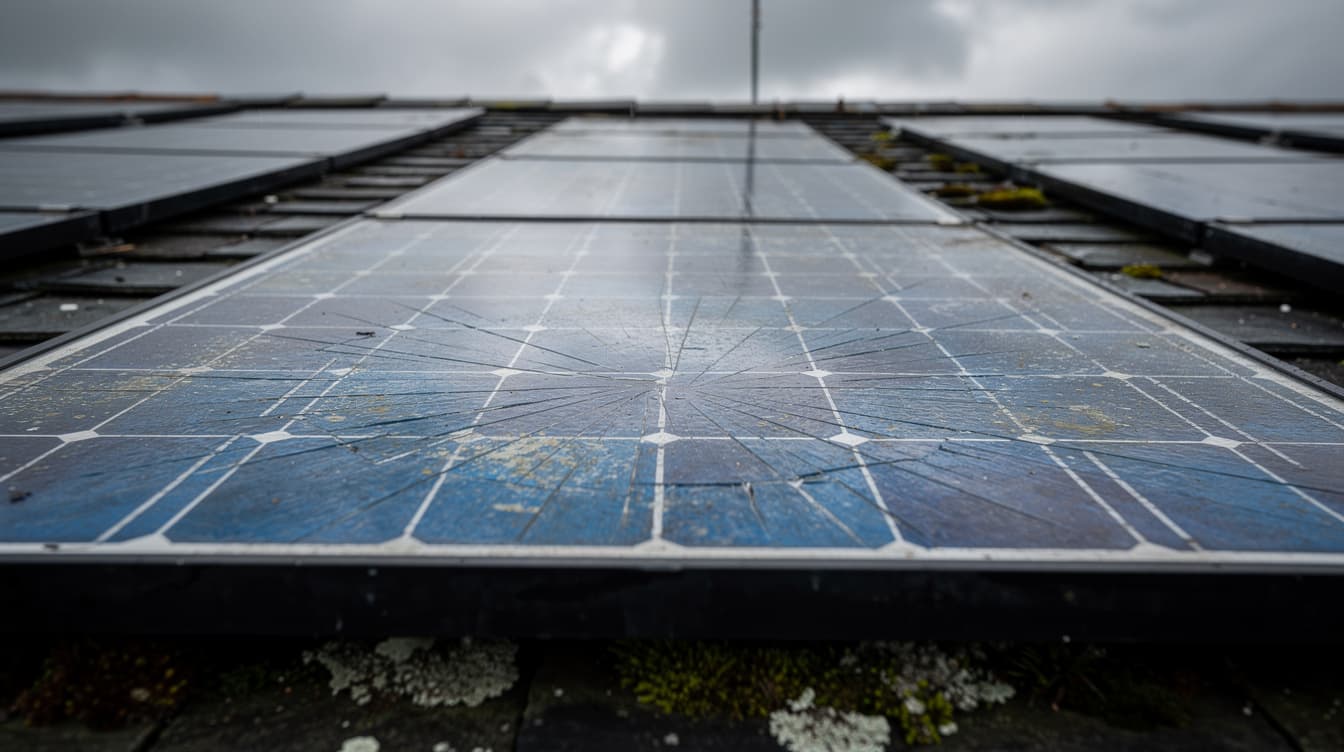
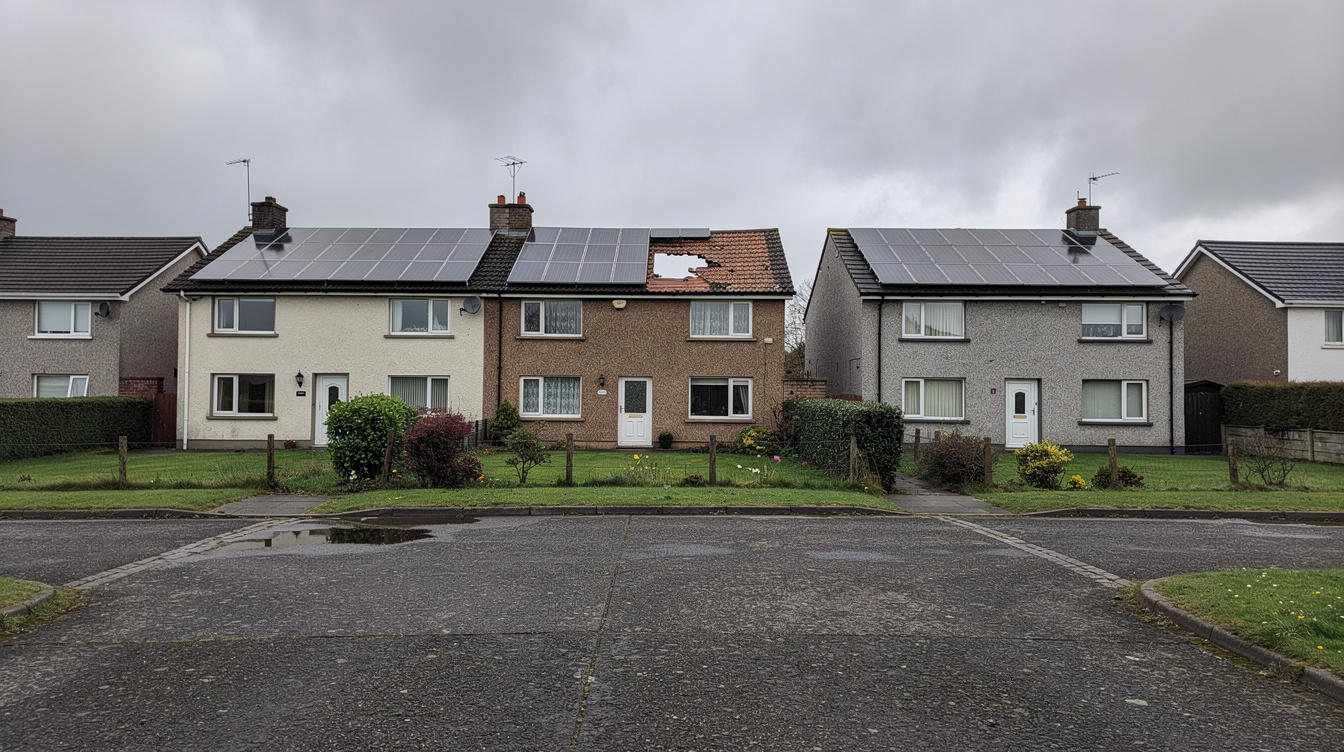
Rare but real. Ireland's storm season has produced enough hailstone strikes to matter, especially in coastal counties. A cracked panel usually still produces — just less — and gets steadily worse as moisture penetrates the crack.
Fix: single-panel replacement. Panel supply cost is €120–€180 plus installer labour €180–€270 = €300–€450 all-in. Panels come with 25-year product and 30-year performance warranties, but manufacturing defects covered under warranty are usually distinguishable from impact damage (which is not covered but often falls under home insurance).
Storm/hail damage to solar panels IS covered by most Irish home insurance policies as long as the panels are declared on the policy. If you haven't told your insurer, do so today — it's usually a nil-cost declaration.
Fault #7: Water ingress at DC connectors
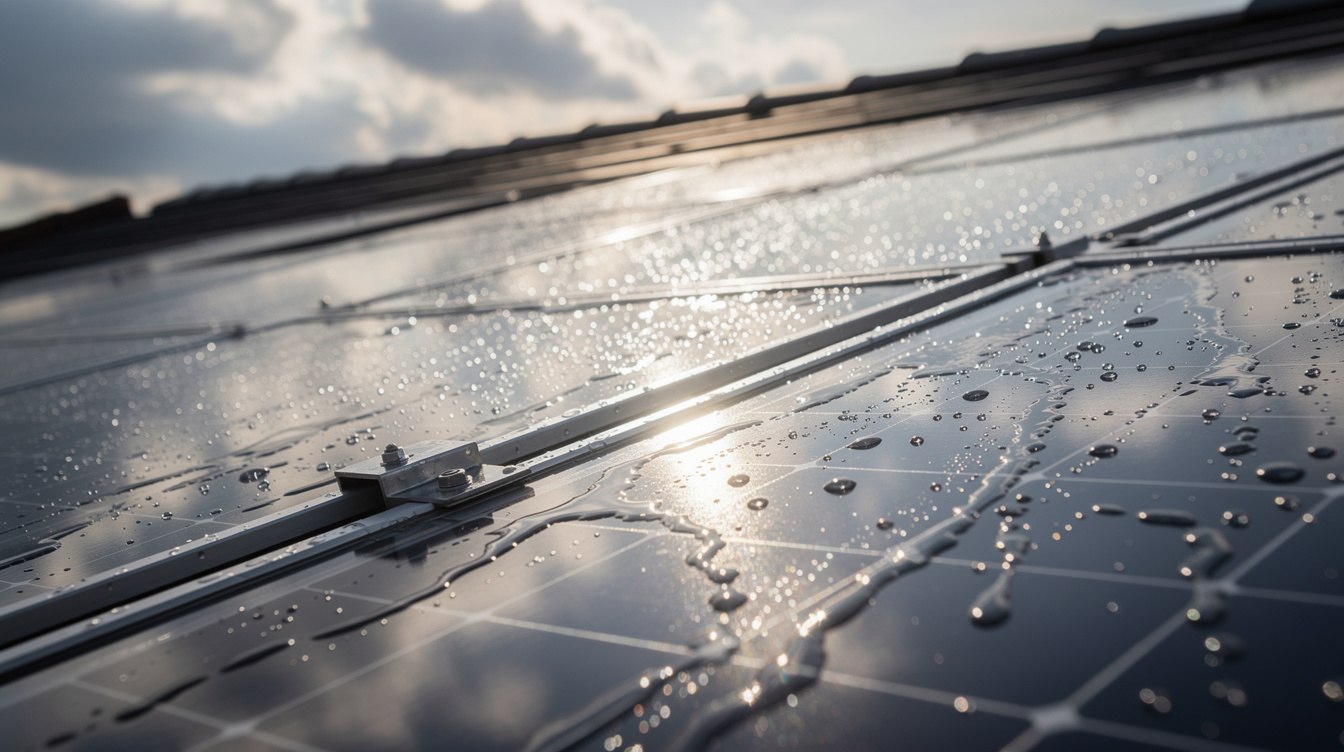
MC4 connectors joining panel strings can fail if they weren't fully seated at installation. In Ireland's damp climate this shows up 3–6 years later as intermittent generation drops on rainy days that recover in dry weather.
Fix: re-terminate the affected connector pair with new MC4s and heat-shrink over the joint. €200–€500 depending on access and how many joints need work. Almost always covered by installer workmanship warranty if you're still inside 5 years.
Fault #8: Battery cell degradation
Modern LFP (lithium iron phosphate) batteries in Ireland come with 10-year / 6,000-cycle warranties, guaranteeing 60–70% capacity retention. Real-world degradation for Irish home use runs closer to 2–3% per year of capacity, so a 10 kWh battery cycled daily still has ~7–8 kWh usable after 8 years.
If your battery is showing sharper degradation than that, it's a warranty claim, not a repair. Contact the installer (not the manufacturer — installer holds your warranty paperwork).
What is (and isn't) fair to charge you
Callout economics in Ireland 2026:
- Basic diagnostic callout: €80–€150 (should include a first-hour inspection)
- Panel-level fault-finding with roof access: €180–€280
- Full system inspection with thermal imaging: €250–€400 (worth it if you're diagnosing a stubborn under-performance)
If a company quotes €800+ just to look at your system, get a second opinion. That's a red flag in the Irish domestic market. Same if you're pushed straight to a full inverter replacement without diagnostics — some inverter "failures" are actually just a communication card or fan needing replacement (€200–€400 vs €2,500).
Preventative maintenance: what actually helps
Irish weather does most of your cleaning for you. Rain alone keeps panels within 2–3% of clean-state output through the year, so annual panel washing rarely pays for itself. What does matter:
- Once-a-year visual inspection — from the ground with binoculars is fine. Look for lifted flashing, gutter debris, unusual staining, and any panel sitting visibly out of line with the rest.
- Check bird activity every March before nesting season. Fitting mesh proactively is one-third the cost of removing a nest and re-fitting.
- Reboot the inverter every 12 months by switching it off at the DC and AC isolator for 5 minutes. Clears memory issues and gives the electronics a brief cool.
- Verify the monitoring app is receiving data monthly. Silent monitoring failures are the biggest source of unnoticed generation loss.
FAQ
How long is the SEAI grant warranty period?
SEAI grant conditions require a minimum 5-year installer workmanship warranty on any grant-funded install. Panels typically carry 25-year manufacturer product warranties and 30-year performance warranties. Inverters typically 10–12 years standard, extendable.
My old installer went out of business — who honours my warranty?
Manufacturer warranties on panels and inverters stay valid even if the installer is gone — but you'll pay a different installer's labour to lodge the claim (typically €180–€350). Workmanship warranty dies with the company. This is one of the reasons to pick an established SEAI-registered installer with a multi-year track record.
Should I take out an extended service contract?
Most Irish installers now offer annual service plans at €150–€250/year. For homeowners comfortable with an app they're usually poor value — the average Irish install throws one billable fault every 5–7 years, so a service contract charging €1,000+ over that period is worse than paying per-callout. Worth considering only if you dislike managing the app monitoring yourself.
Do panels really last 25–30 years in Ireland?
Yes — independent field studies of installs from the 2000s in similar Northern European climates confirm degradation of around 0.5% per year. A panel that started at 400W will still produce ~350W after 25 years. It's the inverter, not the panels, that sets the "real" lifetime of a system.
Ready to Go Solar?
Get free quotes from SEAI-registered installers who stand behind their work — the workmanship warranty is only as good as the company writing it.
The bottom line
Solar in Ireland is a low-maintenance investment but not a zero-maintenance one. The three habits that separate happy owners from disappointed ones: check the app monthly, deal with birds proactively, and log every single warranty document your installer gives you in one folder from day one. Do those three things and the average Irish system will run for 25+ years with under €1,500 of lifetime repair costs.
For more context on the money side, read solar panel maintenance costs Ireland 2026 or what solar warranties actually cover.
Related Articles
Solar Panel Shading Ireland 2026: Trees, Chimneys & Real Output Loss
How much output do you lose from trees, chimneys or dormers shading Irish solar panels? 2026 guide with mitigation costs and decision tree.
Solar Monitoring Apps Ireland 2026: The 6 You’ll Actually Use, Compared
The six monitoring apps Irish solar homeowners actually use in 2026 — iSolarCloud, SolisCloud, mySolarEdge, Enphase, GivEnergy, FusionSolar — honestly compared.
Solar Inverters Ireland 2026: Hybrid vs String vs Microinverters — Costs, Best Brands & How to Choose
Sungrow, GivEnergy, SolarEdge, Solis, Enphase: which inverter is best for Irish homes in 2026? Real prices, warranties & how to pick the right brand.