
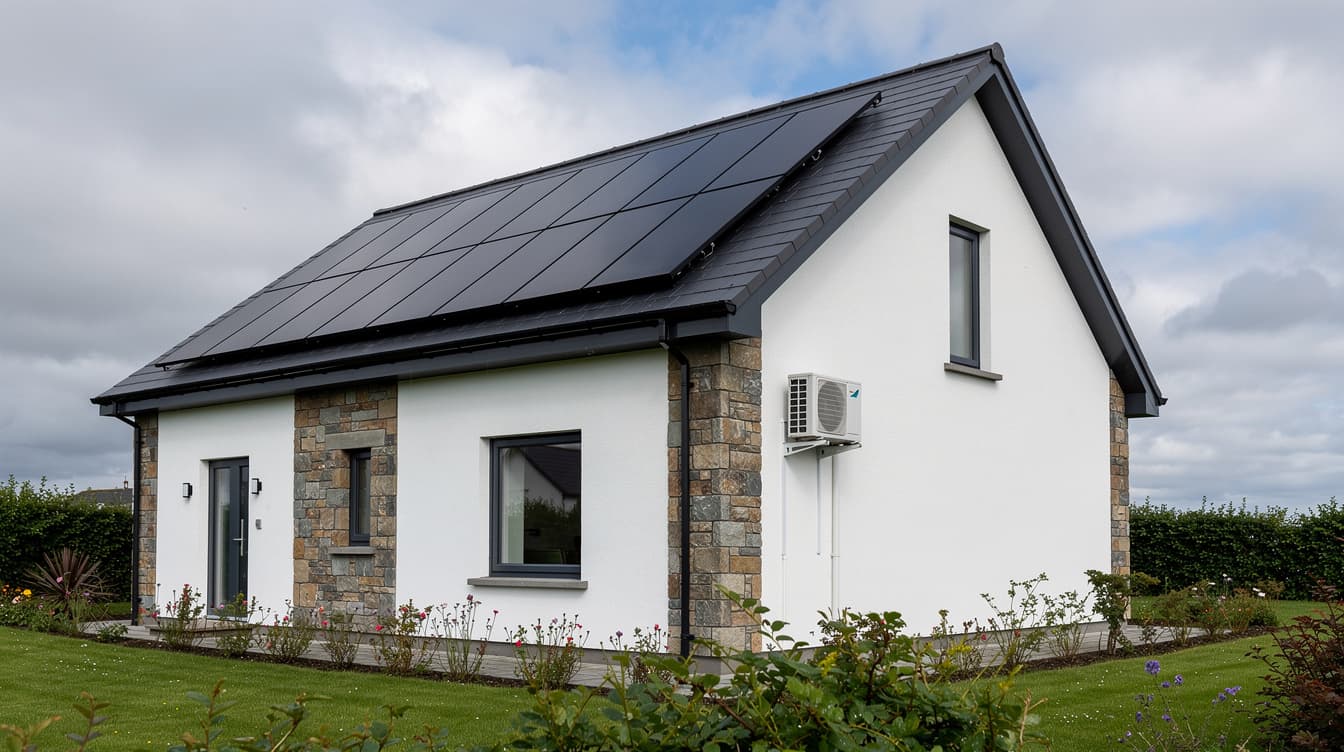
Solar Panels and Air Conditioning Ireland 2026: How to Cool Your Home for Free With Solar
Summer 2025 was officially Ireland’s warmest on record. Nighttime temperatures were so high that Met Éireann recorded new minimums at most observing stations. Across Europe, record heatwaves are becoming the norm — and Ireland, long considered too cool for air conditioning, is no longer immune.
The question Irish homeowners are now asking isn’t will I need cooling? but how do I cool my home without my electricity bill going through the roof? The answer: solar panels. Peak solar generation and peak cooling demand happen at exactly the same time — sunny afternoons — making solar-powered air conditioning one of the smartest energy investments you can make in 2026.
This guide covers every cooling option for Irish homes, what they cost to run, how solar panels offset those costs, and why a reversible air-to-air heat pump might be the best upgrade you’ve never considered.
Ready to Go Solar?
Get your free personalised quote from SEAI-registered installers.
Why Irish Homes Are Overheating
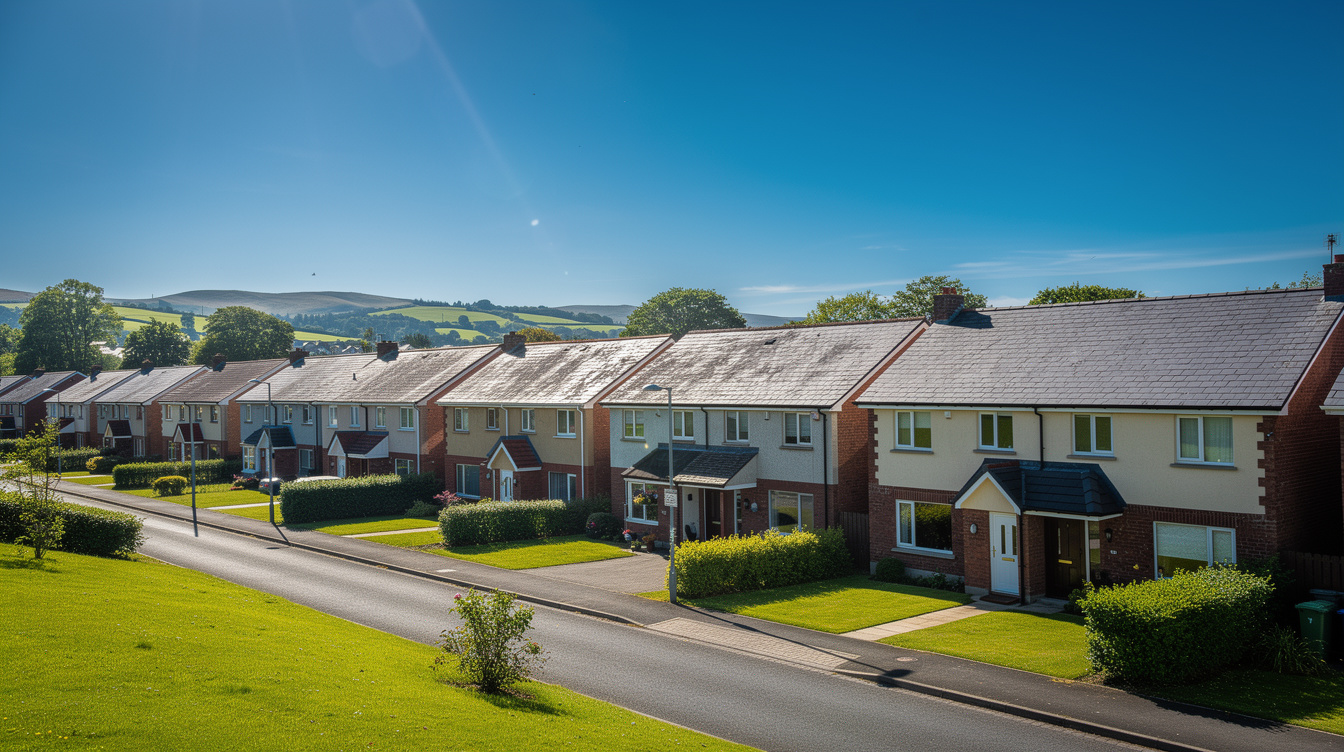
Ireland’s building stock was designed to keep heat in. Cavity wall insulation, double glazing, draught-proofing — everything is optimised for cold, wet winters. But that same thermal envelope becomes a trap in summer:
- Well-insulated homes retain solar heat gains through south-facing windows, pushing indoor temperatures above 28°C on sunny days
- Attic rooms and top-floor bedrooms can reach 30–35°C in direct sunlight, making sleep impossible
- New-build A-rated homes are particularly vulnerable — their airtightness and insulation work against them in summer
- Climate projections show Ireland among the top 10 countries expected to see the biggest increase in extreme heat days
2025’s record summer wasn’t a one-off. Met Éireann data shows Ireland’s average temperatures have risen by over 1°C since pre-industrial times, and the trend is accelerating. What was once a 1-in-20-year heatwave is becoming a regular summer occurrence.
Your Cooling Options: Compared
Before diving into how solar helps, let’s compare every cooling option available to Irish homeowners in 2026:
| Cooling Method | Install Cost | Running Cost/Year | Cooling Power | Also Heats? |
|---|---|---|---|---|
| Portable AC unit | €300–€700 | €80–€200 | Low–medium (1 room) | Some models |
| Split AC system (1 room) | €1,500–€3,000 | €40–€120 | High (1 room) | Yes (reversible) |
| Multi-split AC (3–4 rooms) | €4,000–€8,000 | €100–€300 | High (multiple rooms) | Yes (reversible) |
| Air-to-air heat pump | €3,000–€7,000 | €80–€250 | High (whole house) | Yes — primary heating |
| Air-to-water heat pump (reversible) | €8,000–€16,000 | €150–€400 | Moderate (via underfloor) | Yes — primary heating + hot water |
| Ceiling/pedestal fans | €50–€300 | €5–€15 | Very low (circulates air only) | No |
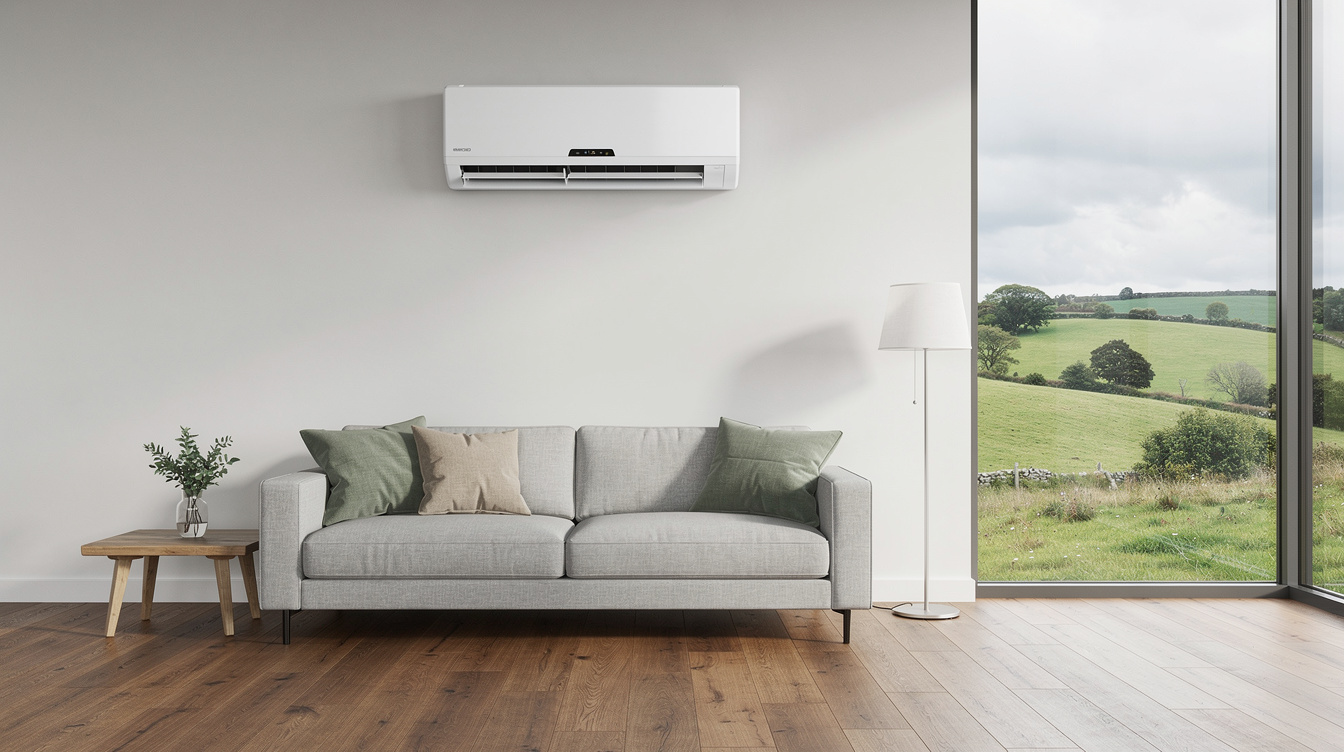
The standout option for most Irish homes is the air-to-air heat pump (also called a split-system or mini-split). It provides both heating and cooling from a single system, is highly efficient (producing 3–4 units of cooling for every 1 unit of electricity), and pairs beautifully with solar panels.
Why Solar + Air Conditioning Is a Perfect Match
Here’s the key insight that makes this combination so powerful: you need cooling most when the sun is shining brightest — which is exactly when your solar panels are producing the most electricity.
Consider a typical hot Irish summer day:
| Time | Solar Output (4 kWp) | AC Consumption | Net Cost |
|---|---|---|---|
| 10:00 — sun warming house | 2.5 kW | 0.8 kW | €0 (solar covers it) |
| 13:00 — peak heat | 3.5 kW | 1.2 kW | €0 (solar covers it) |
| 16:00 — still hot | 2.0 kW | 1.0 kW | €0 (solar covers it) |
| 19:00 — evening cool-down | 0.5 kW | 0.6 kW | ~4c (small grid draw) |
On a sunny day, your solar panels can power your air conditioning for 8–10 hours at zero cost. Without solar, running a split AC system for those same hours would cost €3–€5 per day, or €90–€150 over a hot summer month. With solar panels, your cooling is essentially free during daylight hours.
This is fundamentally different from heating, where demand peaks at night when solar panels produce nothing. Cooling demand and solar production are naturally synchronised.
The Best Cooling System for Solar-Powered Homes
For most Irish homeowners with solar panels, we recommend an air-to-air heat pump (mini-split system) for three reasons:
1. It Heats AND Cools
An air-to-air heat pump is a reversible system. In winter, it extracts heat from outdoor air and pumps it inside. In summer, it reverses — extracting heat from inside your home and pumping it outside. One system, two functions, year-round comfort.
This means you’re not buying a single-purpose air conditioner that sits idle 10 months of the year. You’re buying a year-round climate control system that replaces or supplements your existing heating.
2. Extraordinary Efficiency
Modern air-to-air heat pumps have a COP (Coefficient of Performance) of 3.5–5.0 in cooling mode. That means for every 1 kWh of electricity consumed, the system removes 3.5–5 kWh of heat from your home. A portable AC unit, by comparison, has a COP of just 1.5–2.5.
In practical terms: a split system uses 40–60% less electricity than a portable unit to cool the same room.
3. Perfect Solar Pairing
A single-room split system draws 0.5–1.2 kW in cooling mode — comfortably within what even a small 3 kWp solar system produces on a sunny day. A multi-room setup draws 1.5–3 kW, which a 4–5 kWp system handles easily. Your solar panels effectively run your cooling for free during the hours you need it most.
Solar + Cooling: Get a Combined Quote
Many solar installers now offer heat pump packages. Compare prices from local installers.
Costs and Savings: The Full Picture
Let’s run the numbers for a typical 3-bed semi-d with a 4 kWp solar system and a single-room split AC/heat pump:
| Item | Without Solar | With Solar (4 kWp) |
|---|---|---|
| Split AC unit (installed) | €1,800–€2,500 | €1,800–€2,500 |
| Annual cooling cost (Jun–Aug) | €80–€150 | €10–€30 (evening only) |
| Annual heating savings (Oct–Mar) | €200–€400 vs oil/gas | €300–€500 vs oil/gas |
| Total annual benefit | €280–€550 | €370–€620 |
| Payback period | 4–7 years | 3–5 years |
The dual-use nature of an air-to-air heat pump is what makes the economics work in Ireland. You’re not paying €2,000 for something you use 8 weeks a year. You’re paying for a year-round heating and cooling system that saves money in every season.
SEAI Grants: What’s Available?
Here’s where it gets interesting. The SEAI increased heat pump grants significantly in February 2026:
| Grant | Amount | Covers |
|---|---|---|
| SEAI Solar PV Grant | Up to €1,800 | Solar panel installation |
| SEAI Heat Pump Grant | Up to €12,500 | Air-to-water heat pump systems |
| 0% VAT on solar | Saves €800–€1,200 | Residential solar supply & install |
Important distinction: The €12,500 SEAI heat pump grant applies to air-to-water heat pumps (which feed radiators or underfloor heating). Standalone air-to-air split systems used primarily for cooling are not currently covered by SEAI grants. However, if you’re installing an air-to-water heat pump as part of a deep retrofit, many modern systems include a reversible cooling function via underfloor heating — effectively giving you grant-funded cooling.
The solar PV grant (€1,800) applies regardless of what you power with the panels. So even if your air conditioning system doesn’t qualify for a grant, the solar panels that power it do.
For full grant details, see our SEAI solar grant guide.
Sizing Your Solar System for Cooling
How big a solar system do you need to cover your cooling? It depends on the AC setup:
| AC Setup | Typical Draw | Minimum Solar to Cover | Recommended Solar |
|---|---|---|---|
| 1 room (bedroom) | 0.5–0.8 kW | 2 kWp | 3–4 kWp |
| 2 rooms (living + bedroom) | 1.0–1.5 kW | 3 kWp | 4–5 kWp |
| 3–4 rooms (whole house) | 2.0–3.0 kW | 4 kWp | 5–6 kWp |
The “recommended” column accounts for the fact that your solar panels also power everything else in your home (fridge, lights, appliances). A 4–5 kWp system — the most common size installed in Ireland — comfortably covers 1–2 rooms of cooling plus your normal household load on a sunny day.
For help choosing the right system size, use our solar calculator or see our system size comparison guide.
Do You Need a Battery?
For solar-powered cooling specifically, a battery is less essential than for general electricity use. Here’s why:
- Cooling demand peaks during daylight — exactly when solar panels produce. You’re using the power directly, not storing it.
- Evening cooling is usually brief — once the sun drops and outdoor temperatures fall (Ireland rarely stays above 20°C overnight), you typically only need AC for 1–2 hours after sunset.
- A battery adds €3,500–€8,000 to your system cost, which is hard to justify for 6–8 weeks of evening cooling per year.
That said, a battery does make sense if you’re using your heat pump for heating in winter too — storing daytime solar energy to run the heat pump in the evening. The cooling benefit is a bonus on top of the heating savings.
For more on batteries, see our battery comparison guide.
Low-Cost Cooling Tips (Before You Buy AC)
Air conditioning isn’t the only answer. Before investing in a split system, try these measures that work with or without solar panels:
- External shading: External blinds, shutters, or awnings block solar heat gain before it enters your home. Far more effective than internal curtains — they can reduce room temperature by 5–8°C on hot days.
- Ventilation strategy: Open windows at night when outdoor temperatures drop below indoor. Close everything in the morning before it heats up. This “flush ventilation” technique is free and surprisingly effective.
- Reflective window film: Costs €30–€100 per window and reflects up to 80% of solar heat. Ideal for south and west-facing windows.
- Ceiling fans: A fan doesn’t cool the air, but the breeze makes it feel 3–4°C cooler. Running costs are negligible (€5–€15/year) and a solar system barely notices the draw.
- Loft insulation top-up: Inadequate loft insulation lets heat radiate down into bedrooms. Topping up to 300mm+ costs €300–€500 and helps in both winter and summer.
If these passive measures aren’t enough — and for well-insulated, airtight homes they often aren’t — then a split AC system paired with solar is the next step.
Installation: What to Expect
Installing a split air conditioning system in an Irish home is straightforward:
- Survey: An F-gas registered engineer assesses your home and recommends unit size and placement
- Outdoor unit: Mounted on a bracket on the exterior wall, typically at ground level or low on a side wall
- Indoor unit: Wall-mounted high in the room being cooled (living room, bedroom, or home office)
- Pipework: Refrigerant pipes connect the indoor and outdoor units through a small hole (65–75mm) in the wall
- Electrical: The system connects to a dedicated circuit in your consumer unit
- Commissioning: F-gas certification and testing
Timeline: A single-room split system takes half a day to install. A multi-room system takes 1–2 days. There’s no disruption to your existing heating system — the AC is an entirely separate system.
Planning permission: You don’t need planning permission for a split AC system in Ireland, provided the outdoor unit doesn’t face the road (front of house) and isn’t in a conservation area. Always check with your local authority if unsure.
The Combination Investment: What It All Costs
Here’s the total cost of a solar + cooling setup for a typical Irish home in 2026:
| Component | Cost | Grant/Saving | Net Cost |
|---|---|---|---|
| 4 kWp solar system | €6,500 | €1,800 SEAI + 0% VAT | ~€4,700 |
| Split AC/heat pump (1 room) | €2,000 | €0 | €2,000 |
| Total | €8,500 | €1,800+ | ~€6,700 |
With annual savings of €1,000–€1,500 (electricity bill reduction from solar plus heating cost reduction from the heat pump), the combined system pays for itself in 5–7 years. After that, you have 18–20+ years of near-free cooling and significantly reduced heating costs.
For more on solar costs, see our complete cost guide.
Get a Solar + Cooling Quote
Compare prices from SEAI-registered installers in your area.
Frequently Asked Questions
Do Irish homes really need air conditioning?
Increasingly, yes. Summer 2025 was Ireland’s warmest on record, with nighttime temperatures making sleep difficult for weeks. Well-insulated modern homes are particularly prone to overheating. While AC isn’t needed year-round, having cooling capability for 6–10 weeks per summer is becoming important for comfort and health — especially for the elderly and young children.
Can solar panels fully power an air conditioning system?
During daylight hours, yes. A 4 kWp solar system produces enough to power 1–2 rooms of cooling plus your normal household load on a sunny day. You may need a small amount of grid electricity for evening cooling, but the daytime cost is effectively zero.
What’s the difference between air conditioning and a heat pump?
They’re the same technology. An air conditioner removes heat from inside your home. A heat pump can do the same thing in reverse — adding heat in winter. Most modern split AC systems are reversible heat pumps, providing both heating and cooling. The term “heat pump” is typically used when the primary purpose is heating; “air conditioning” when the primary purpose is cooling.
Is there an SEAI grant for air conditioning?
Not directly. The SEAI heat pump grant (up to €12,500) applies to air-to-water heat pumps used as primary heating systems. Standalone air-to-air systems used for cooling are not currently grant-eligible. However, the SEAI solar PV grant (€1,800) applies to the panels that power your AC.
How noisy is a split air conditioning system?
Modern split systems are remarkably quiet. The indoor unit operates at 20–25 dB in quiet mode — barely louder than a whisper. The outdoor unit is louder (45–55 dB) but is positioned outside. For context, a normal conversation is about 60 dB. Noise is rarely an issue in practice.
Can I add air conditioning to an existing solar panel system?
Absolutely. AC installation is independent of your solar system — it simply draws electricity from your home’s circuit, whether that electricity comes from solar or the grid. No modifications to your solar panels or inverter are needed. The solar monitoring app will simply show higher daytime self-consumption on hot days.
How many hours per year will I actually use air conditioning in Ireland?
Based on recent climate data, expect to use cooling for 300–600 hours per year (roughly 6–10 weeks at 6–8 hours per day). This number is increasing as Irish summers warm. However, because the system also heats your home in winter, it gets year-round use — making it a much better investment than a cooling-only system.
Related Articles
Solar Panels and Underfloor Heating Ireland 2026: The Complete System Guide (Costs, Grants & Running Costs)
Solar panels + underfloor heating Ireland 2026: full system costs from €10,100 after €14,900 in SEAI grants. Running costs, sizing & 5 mistakes to avoid.
Best Time to Install Solar Panels in Ireland 2026: Why Smart Homeowners Book in Autumn (Not Summer)
When to install solar panels in Ireland for the best price and shortest wait. Month-by-month output, installer demand cycles and 2026 SEAI grant timing.
Solar Panels and Immersion Heaters Ireland 2026: How to Get Free Hot Water From Your Solar System
How solar PV diverters heat your water for free in Ireland. Brands compared, costs, savings and whether a diverter beats exporting.