
Solar Panels & Immersion Heater Ireland 2026 — Diverter Guide & Savings
If you have solar panels in Ireland, here’s an awkward truth: most days, your roof generates more electricity than your house can use. The standard answer is to export that surplus back to the grid under the Clean Export Guarantee — but at roughly 18c/kWh export rates vs 35c/kWh import rates, you’re effectively giving energy away at half its value.
A solar immersion diverter fixes this. Instead of exporting surplus solar, it routes that “extra” electricity into your immersion heater — heating your hot water cylinder for free. For a typical Irish four-bedroom house, that’s €200–€450 a year of avoided gas, oil or peak-rate immersion costs, paying back the device in 2–4 years.
This guide covers exactly how diverters work, the three brands that dominate the Irish market in 2026 (myenergi eddi, Solar iBoost+, and Sunamp thermal batteries), realistic Irish savings figures using PVGIS-style yield estimates, and the situations where a diverter is the right next step versus when you should add a battery or heat pump instead.
Ready to Go Solar?
Get your free personalised quote from SEAI-registered installers.
What a solar immersion diverter actually does
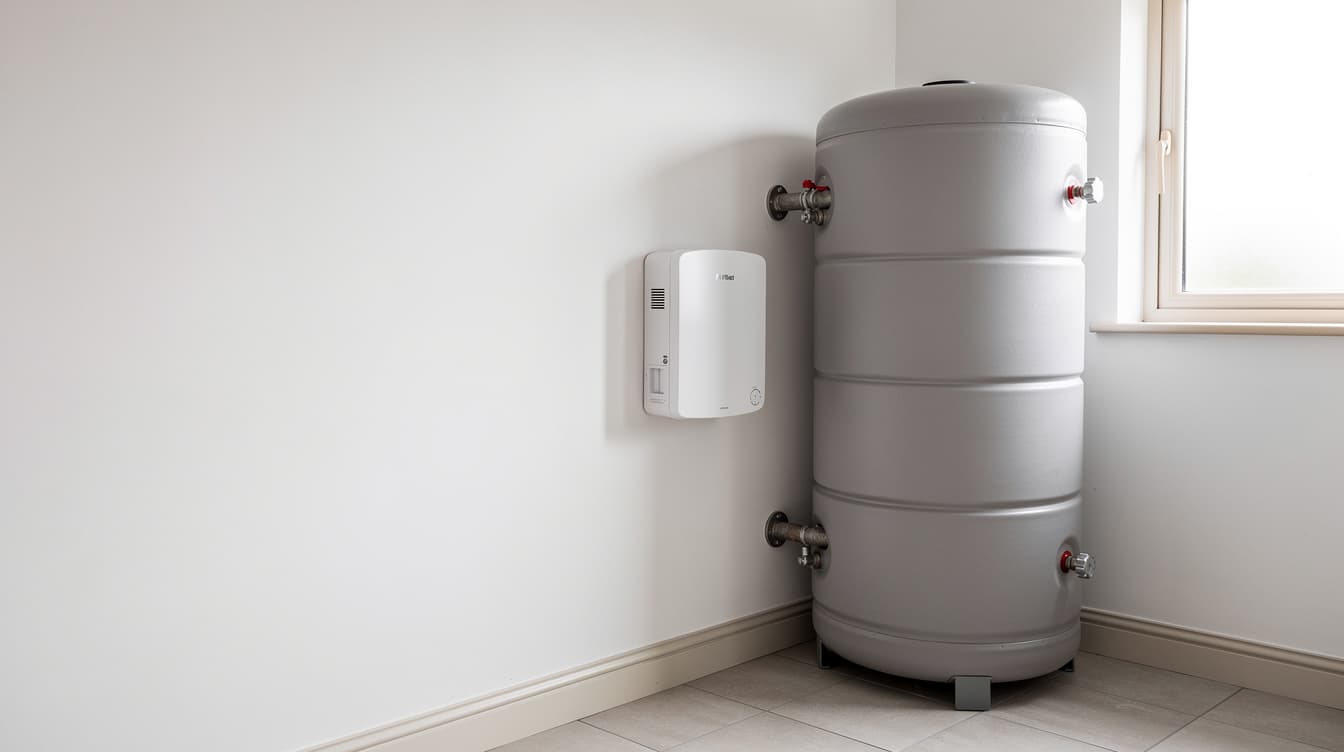
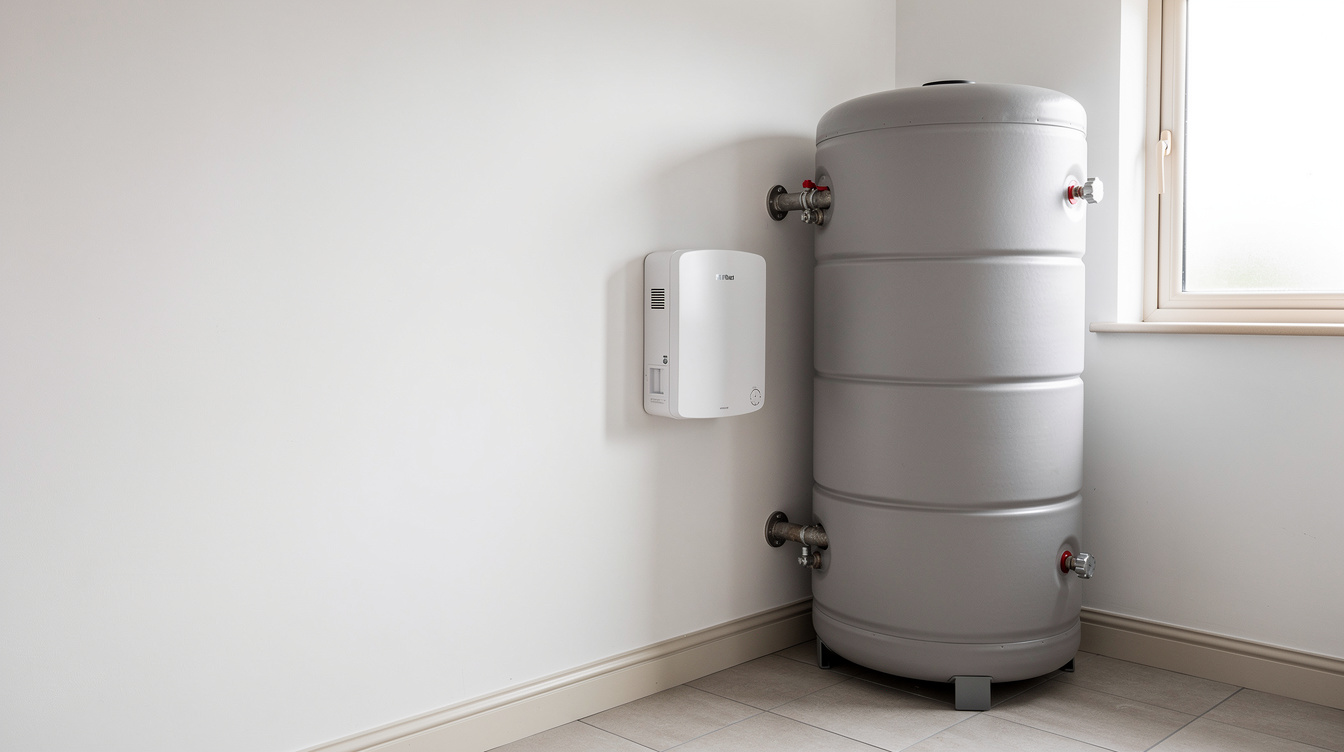
Every Irish hot water cylinder has an immersion heater — a 3 kW electric element used as a backup when the gas boiler or oil burner isn’t running. It’s expensive to run on grid electricity, but it’s essentially free to run on surplus solar.
A diverter sits between your fuse board, your solar inverter, and your immersion. It uses a current clamp on the grid tail to detect, in real time, when your solar output exceeds household demand. The moment surplus appears — even just 200W — the diverter ramps the immersion element to absorb exactly that amount, no more, no less.
The result: zero export from your inverter while the cylinder is heating, and a cylinder that’s topped up to 60–65°C by sunset on most days from April through September.
Critically, modern diverters do this without “hunting” or causing the inverter to clip. They modulate the immersion load 50–100 times per second using burst-fire control, so the inverter sees a perfectly matched local load, not a 3 kW switch flicking on and off.
How much hot water can solar actually deliver in Ireland?
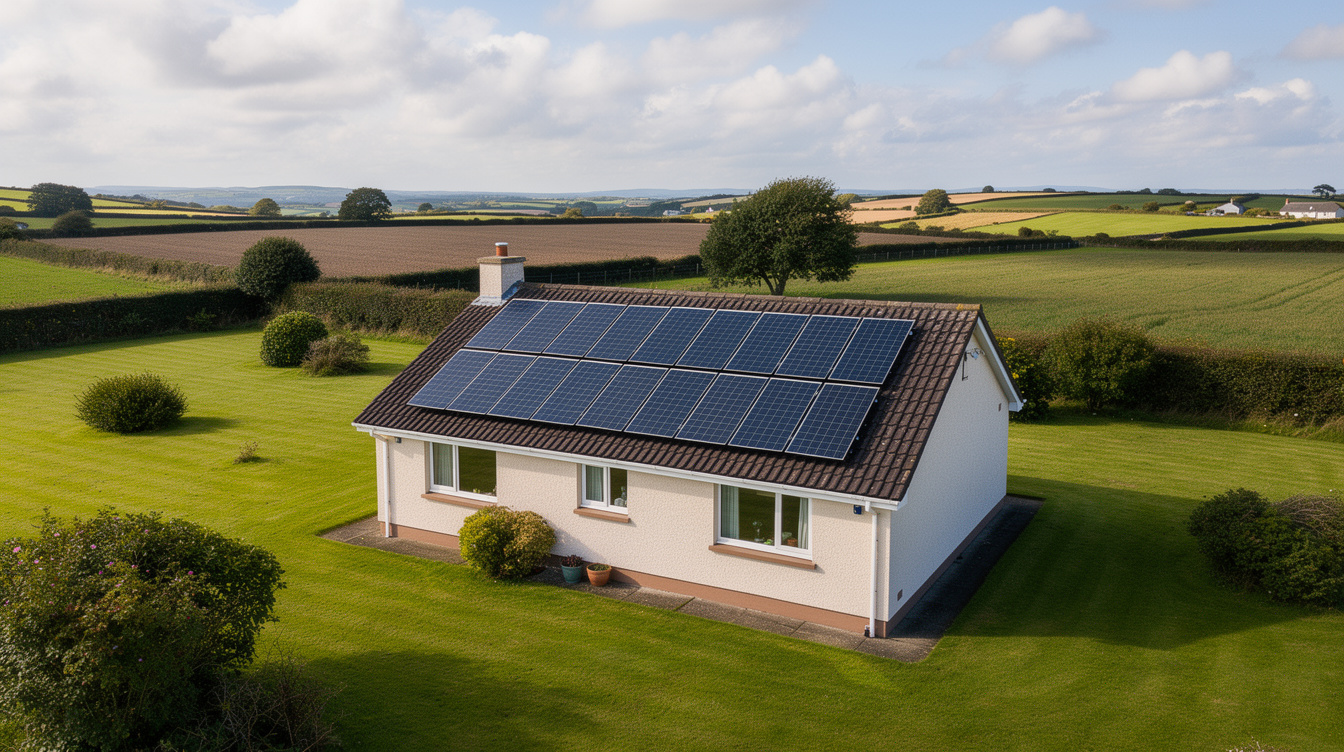
Be realistic. Ireland is not Spain. A 4 kWp south-facing PV system in the midlands produces roughly 3,400 kWh per year, but only a portion of that arrives as “surplus” that can be diverted. The rest is used directly by the house in real time or, on cloudy days, doesn’t exist at all.
Based on PVGIS yield curves and typical Irish household demand profiles, here’s what a diverter actually captures per year:
| PV system size | Annual generation | Diverted to immersion (typical) | Cylinder days/year fully heated |
|---|---|---|---|
| 3.0 kWp | ~2,550 kWh | 600–850 kWh | ~150 days |
| 4.0 kWp | ~3,400 kWh | 900–1,300 kWh | ~190 days |
| 5.0 kWp | ~4,250 kWh | 1,200–1,700 kWh | ~220 days |
| 6.0 kWp | ~5,100 kWh | 1,500–2,000 kWh | ~240 days |
The wide range reflects real Irish life. Houses with two retirees who shower in the morning capture much more than households where the cylinder is heated overnight by an oil boiler before anyone’s home to draw solar from. Lifestyle matters more than panel count.
Translating to euros: at the current Irish standard-rate electricity import of ~35c/kWh, a diverter that captures 1,200 kWh of surplus saves roughly €420 a year — assuming the alternative was heating that water with the grid. If your alternative was gas (~9c/kWh equivalent thermal cost), the cash saving is closer to €110 a year, but you’re still self-consuming solar instead of exporting it at 18c.
The three Irish market options in 2026
1. myenergi eddi — the market leader
The eddi is the dominant diverter sold in Ireland and the UK. Manufactured in Stokesley, Yorkshire, it integrates cleanly with myenergi’s zappi EV charger and harvi wireless sensor, which is why most SEAI-registered installers default to it when you ask for “a diverter.”
- Max output: 3.7 kW (16A) — covers any standard 3 kW Irish immersion element with headroom
- Heating outputs: 2 (e.g. immersion + underfloor manifold, or two cylinders)
- Price installed in Ireland: €750–€950 typical, including current clamp and parts
- Warranty: 3 years standard, 5 years if registered
- Connectivity: Wi-Fi / Ethernet, full app dashboard, OCPP-style export limits available
The eddi’s killer feature for Irish homeowners is the “Boost” timer: you can set it to top up the cylinder from grid at 02:00–04:00 on the night-rate tariff if solar didn’t finish the job during the day. This single feature means many eddi owners on a smart tariff like Energia EV Plus stop running their gas boiler for hot water entirely — even in December.
2. Marlec Solar iBoost+ — the budget alternative
The iBoost+ has been around since 2013 and is the cheaper, simpler option. It does one job — divert surplus to a single immersion — and does it reliably.
- Max output: 3.0 kW (single immersion only, no secondary load)
- Price installed in Ireland: €450–€650 including the wireless sender unit
- Warranty: 2 years
- Connectivity: No native Wi-Fi or app (optional £79 buddy module adds Wi-Fi)
The iBoost is the right call if you have a basic 3 kWp system, a single cylinder, no EV, and you want the lowest-cost path to self-consuming surplus. For most Irish four-bed houses planning to add an EV or battery within five years, the extra €200–€300 for an eddi pays back in optionality alone.
3. Sunamp Thermino — the thermal battery alternative
Sunamp doesn’t divert into an existing cylinder — it replaces the cylinder entirely with a sealed phase-change-material (PCM) thermal battery. The Thermino 210 is a wall-mountable unit roughly half the floor footprint of a 200L copper cylinder that stores the same amount of useful hot water.
- Capacity: ~7.5 kWh thermal (Thermino 210)
- Price installed in Ireland: €2,800–€3,800 fitted
- Lifetime: 40,000+ charge cycles (~25 years at one cycle/day)
- Best fit: apartments, retrofits where an old cylinder needs replacing anyway, or homes with no space for a 1.5m-tall cylinder
For most existing Irish homes with a serviceable copper cylinder, Sunamp is overkill — the eddi-into-existing-cylinder route gives 90% of the benefit for a quarter of the cost. But if your cylinder is 25 years old and needs replacing, doing it once with a Thermino + integrated PV diversion can make sense.
Will a diverter work with your existing setup?
Almost every Irish home built since 1990 has a compatible setup. The conditions you need:
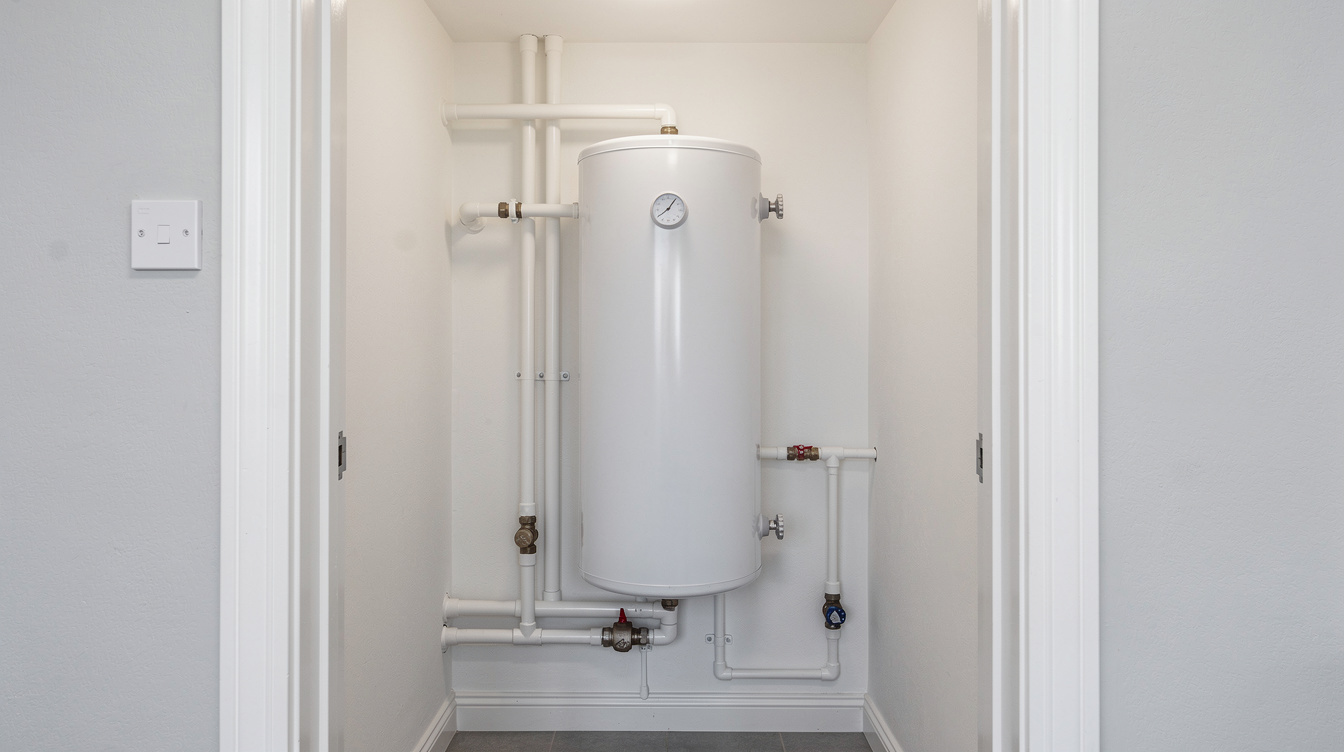
- An immersion heater fitted to the cylinder. If yours has been removed or capped, you’ll need a plumber to re-fit one (€200–€400). Look for a brass boss with electrical wiring entering it, usually mid-height or top of the cylinder.
- A modern hot water cylinder (not an instant-heat combi). If your gas boiler is a combi (no cylinder, hot water heated on demand), a diverter cannot work — there’s nothing to store hot water in. Around 35% of Irish homes have combi boilers; for these, a Sunamp Thermino is the only PV-to-hot-water option.
- A spare slot in your consumer unit (fuse board) for a 16A breaker, plus space near it for the diverter unit. Diverters need to be within 2m of the main switch for the current clamp.
- A solar inverter with grid export. Diverters work behind the inverter, so the inverter itself doesn’t need to be specific — SolarEdge, Fronius, Huawei, Solis, GoodWe, Growatt, SMA all work fine. You do not need a hybrid or battery-ready inverter.
Diverter vs battery vs heat pump — which next step?
This is the question that actually matters once you have solar panels. The honest answer for most Irish households in 2026: add a diverter first, then a battery, then think about a heat pump. Here’s why.
| Upgrade | Typical installed cost | Annual surplus captured | Payback (typical) |
|---|---|---|---|
| Immersion diverter (eddi) | €800 | 900–1,300 kWh | 2–4 years |
| 5 kWh home battery | €4,500 | 1,200–1,800 kWh | 8–12 years |
| Air-to-water heat pump | €12,000 (after grant) | 600–900 kWh (PV only) | 10–15 years* |
*Heat pump payback depends mainly on replacing oil/gas heating, not on PV self-consumption. The PV synergy is a side benefit.
A diverter pays for itself faster than any other solar upgrade in Ireland, full stop. It also has zero ongoing maintenance, no batteries to degrade, and no plumbing changes. If you have solar and you don’t have a diverter, you are leaving money on the roof.
Already have solar? Want a quote for a diverter?
SEAI-registered installers across Ireland can fit an eddi or iBoost in a single morning.
What about Clean Export Guarantee — isn’t it better to just export?
This is the question every Irish solar owner asks at some point. The answer is no, but the maths is closer than people think.
Under the Clean Export Guarantee, your supplier pays you for surplus electricity exported back to the grid. As of mid-2026, top CEG rates from Energia and Pinergy are around 24c/kWh; Electric Ireland and Bord Gáis sit closer to 18c/kWh. Compare that with what you’d pay to heat the same litre of water:
- Grid immersion at peak rate: ~35c/kWh of heat
- Grid immersion at night rate (smart tariff): ~10–15c/kWh of heat
- Gas boiler heating water: ~9c/kWh of heat (at current gas rates with ~85% efficiency)
- Oil boiler heating water: ~14c/kWh of heat
If your alternative is peak-rate grid immersion (~35c) and your CEG export is 18c, every diverted kWh nets you 35 + 18 = the savings on imports plus the avoided opportunity cost of not exporting. The diverter wins by ~17c/kWh.
If your alternative is night-rate immersion (~12c) and your CEG export is 24c, the maths flips: you’re better off exporting and re-importing at night. This is the one scenario where a diverter actively loses you money — and it’s rare in practice, because most people don’t bother running the immersion overnight on grid.
The safe rule: if you currently heat water any other way besides solar, a diverter wins. If you already heat your hot water on a night-rate immersion overnight, run the numbers carefully or skip the diverter and add a battery instead.
Installation: what to expect on the day
A diverter install in Ireland is a half-day job for a qualified electrician, typically scheduled alongside an annual solar service or a new EV charger install:
- Site survey (15 min): The installer checks consumer unit space, cylinder location, and inverter type. If your fuse board is full, you may need a small expansion enclosure (€150 extra).
- Wiring (90 min): Current clamp goes on the grid tail at the meter, 4mm² SWA cable runs from a new 16A breaker to the diverter, then 2.5mm² from the diverter to the immersion. RCBO protection is fitted to the new circuit.
- Commissioning (30 min): Installer pairs the unit to Wi-Fi, calibrates the current clamp direction, sets the immersion target temperature (60°C kills legionella), and runs a test divert to confirm at least 1 kW flows.
- Cert and handover: You get an RECI completion cert for the new circuit and the installer typically registers the 5-year warranty.
Total time: typically 3–4 hours on site. Nothing on the cylinder itself is touched, no draining required, no impact on the rest of the heating system.
Common mistakes to avoid
Sizing the immersion element wrong. Some older Irish cylinders have a 2.5 kW or even 1 kW element. A 1 kW element on a 4 kWp array means most of your surplus on a sunny May day still ends up exported — the diverter can only push as much as the element can absorb. If your element is under 3 kW, upgrade it (€120 fitted) when you fit the diverter.
Putting the current clamp on the wrong tail. The clamp must go on the grid-side tail (between meter and house), not on the inverter feed or a sub-circuit. If it’s wrong, the diverter either does nothing or runs constantly from the grid. Reputable installers catch this in commissioning, but if you’ve had one fitted and the diverter is “always on” even at night, this is almost certainly the cause.
Pairing it with a battery without thinking about priority. If you add a home battery later, decide which gets surplus first — the battery (electricity, ~95% round-trip) or the cylinder (hot water, single use, can’t be redirected back to lights). Most installers set battery-first, diverter-second. The eddi’s “Eco+” mode handles this automatically if both are integrated.
Expecting it to work in December. A 4 kWp Irish array generates ~70 kWh in December — barely enough to heat the cylinder twice in the whole month. Diverters earn their keep April through September. Manage expectations: winter water heating still comes from your boiler or grid.
Mid-2026 snapshot: what’s changed
The diverter market in Ireland has moved meaningfully since this guide first went up. Three things matter for anyone deciding in mid-2026:
- eddi pricing has dropped 6–8%. The hardware-only eddi is now retailing at €395–€450 (was €425–€480 at start of 2026). Lead times from myenergi’s Irish distributor have settled at 5–9 working days — back to pre-2023 norms.
- Solar iBoost+ availability has tightened. Marlec confirmed lower production runs in H2 2026, and Irish wholesaler stock turns over in 2–3 weeks. If your installer prefers the iBoost, expect a 1–2 week wait vs the eddi’s same-week availability.
- Smart-tariff night rates have eased to 12–15c/kWh. That reshapes the diverter-vs-battery calculation slightly: if you’re on a smart night plan, the “cost” of using grid-night electricity for the immersion is now closer to 13c, so the diverter’s avoided-cost case shrinks marginally. The eddi’s “boost from tariff” feature, which fills the cylinder from grid only during the cheap window, has become more compelling for evening showers.
- Sunamp Thermino installed pricing has held flat at €2,800–€3,800 in Ireland, but unit availability has improved as Sunamp scaled UK production. Lead time is now 2–3 weeks vs 6–8 weeks in 2025.
- Standard daytime electricity import is now 32–36c/kWh across Bord Gáis, Electric Ireland and SSE Airtricity standard residential tariffs; export under the Clean Export Guarantee runs 18–22c/kWh depending on supplier. The 14–18c/kWh gap is exactly the diverter’s value proposition: every kWh you self-consume into the immersion is worth roughly twice what it would be worth exported.
Cylinder compatibility: what to check before quoting
Most diverter quotes go wrong at the cylinder stage. Before you sign anything, confirm five details about your hot water cylinder:
| Cylinder type | Diverter compatibility | Notes |
|---|---|---|
| Vented copper (1970s–2000s) | Excellent | Standard Irish setup. Diverter feeds the existing 3 kW immersion. No plumbing needed. |
| Unvented (mains-pressure) | Excellent | Most post-2010 homes. Diverter works identically. Check the immersion is 3 kW (not 1 kW boost element). |
| Stainless steel (Joule, Range) | Excellent | Better insulation, slower standing heat loss — ideal diverter target. |
| Twin-coil with heat pump | Good | Diverter works on the resistive element, leaving the heat pump coil for night-rate top-ups. |
| Combi boiler (no cylinder) | Incompatible | No storage for surplus. Sunamp Thermino is the only path here. |
| Pre-1990 cylinder, no immersion | Requires plumber visit | Add a 3 kW immersion to the existing boss (€200–€400) before the diverter goes in. |
Two more checks specific to Irish housing:
- Cylinder location. If your cylinder is in an attic (common in 1980s semi-detached) and your fuse board is downstairs, the diverter sits at the fuse board and runs a 2.5mm twin and earth up to the immersion. Budget an extra €60–€120 in cable and labour.
- Cylinder insulation thickness. Older spray-foamed 25mm-jacket cylinders lose 60–90 W of standing heat. A modern factory-foamed 75mm jacket loses 20–35 W. If your cylinder is older than 15 years, the €180–€220 cost of a new factory-foamed Joule cylinder is recovered in 3–4 years just on standing-loss savings, never mind solar gain.
Month-by-month savings: what to actually expect
The single most misleading thing about diverter marketing is the headline annual saving. The reality is heavily seasonal: a diverter on a 4 kWp array does most of its work between April and September and very little in mid-winter. This is what a typical Irish midlands install looks like month by month.
| Month | PV output (4 kWp) | Surplus to cylinder | Equivalent value |
|---|---|---|---|
| January | 85 kWh | 20 kWh | €7 |
| February | 140 kWh | 42 kWh | €15 |
| March | 270 kWh | 95 kWh | €33 |
| April | 410 kWh | 175 kWh | €61 |
| May | 485 kWh | 215 kWh | €75 |
| June | 510 kWh | 230 kWh | €81 |
| July | 485 kWh | 220 kWh | €77 |
| August | 410 kWh | 185 kWh | €65 |
| September | 300 kWh | 115 kWh | €40 |
| October | 180 kWh | 55 kWh | €19 |
| November | 95 kWh | 25 kWh | €9 |
| December | 70 kWh | 15 kWh | €5 |
| Total | 3,440 kWh | 1,392 kWh | €487 |
That €487 figure assumes electricity at 35c/kWh, an average cylinder reheat cycle, and a household that’s home enough during the day to draw down hot water and create capacity for more solar to flow in. Add €120–€180 in displaced gas or oil if the diverter is also offsetting some of your boiler runs in shoulder seasons. Realistic Irish totals run €500–€700 a year for an active four-person household, €300–€500 for a quieter two-person household.
Three real Irish scenarios
Scenario A: Three-bed terrace in Cork, family of three, gas boiler. 3 kWp south-facing array, 150L copper cylinder with 3 kW immersion. Annual generation 2,910 kWh. Daytime base load (fridge, broadband, standby) absorbs ~520 kWh. Diverter sends another 920 kWh to the cylinder. Result: gas water heating drops from 2,200 kWh/yr to 1,080 kWh/yr — a €165 annual gas saving plus €120 in lower export-then-import losses. eddi installed for €820. Payback: 3.0 years.
Scenario B: Four-bed semi in Galway, family of four, oil boiler. 4 kWp split south + east, 200L stainless cylinder. Annual generation 3,800 kWh. Daytime base load 700 kWh. Diverter sends 1,260 kWh to the cylinder. Result: oil consumption for hot water drops from 480L to 235L — a €235 saving at current oil prices — plus €180 in higher self-consumption value vs export. eddi installed for €860. Payback: 2.1 years.
Scenario C: Rural detached in Donegal, retired couple, oil boiler + Stanley range. 5 kWp south-facing array, 220L copper cylinder. Annual generation 4,600 kWh (lower yield in north-west). Daytime base load minimal (~350 kWh). Diverter sends 1,540 kWh to the cylinder — effectively eliminating summer oil-for-hot-water entirely, and cutting Stanley range runs for hot water in shoulder seasons. Result: 380L of oil avoided (€365) plus €220 in self-consumption uplift. eddi installed for €880. Payback: 1.5 years — the best diverter ROI in the country precisely because the off-grid heating fuels they displace are so expensive.
The pattern across all three: diverter ROI scales directly with the cost of the fuel you’re displacing. Oil-heated homes get faster paybacks than gas-heated homes. Off-grid LPG and bottled-gas homes get the fastest of all.
FAQ
Will a diverter void my SEAI grant or solar warranty? No. Diverters are a downstream load — they don’t touch the inverter, panels, or grid connection. SEAI grant compliance and inverter warranties are unaffected.
Do I need ESB Networks approval for a diverter? No. A diverter is a load behind your meter, treated the same as adding an electric shower. No NC6 form, no notification needed.
Can a diverter overheat my cylinder? No. All modern diverters honour the cylinder thermostat — once water reaches the setpoint (typically 60–65°C), they stop diverting. The eddi additionally has a high-limit cutout.
What if I have a heat pump cylinder? Most heat pump cylinders also have a backup immersion element. You can still divert into that, although the heat pump itself is usually the lower-cost way to heat water on demand. Diverter savings drop to roughly €80–€150/year in this case.
How long do diverters last? The eddi and iBoost are solid-state with no moving parts — expected life is 15+ years. The eddi specifically has a 3–5 year warranty but installer feedback in Ireland reports very few failures.
Can I install a diverter myself? No. New 16A circuits in Ireland require an RECI-registered electrician and a completion cert. DIY installs are unsafe, void the warranty, and won’t pass a future BER assessment.
The bottom line
An immersion diverter is the single highest-ROI upgrade you can add to an existing Irish solar PV system. For €800 fitted, you turn the cheapest possible thing your panels make — midday surplus — into the most expensive thing your house buys — peak-rate hot water. Payback under four years, no maintenance, 15-year life.
If you don’t have solar yet, don’t treat the diverter as a reason to scale up the array. Size your PV to your annual demand using our Ireland solar calculator, get the €1,800 SEAI grant on the panels themselves, and add the diverter on day one of the install — most reputable installers will quote it as a €700–€900 add-on at the same time as the system.
Get a Quote for Solar + Diverter
Three free quotes from SEAI-registered installers across Ireland. We’ll match you with companies that quote diverters as standard.
Related Articles
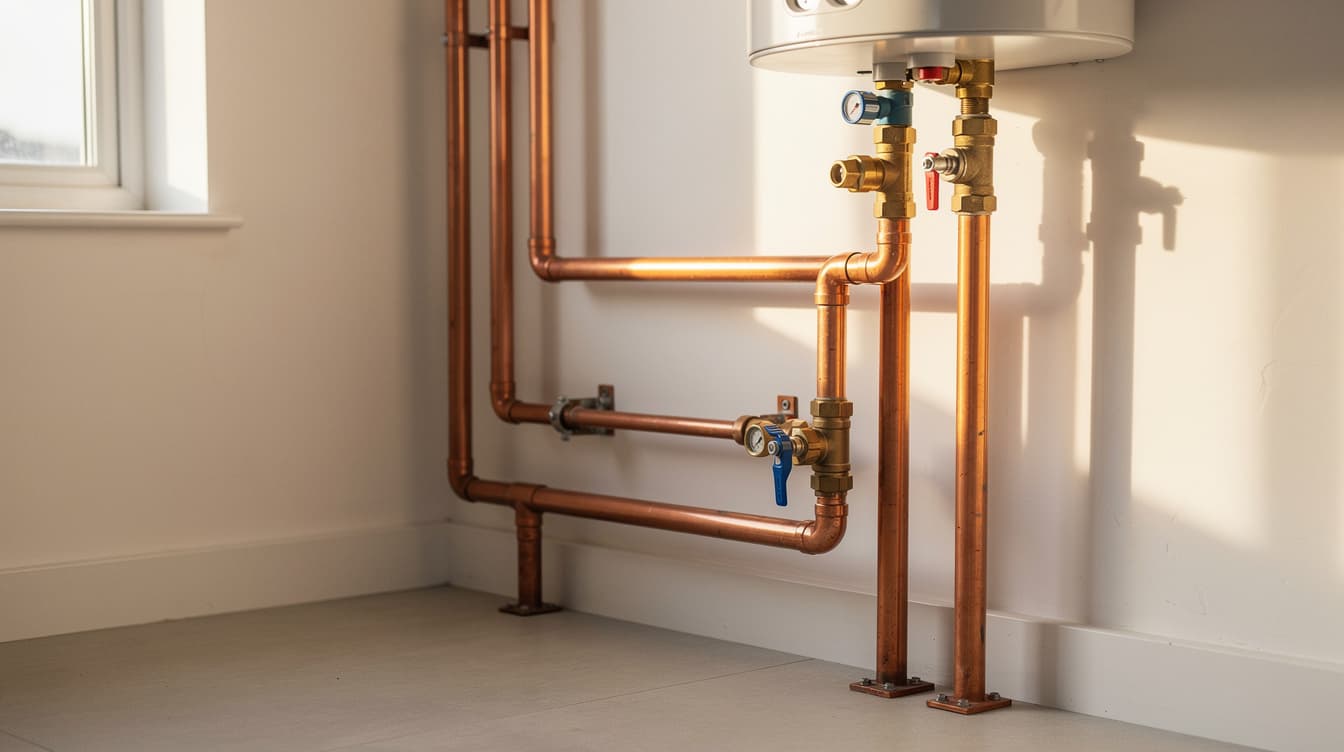
PV Solar Diverter Ireland 2026: Eddi vs iBoost vs PowerDiverter Compared
Compare Eddi, Solar iBoost+ and PowerDiverter for Irish solar homes in 2026: real prices, install costs, VAT savings, and honest payback vs the CEG.
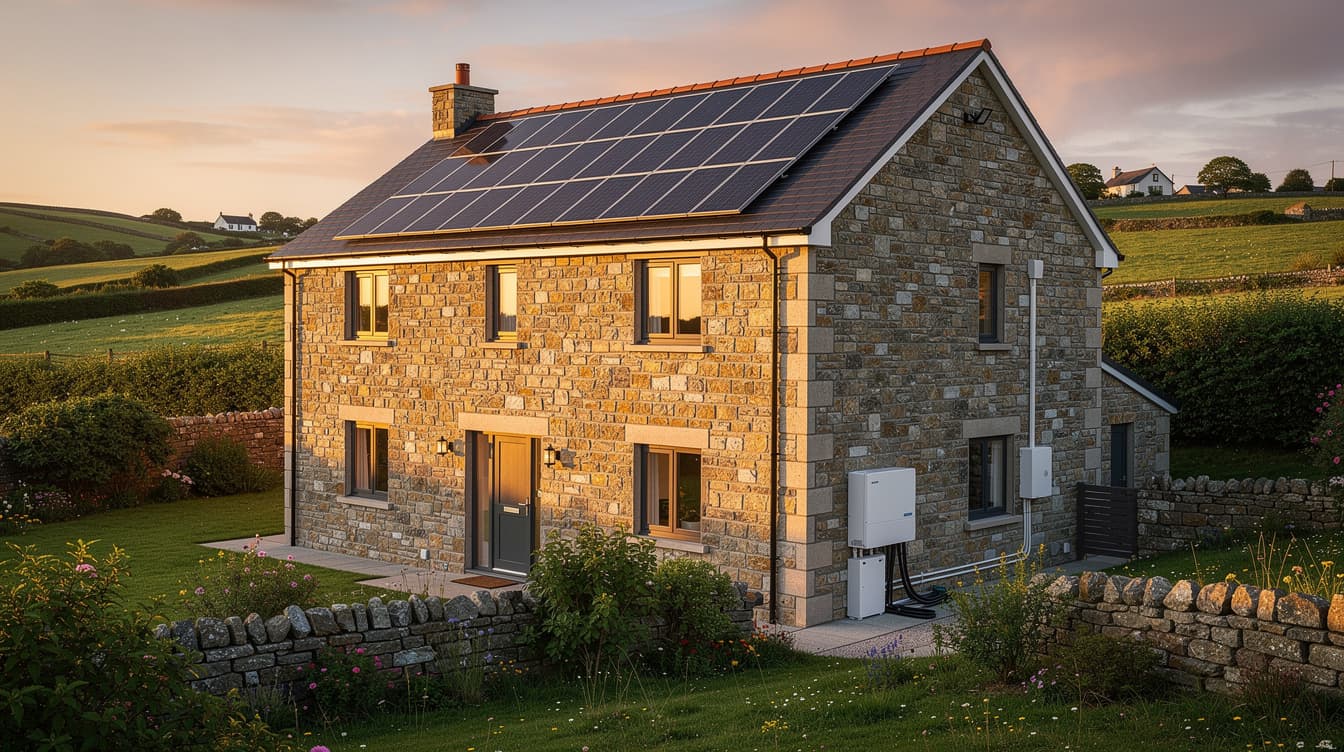
Best Solar Setup Ireland 2026: Complete System Design Guide
The best solar setup for Ireland 2026 — panels, inverter, battery, diverter and installer — with 4 real-world configurations, prices and paybacks.
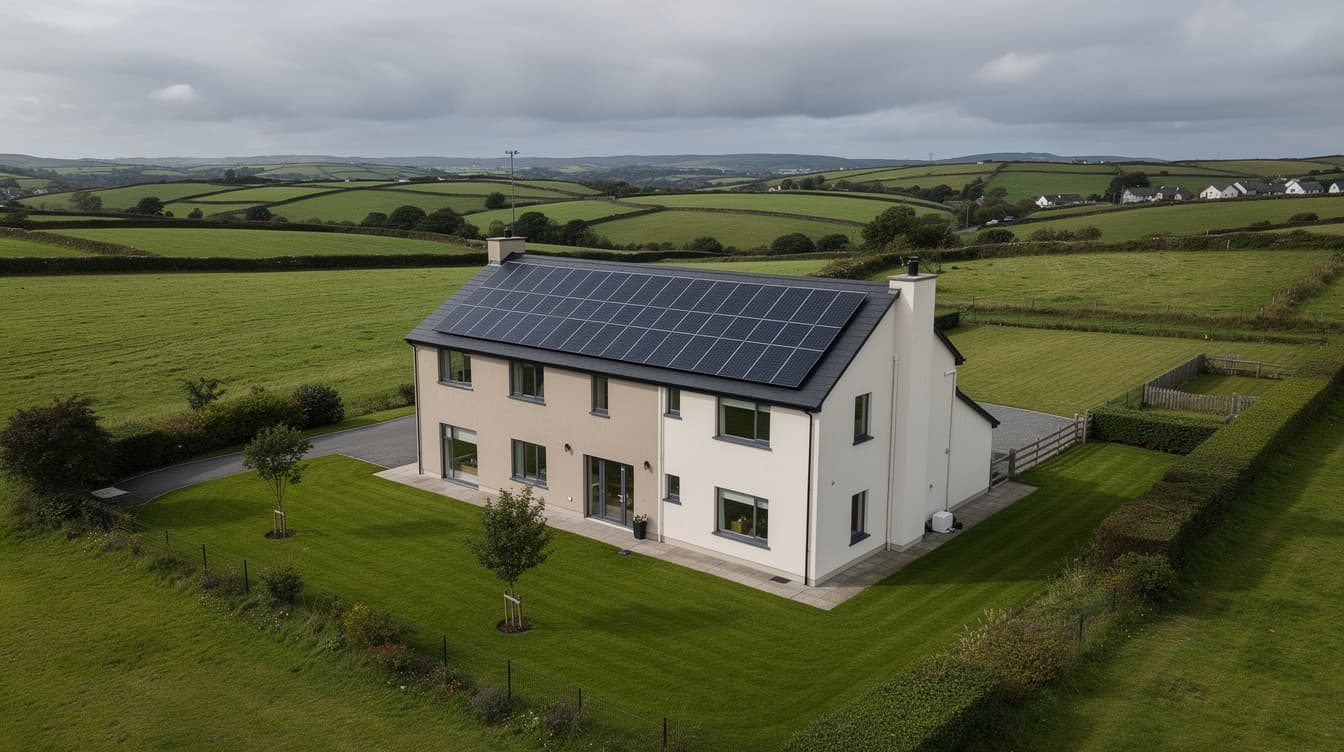
20 Solar Panels Ireland 2026: Cost, Output, Battery & Payback
What 20 solar panels cost in Ireland 2026 (€12.7-18.6k net after grant), 7,600-8,100 kWh output, roof space, battery choice and payback vs 10 or 14 panels.