
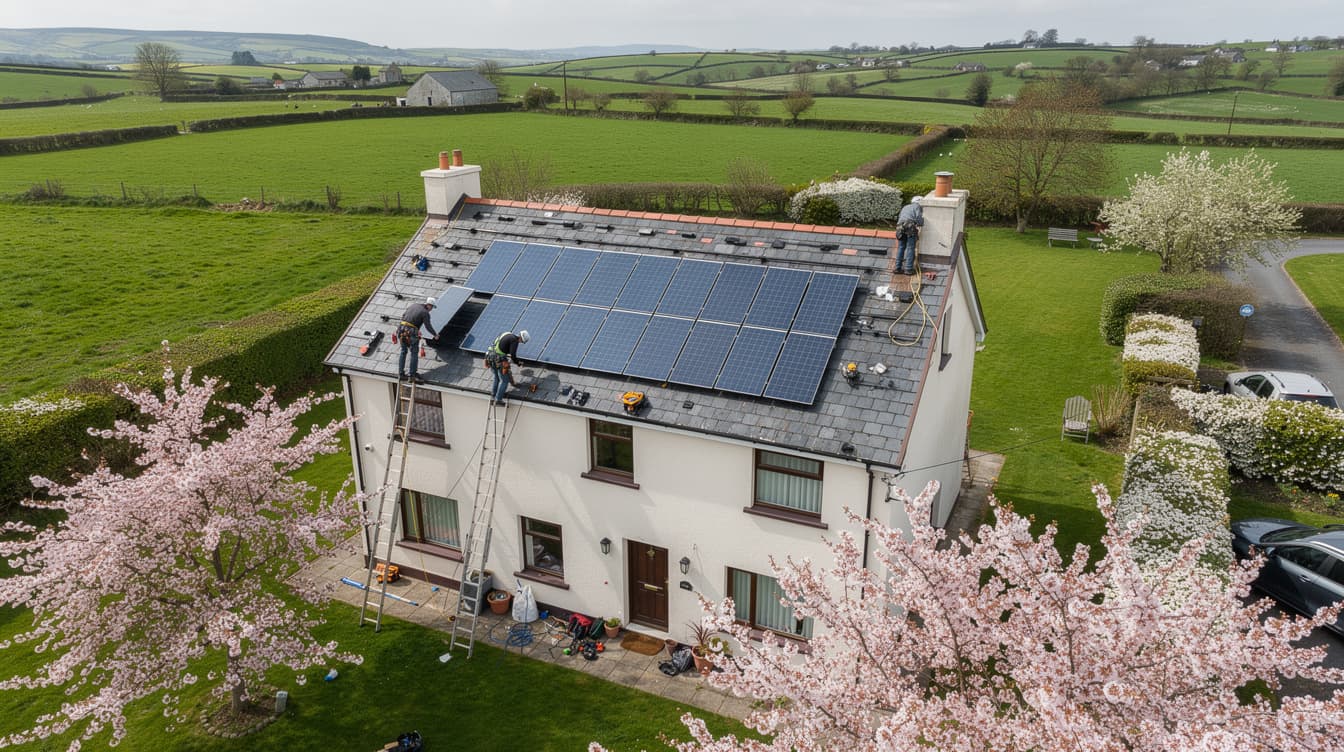
Best Time of Year to Install Solar Panels in Ireland: A 2026 Seasonal Guide
Best Time of Year to Install Solar Panels in Ireland: A 2026 Seasonal Guide
Should you wait for summer sun or book now while installers have capacity? The answer might surprise you. Here is a month-by-month breakdown of when to install solar panels in Ireland — and why autumn and late winter are the smartest times to book.
Everyone assumes summer is the best time to install solar panels. More sun means more power, so it makes sense to get them up as early in summer as possible, right?
The reality is more nuanced. Solar panels work year-round in Ireland, and the best time to install depends on three factors: installer availability, weather conditions for the install itself, and how quickly you want your system generating. If you optimise for all three, the sweet spot is often September–November or February–March — not the middle of summer.
This guide walks through each season so you can time your installation for the shortest wait, best price, and quickest return on investment.
Month-by-Month: When to Install Solar in Ireland
| Month | Wait Time | Install Conditions | Verdict |
|---|---|---|---|
| January | 2–4 weeks | Cold, short days, occasional frost | Good for booking — lowest demand |
| February | 3–5 weeks | Lengthening days, mild | Excellent — system ready for spring |
| March | 4–6 weeks | Good weather, demand rising | Excellent — catch the best solar months |
| April–May | 6–10 weeks | Great conditions, high demand | Good if you booked early |
| June–July | 8–14 weeks | Peak sun, but installers are swamped | Longest waits of the year |
| August | 6–10 weeks | Still good conditions, demand easing | Decent if booking now |
| September–October | 3–5 weeks | Mild, dry, great for roofwork | Best overall — low wait, good weather |
| November–December | 2–4 weeks | Shorter days, rain risk | Good for booking — system ready for Jan |
The key insight: The months with the most sunshine (May–July) are also when every other homeowner is calling installers. By the time you get through the queue, summer may be half over. If you book in September or February, you skip the rush and still capture the best production months.
Why Autumn Is the Smart Choice
September and October are arguably the best months to get solar panels installed in Ireland. Here is why:
- Short wait times: Most installers have 3–5 week lead times in autumn, compared to 8–14 weeks in summer
- Mild, dry weather: Irish autumns are often drier than spring, making roof work safer and faster
- Still generating: September and October still get 2.5–3.5 hours of peak sun daily — your panels start earning immediately
- Ready for the new year: Your system is fully commissioned and generating before the next electricity bill cycle
- Better deals: Some installers offer discounts in their quieter months to keep crews busy
- SEAI grant processing: Fewer applications in the queue means faster grant approval
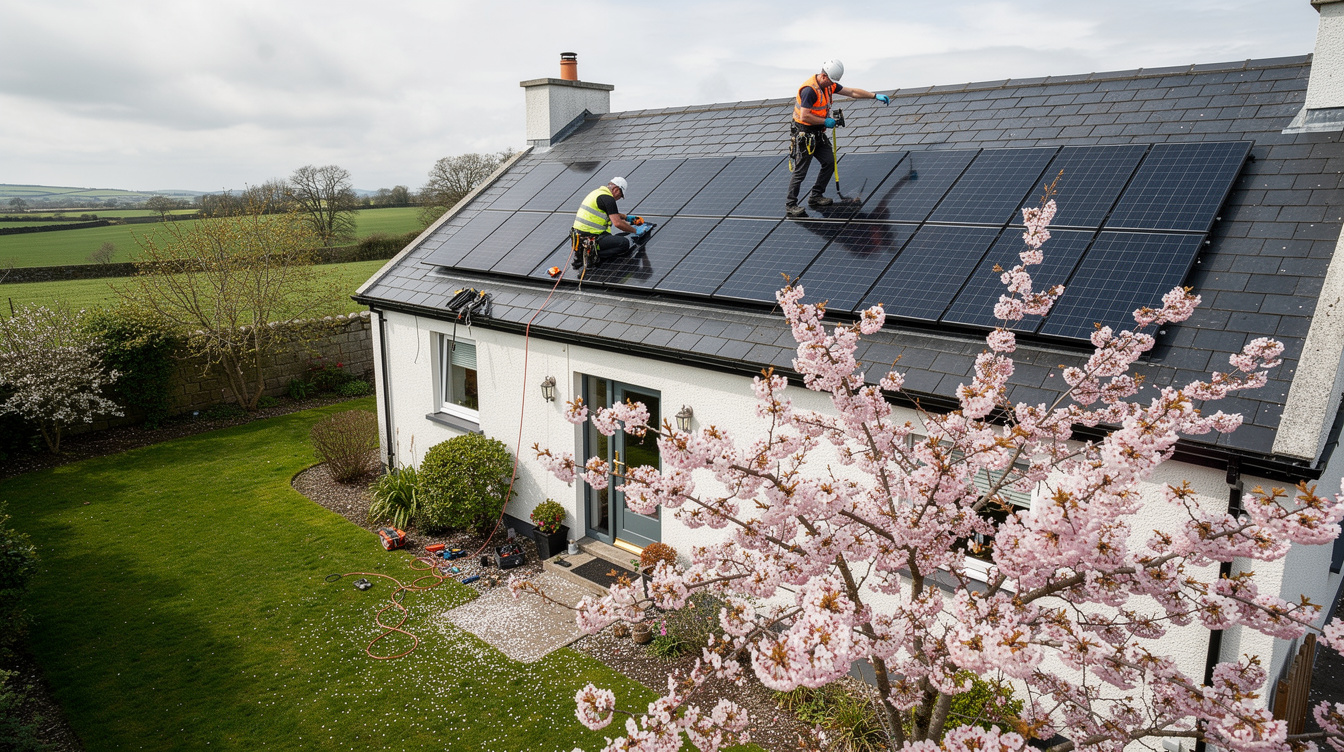
How Much Do Solar Panels Produce Each Season in Ireland?
A common worry is that panels installed in autumn or winter will not generate much electricity for the first few months. Let us look at the actual numbers for a typical 5 kWp system:
| Season | Months | Daily Output (5 kWp) | Seasonal Total | % of Annual |
|---|---|---|---|---|
| Spring | Mar–May | 12–18 kWh | ~1,350 kWh | 28% |
| Summer | Jun–Aug | 16–22 kWh | ~1,700 kWh | 35% |
| Autumn | Sep–Nov | 6–13 kWh | ~870 kWh | 18% |
| Winter | Dec–Feb | 3–7 kWh | ~480 kWh | 10% |
| Full year | Jan–Dec | Avg ~13 kWh | ~4,600 kWh | 100% |
Even in winter, a 5 kWp system generates 3–7 kWh per day — enough to cover lighting, appliances, and standby loads. And remember: panels produce electricity from daylight, not direct sunshine. Ireland’s overcast skies still deliver diffuse light that panels convert to electricity.
The real cost of waiting: If you delay installation from September to June to “get more sun,” you miss 9 months of generation. At €0.38/kWh, that is roughly €650–€900 in lost savings for a typical system. That is money you will never get back.
Ready to Go Solar?
Get your free personalised quote from SEAI-registered installers.
Installer Wait Times in Ireland (2026 Reality)
Solar demand in Ireland has surged since the SEAI grant was confirmed at €1,800 for 2026 and electricity prices remain high. Here is what that means for wait times:
Current lead times (May 2026):
- Peak season (Apr–Jul): 8–14 weeks from quote to commissioning
- Shoulder season (Aug–Oct, Feb–Mar): 4–6 weeks
- Off-peak (Nov–Jan): 2–4 weeks
These are typical ranges. Popular installers may be booked further out. Always get 3 quotes to compare availability.
The installation itself takes just 1–2 days. The wait is almost entirely scheduling — getting into the installer’s diary, SEAI grant processing (around 20 working days), and ESB Networks notification for grid connection.
How to Speed Up the Process
- Get quotes early. Contact 3–5 SEAI-registered installers and compare both price and availability.
- Have your BER ready. If your house already has a BER certificate, the process moves faster. If not, your installer can arrange one.
- Choose in-stock equipment. Ask your installer which panels and inverters they have in stock versus what needs ordering. Choosing available brands can save 2–4 weeks.
- Book in shoulder season. September–November or January–March gives you the shortest waits.
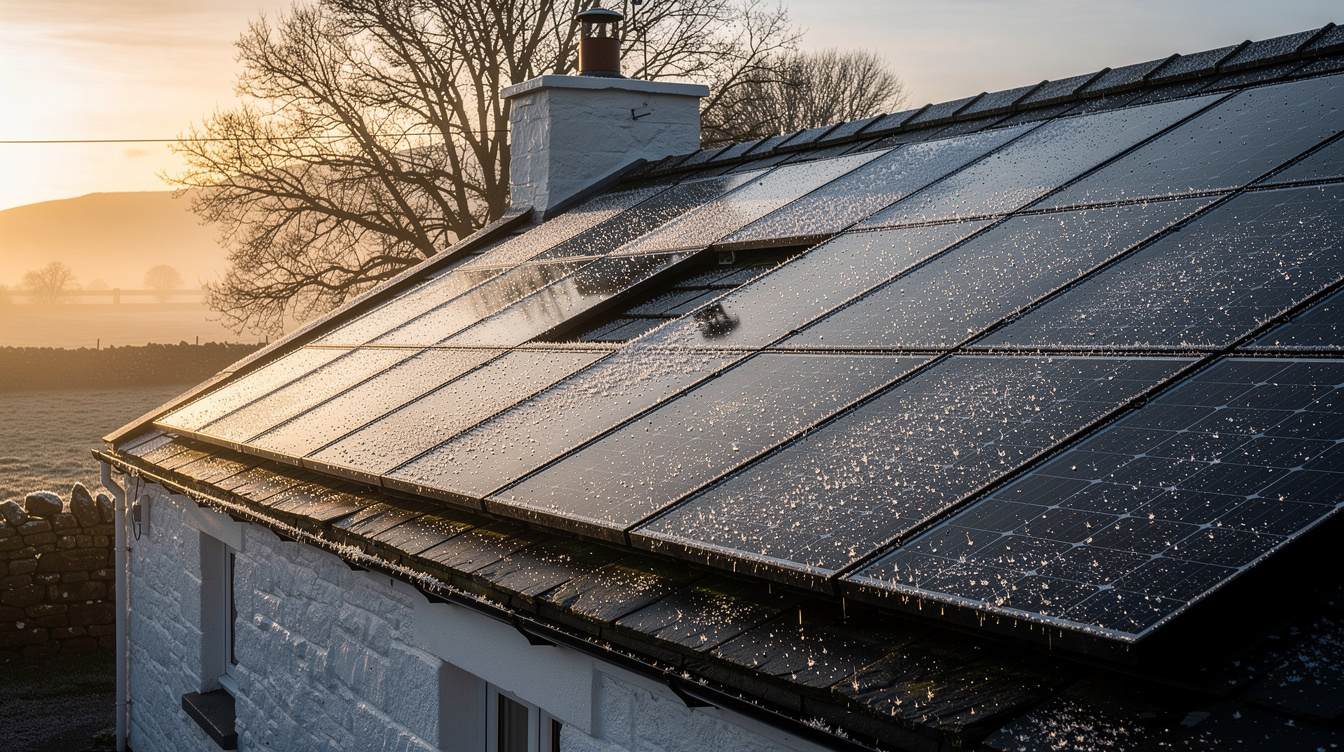
Does Weather Affect the Installation?
Solar panels can be installed in almost any weather — but some conditions make the job harder or slower:
| Condition | Can Install? | Notes |
|---|---|---|
| Light rain | Yes | Installers work through drizzle |
| Heavy rain / thunderstorms | No | Safety risk on wet roofs; rescheduled |
| High winds (>40 km/h) | No | Panels act as sails; unsafe to lift |
| Frost / ice | Delayed start | Wait until roof thaws (usually by 10am) |
| Overcast / cloudy | Yes | No impact on installation |
| Snow (rare in Ireland) | No | Rescheduled; usually clears within 24h |
In practice, Irish weather rarely stops an installation outright. A typical install day might start with cloud, get some drizzle at lunch, and clear up by afternoon. Experienced installers are well used to Irish conditions and build flexibility into their schedules.
SEAI Grant Timing: Does It Matter When You Apply?
The SEAI solar PV grant of up to €1,800 is available year-round in 2026. There is no application deadline and no risk of the fund running out mid-year — it is a standing programme.
However, processing times vary:
- Quieter months (Oct–Feb): Grant applications typically processed in 15–20 working days
- Busy months (Mar–Sep): Can stretch to 25–30 working days due to volume
Your installer usually handles the grant application on your behalf. The grant is paid directly to you after installation and inspection are complete. Most homeowners receive the payment within 4–8 weeks of the install.
Important: The SEAI grant was confirmed at €1,800 for 2026, but there is no guarantee it will remain at this level in 2027. Earlier plans to reduce the grant were reversed, but budgetary pressures could see a reduction in future years. If you are thinking about solar, locking in the current grant rate is a smart move.
Lock In Your €1,800 SEAI Grant
Get your free personalised quote from SEAI-registered installers near you.
The Hidden Cost of Waiting
Every month you delay, you are paying full price for grid electricity that solar could offset. Let us put numbers on it:
| Delay | Lost Generation (5 kWp) | Lost Savings |
|---|---|---|
| 1 month (summer) | ~550 kWh | €110–€150 |
| 3 months (spring) | ~1,350 kWh | €270–€380 |
| 6 months | ~2,500 kWh | €500–€700 |
| 12 months | ~4,600 kWh | €920–€1,300 |
Waiting a year to “save up more” or “see if prices drop” costs you €1,000+ in lost savings. Solar panel prices have been relatively stable in 2025–2026, and any small price decrease is far outweighed by the electricity savings you miss out on.
Practical Tips for Timing Your Installation
- Start getting quotes now. Even if you want an autumn installation, begin the quote process 6–8 weeks ahead. Comparing 3 quotes takes time.
- Ask about installer availability. Some installers are booked out for months; others can fit you in within 3 weeks. Availability is as important as price.
- Consider a “winter booking, spring install” strategy. Book in December–January for a February–March install date. You get off-peak pricing and your system is live for the best generation months.
- Do not wait for “better” panels. Panel technology improves incrementally each year. The panels available now are excellent. Waiting for next year’s model costs you a full year of savings.
- Check your roof condition first. If your roof needs repairs, get that done before the solar installer arrives. This avoids costly delays and the expense of removing and reinstalling panels later.
The Bottom Line
There is no bad time to install solar panels in Ireland — they generate electricity all year round, even in December. But if you want the shortest wait times, best installer availability, and smartest financial outcome, here is the order of preference:
- September–October: Short waits, mild weather, system generating before winter
- February–March: System ready for the peak spring/summer months
- November–January: Shortest waits, potential off-season deals
- April–August: Great sun but longest installer queues
The single most expensive thing you can do is wait. Every month without solar is a month of full-price electricity bills. If you are reading this in May 2026, the best move is to start getting quotes today for a late summer or early autumn installation.
Get Your Free Solar Quote Today
Compare prices from vetted, SEAI-registered installers near you.
Related Guides
Related Articles
Solar Panel System Cost by Number of Panels Ireland 2026: 8, 12, 14, 20, 24 Panel Prices
What 8, 12, 14, 16, 20 or 24 solar panels actually cost in Ireland 2026 — net after €1,800 SEAI grant & 0% VAT, output kWh, roof area & battery add-ons.
6kW Solar System Cost Ireland 2026: Real Prices, Output & Payback
6kW solar costs €7,700–€10,500 net after the €1,800 SEAI grant and 0% VAT in Ireland 2026. Real quote, 5,270 kWh/yr output, EV/battery ROI.
Average Cost of Solar Panels Ireland 2026: What Homeowners Really Pay
Real 2026 Ireland solar prices by kW size, region and battery option. Average 5kW after SEAI grant: €7,100-€9,000. Full breakdown inside.