
Solar Panels for Bungalows in Ireland 2026: Why Single-Storey Homes Are Ideal for Solar
Solar Panels for Bungalows in Ireland 2026: Why Single-Storey Homes Are Ideal for Solar
Bungalows have the biggest, simplest roofs in Ireland — and that makes them perfect for solar panels. Here is the complete guide to system sizing, costs, and savings for bungalow owners in 2026.
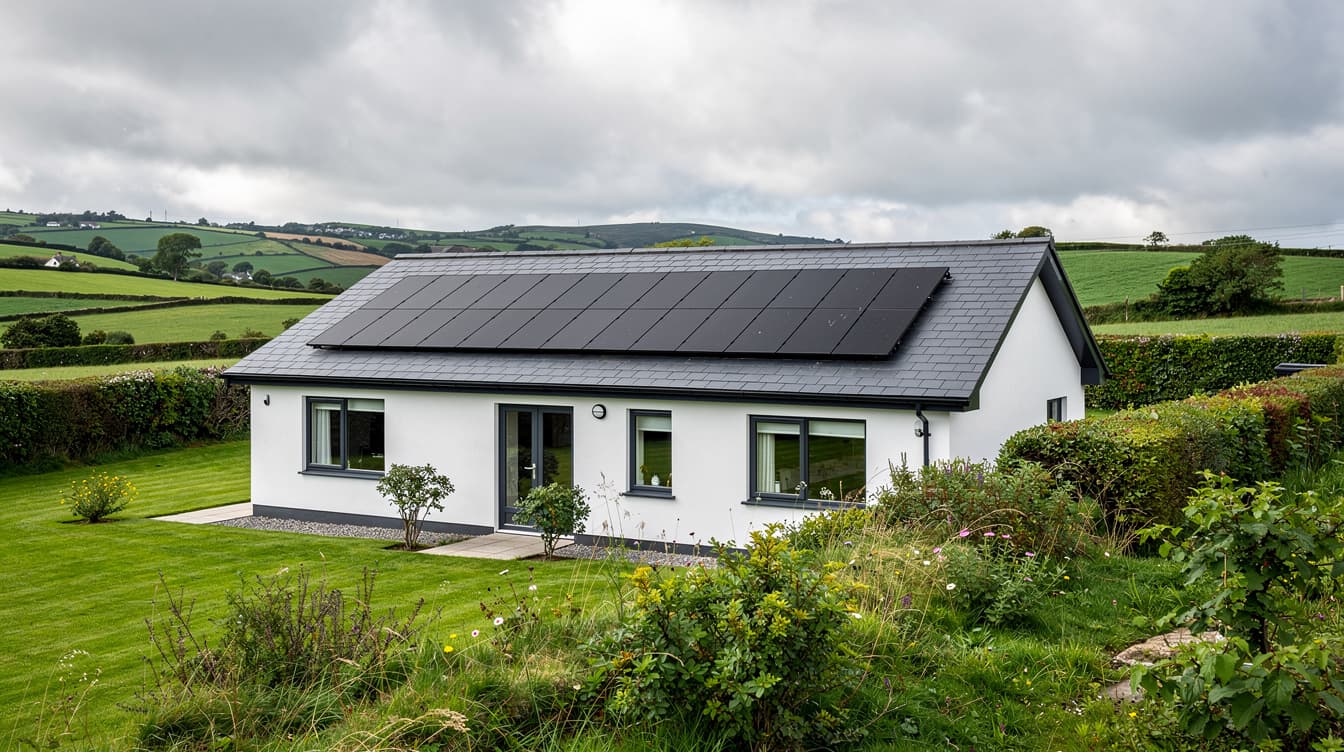
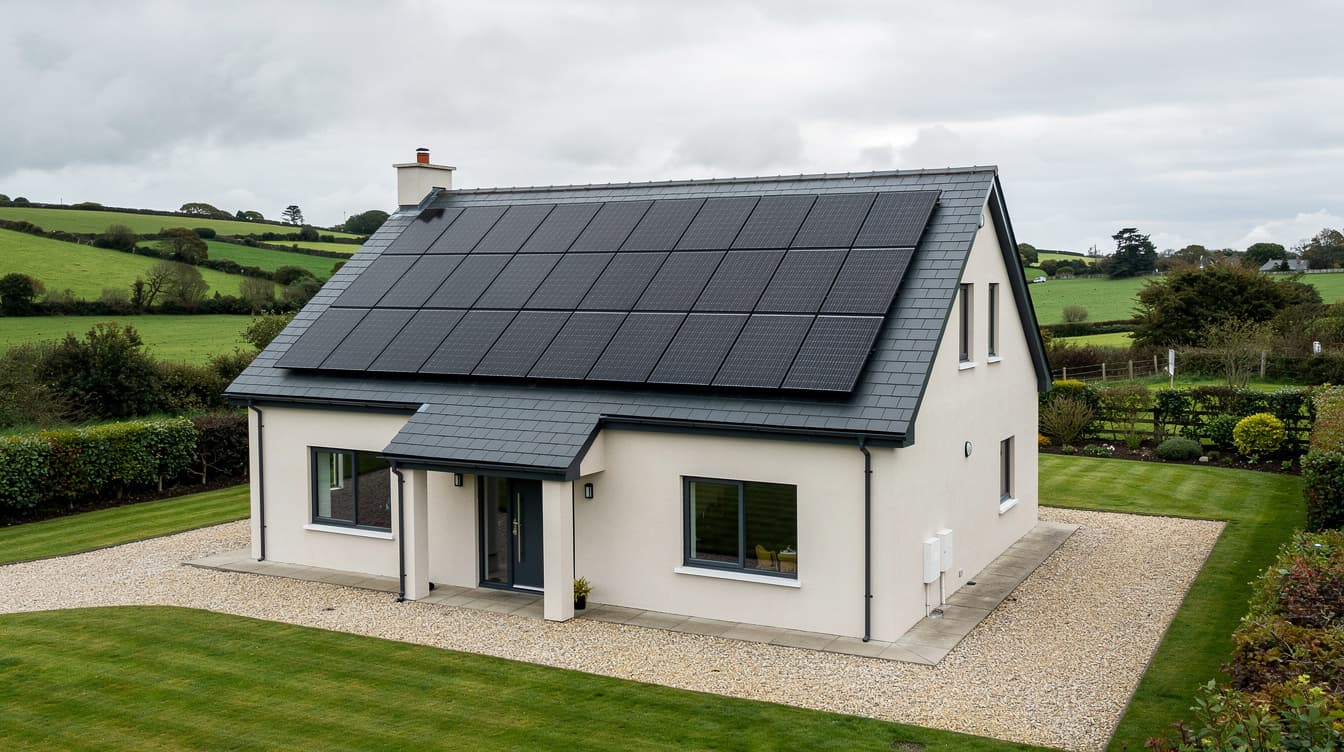
If you own a bungalow in Ireland, you are sitting on one of the best roof types in the country for solar panels. Bungalows typically have large, uninterrupted roof planes with fewer dormers, valleys, and obstructions than two-storey houses. That means more usable space, simpler installation, and lower costs per panel.
This guide covers everything a bungalow owner needs to know: how many panels you need, what it costs after the SEAI grant, how much you will save, and the specific advantages your roof shape gives you over other house types.
Why Bungalows Are Ideal for Solar
Not all roofs are created equal when it comes to solar. Here is why bungalows consistently outperform other house types:
1. Larger, uninterrupted roof area. A typical Irish bungalow has 70–100 m² of total roof space. With fewer dormers and gables than a two-storey house, you often have 40–60 m² of usable south-facing area — enough for 16–25+ panels.
2. Lower installation costs. Single-storey roofs are easier to access. Scaffolding is simpler, and installers spend less time on safety setup. This can save €300–€500 compared to a two-storey installation.
3. Easier maintenance. Cleaning panels, checking connections, or inspecting for damage is far simpler when the roof is only 3–4 metres off the ground.
4. Better ventilation underneath. Bungalow attics tend to be well-ventilated, which helps keep panels cool in summer. Cooler panels are more efficient — every degree above 25°C reduces output by roughly 0.3–0.4%.
In short, if you have a bungalow with a south, south-east, or south-west facing roof, you have an almost ideal setup for solar in Ireland.
How Many Panels Does a Bungalow Need?
The right system size depends on your electricity usage, not just your roof size. Here is a quick sizing guide based on typical bungalow households:
| Bungalow Type | Annual Usage | Recommended System | Panels Needed |
|---|---|---|---|
| Small bungalow (1–2 bed) | 3,000–3,500 kWh | 3.1 kWp | 7 panels |
| Medium bungalow (3 bed) | 4,000–5,000 kWh | 4.4 kWp | 10 panels |
| Large bungalow (4–5 bed) | 5,500–7,000 kWh | 6.2 kWp | 14 panels |
| Large bungalow + EV | 7,000–9,000 kWh | 8.0 kWp | 18 panels |
A key advantage for bungalows: because you have more roof space than a typical semi-d, you can often go bigger than the minimum recommended system. A larger system means more electricity exported to the grid under the Clean Export Guarantee, earning you 24c/kWh from your supplier.
Each modern panel (2026 N-type TOPCon standard) produces around 440W and measures approximately 1.9 m². So 10 panels need about 19–21 m² of roof space — well within what most bungalows offer on a single roof face.
Ready to Go Solar?
Get your free personalised quote from SEAI-registered installers.
Full Cost Breakdown (After SEAI Grant)
Solar panel costs in Ireland have stabilised in 2026 thanks to 0% VAT and mature supply chains. Here is what bungalow owners can expect to pay:
| System Size | Panels | Cost Before Grant | SEAI Grant | Net Cost |
|---|---|---|---|---|
| 3.1 kWp | 7 | €5,800–€6,500 | €1,600 | €4,200–€4,900 |
| 4.4 kWp | 10 | €7,300–€8,500 | €1,800 | €5,500–€6,700 |
| 6.2 kWp | 14 | €9,800–€11,200 | €1,800 | €8,000–€9,400 |
| 8.0 kWp | 18 | €12,500–€14,000 | €1,800 | €10,700–€12,200 |
How the SEAI grant works: You receive €700 per kWp for the first 2 kWp, and €200 per kWp for capacity between 2–4 kWp. The maximum grant is €1,800 for systems of 4 kWp or larger. Your home must have been built and occupied before 2021.
Bungalows often come in slightly cheaper than two-storey houses because the scaffolding requirements are simpler and the roof is easier to work on. Expect to save €300–€500 on installation labour compared to a similar-sized system on a two-storey house.
Bungalow Roof Types and Solar Compatibility
Irish bungalows come in several roof styles. Here is how each one works with solar panels:
Hip roof (most common): Four sloping sides with no gable walls. This is the classic Irish bungalow roof. You get two large, usable faces — ideal if one faces south. Even east/west faces work well on a hip roof because of their generous size. Panels can go on two or even three faces if needed.
Gable roof: Two sloping sides with vertical walls at each end. Simpler than a hip roof and often gives you a single large south-facing plane — the ideal setup. Very common on older bungalows.
Dormer bungalow: A bungalow with rooms in the roof space, creating dormer windows that protrude from the roof. The dormers reduce usable panel area, but you typically still have enough space for 8–14 panels between and around the dormers.
Flat or low-pitch roof: Less common but found on some 1960s–1970s bungalows. Panels are mounted on angled frames (typically 30–35° tilt) to maximise sunlight capture. Slightly higher installation cost due to the mounting frames (€400–€600 extra).
Realistic Savings for Bungalow Owners
How much you save depends on three things: your system size, how much electricity you use during daylight hours, and whether you export surplus to the grid. Here are realistic 2026 figures:
| System | Annual Generation | Self-Use Savings | Export Income | Total Savings/yr | Payback |
|---|---|---|---|---|---|
| 3.1 kWp (7 panels) | 2,800 kWh | €520 | €160 | €680 | 6–7 yrs |
| 4.4 kWp (10 panels) | 3,950 kWh | €700 | €280 | €980 | 5–7 yrs |
| 6.2 kWp (14 panels) | 5,550 kWh | €880 | €420 | €1,300 | 6–7 yrs |
| 8.0 kWp (18 panels) | 7,200 kWh | €1,050 | €600 | €1,650 | 6–7 yrs |
Note: Self-use savings assume 38c/kWh average electricity rate (typical mid-2026 unit rate). Export income assumes 24c/kWh under the Clean Export Guarantee. Bungalow owners who work from home or are retired tend to have higher self-use ratios (40–50% vs the typical 30–35%), which improves payback.
Many bungalow owners are retirees who are home during the day — this is a significant advantage. Being home when the sun shines means you use more of your own solar electricity directly, which is worth 38c/kWh rather than the 24c/kWh you get for exporting it.
Find Out What You Could Save
Use our free calculator to estimate your solar savings based on your electricity bill.
Should You Add a Battery or Diverter?
Once you have solar panels generating electricity, you have two options for dealing with surplus power beyond exporting it to the grid:
Solar Immersion Diverter (€450–€640 installed)
A solar diverter sends surplus electricity to your immersion heater, giving you free hot water from March to October. This is the cheapest add-on and pays for itself in 1–2 years. Popular brands include the myenergi Eddi (€400–€500) and iBoost (€300–€400).
Best for: Bungalow owners with a hot water cylinder who want a quick, low-cost upgrade.
Battery Storage (€2,500–€6,000 installed)
A solar battery stores surplus electricity for use in the evening and at night. A 5 kWh battery costs €2,500–€3,500 installed. Batteries make the most sense for larger systems (6+ kWp) where you are exporting a lot of power.
Best for: Bungalow owners with larger systems who want to maximise self-consumption and reduce grid dependence.
Our recommendation for most bungalow owners: Start with panels + diverter. Add a battery later if your electricity bills still seem high in the evenings. Battery prices are expected to continue falling through 2026–2027.
Planning Permission for Bungalows
Good news: most bungalow solar installations do not require planning permission. Under current exempted development rules:
- Roof-mounted panels on a house are exempt from planning permission
- Panels must not project more than 15 cm above the roof surface
- Panels must be at least 50 cm from the edge of the roof
- The total area of panels must not exceed 12 m² or 50% of the total roof area (whichever is greater) — this generous limit means bungalows rarely hit the cap
- If your bungalow is in an Architectural Conservation Area or is a protected structure, you will need planning permission
Your installer will confirm whether your specific property qualifies for the exemption as part of the survey.
How to Get Started
Here is the step-by-step process for getting solar panels on your bungalow:
- Get 3 quotes. Request free quotes from SEAI-registered installers. They will do a site survey and assess your roof.
- Compare quotes carefully. Look at panel brand, inverter type, warranty length, and total installed price. Our guide to choosing an installer walks you through what to look for.
- Apply for the SEAI grant. Your installer typically handles this for you. The grant is paid directly to the installer, so you only pay the net cost. Read our step-by-step SEAI grant guide.
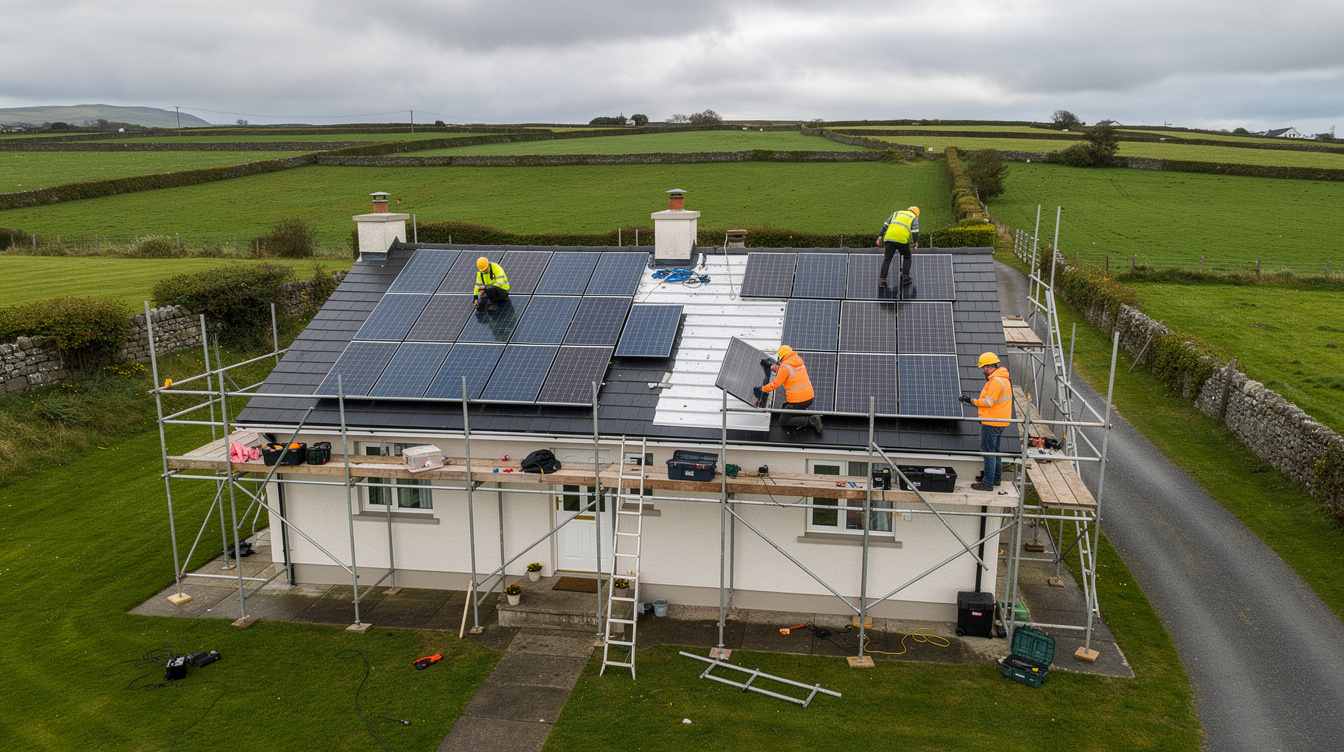
- Installation takes 1–2 days. A typical bungalow installation is faster than a two-storey house — many are completed in a single day for systems up to 10 panels.
- Register for the Clean Export Guarantee. Contact your electricity supplier to sign up and start earning from exported power.
Ready to Go Solar?
Get your free personalised quote from SEAI-registered installers.
The Bottom Line
Bungalows are among the best house types in Ireland for solar panels. You have the roof space, the access is easy, and the costs are slightly lower than for two-storey homes. Whether you are a retiree looking to cut bills, a young family in a rural bungalow, or anyone in between — the numbers work.
- 10 panels (4.4 kWp) suits the average 3-bed bungalow — from €5,500 after the SEAI grant
- €980 saved per year on a typical installation
- 5–7 year payback, then 20+ years of near-free electricity
- No planning permission needed for most installations
- Add a diverter for free hot water — just €450–€640 extra
The best way to find out exactly what your bungalow could save is to get a free quote from a local SEAI-registered installer.
Related Articles
Solar Panel System Cost by Number of Panels Ireland 2026: 8, 12, 14, 20, 24 Panel Prices
What 8, 12, 14, 16, 20 or 24 solar panels actually cost in Ireland 2026 — net after €1,800 SEAI grant & 0% VAT, output kWh, roof area & battery add-ons.
6kW Solar System Cost Ireland 2026: Real Prices, Output & Payback
6kW solar costs €7,700–€10,500 net after the €1,800 SEAI grant and 0% VAT in Ireland 2026. Real quote, 5,270 kWh/yr output, EV/battery ROI.
5kW Solar System Cost Ireland 2026: Real Prices, Output & 25-Year ROI
5kW solar system costs €6,700–€9,200 net after the €1,800 SEAI grant and 0% VAT in Ireland 2026. Full itemised breakdown, real output data & battery ROI.