
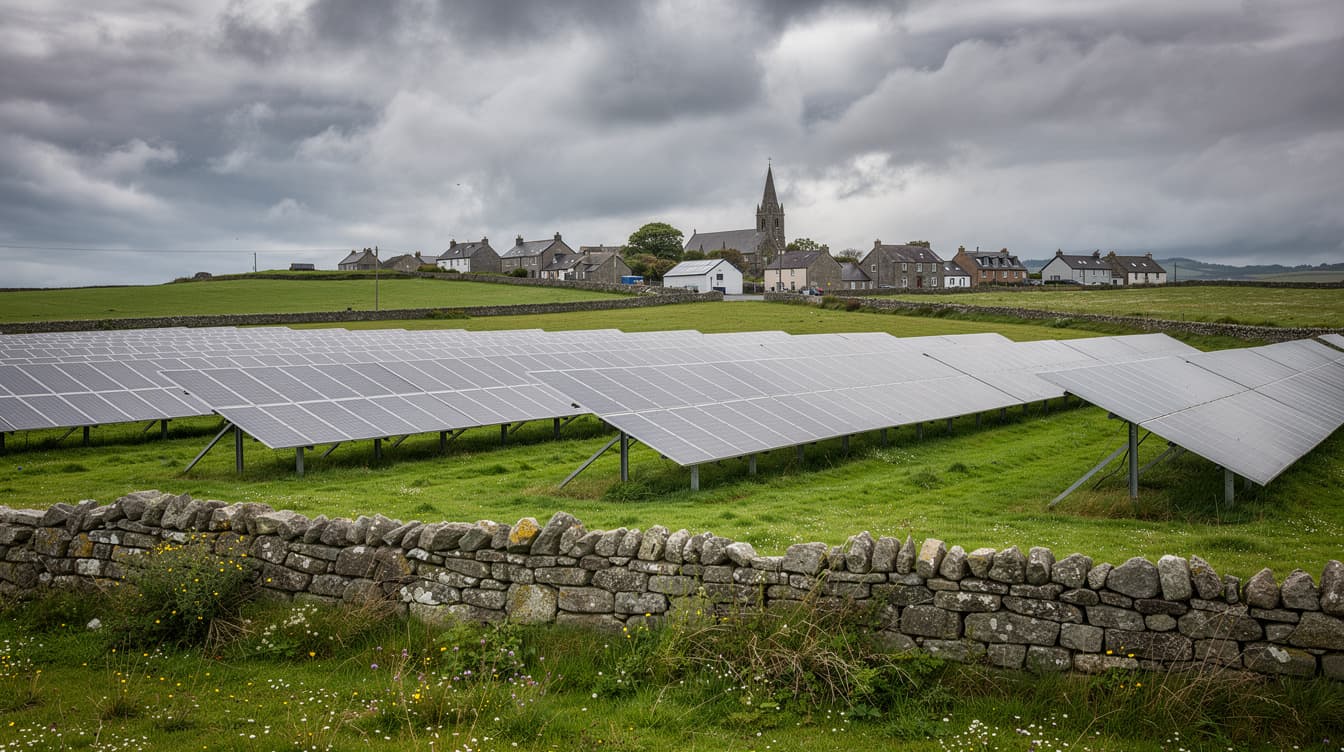
Community Solar Projects Ireland 2026: How to Benefit from Solar Without Your Own Roof
Not everyone has a south-facing roof. Not everyone owns their home. But everyone pays an electricity bill — and in 2026, community solar projects are giving Irish people a way to benefit from solar energy without installing a single panel on their own property. Over 1,000 Sustainable Energy Communities are now active across Ireland, and community-owned solar farms are generating power in Mayo, Galway, Tipperary and beyond.
Whether you are a renter, apartment dweller, or homeowner with a shaded or north-facing roof, community solar could be your way into Ireland’s clean energy revolution. This guide explains what community solar is, how it works in Ireland, how to join a project near you, and what it actually costs and saves.
Want Solar But Can’t Install Panels?
Get advice on community solar options or a free quote for your own installation.
What Is Community Solar?
Community solar is a model where a group of people — homeowners, renters, businesses, community organisations — collectively invest in or subscribe to a shared solar installation. Instead of each person putting panels on their own roof, the community builds one larger, more efficient system and shares the benefits.
In Ireland, community solar takes several forms:
- Community-owned solar farms — A co-operative or community group develops a solar farm on local land. Members invest and receive a share of the revenue from electricity sales
- Sustainable Energy Communities (SECs) — SEAI-supported community groups that work together on energy projects, including solar on community buildings, schools, and sports clubs
- Community electricity suppliers — Organisations like Community Power that operate community-owned solar farms and sell the electricity directly to member-customers
- Shared rooftop schemes — Solar panels on apartment blocks, housing estates, or commercial buildings where the energy is shared among multiple households
Why Community Solar Matters in Ireland
Ireland has a specific problem that community solar solves. Consider these numbers:
| Challenge | Scale | Community Solar Solution |
|---|---|---|
| Renters who cannot install panels | ~600,000 households | Subscribe to a community solar project instead |
| Apartments with no rooftop access | ~220,000 units | Shared rooftop or off-site community farm |
| North-facing or heavily shaded roofs | ~15% of homes | Access solar from an optimally sited farm |
| Upfront cost barrier | Many households | Spread investment across a community or subscribe without any capital |
| Rural communities with limited grid infrastructure | Nationwide | Local generation reduces grid dependence |
The Irish government has recognised this. Budget 2026 allocated a record €558 million for home and community energy upgrade grants. And the Renewable Electricity Support Scheme (RESS) has reserved specific capacity for community-led solar and wind projects.
How Community Solar Works in Ireland: 3 Models
Model 1: Community-Owned Solar Farm
This is the most established model. A community co-operative purchases or leases land, builds a solar farm, and sells the electricity to the grid through the RESS auction scheme. Members invest upfront and receive dividends from electricity sales over 15–20 years.
How it works:
- A community group forms a co-operative (typically a DAC — Designated Activity Company)
- Members invest a minimum amount (often €500–€5,000 per share)
- The co-op develops a solar farm (typically 1–5 MW)
- Electricity is sold through a RESS contract at a guaranteed price for 15 years
- Profits are distributed to members as dividends
Real example: Community Power in Tipperary operates community-owned solar farms in Mayo and Galway, with additional projects in Tipperary and Mayo awarded through RESS 2. Members both invest in the farm and can switch their electricity supply to Community Power as customers.
Model 2: Sustainable Energy Community (SEC)
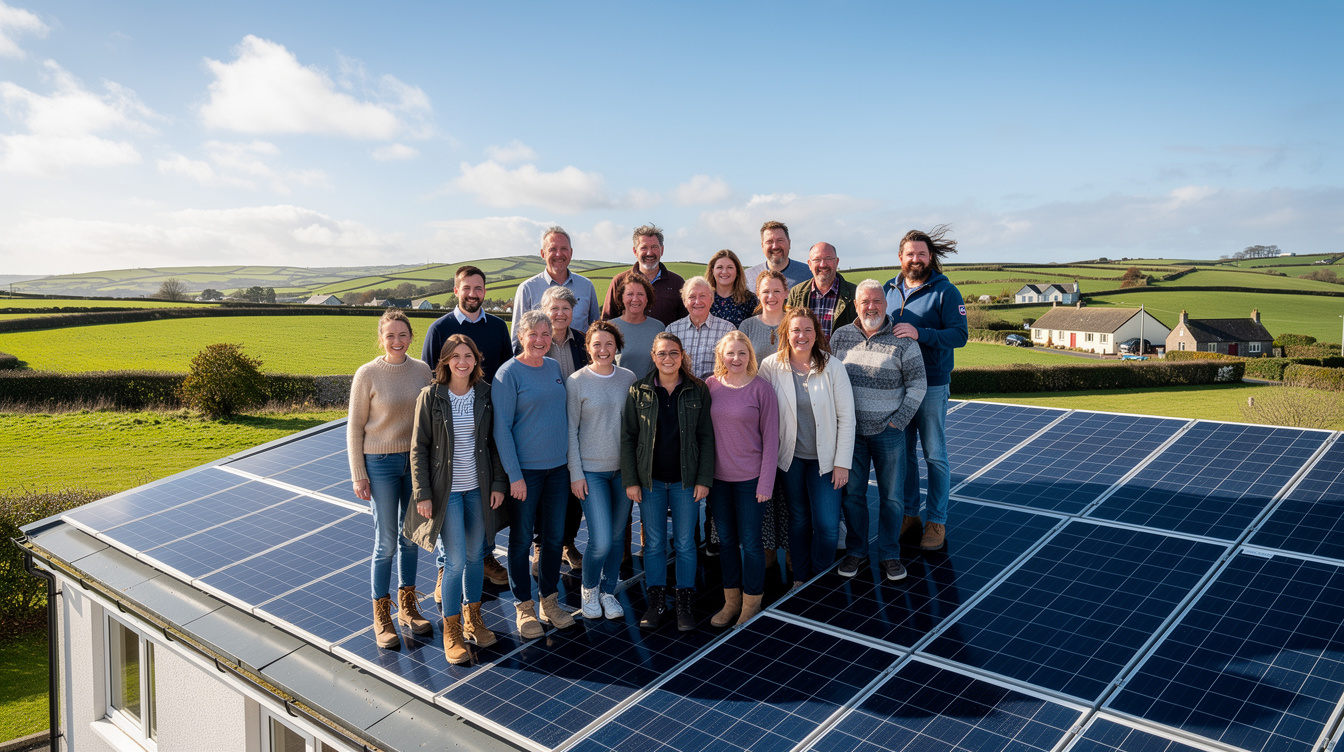
SECs are community groups supported by SEAI that work together on energy efficiency and renewable energy projects. Over 1,000 SECs are now active across Ireland, covering every county.
What SECs can do:
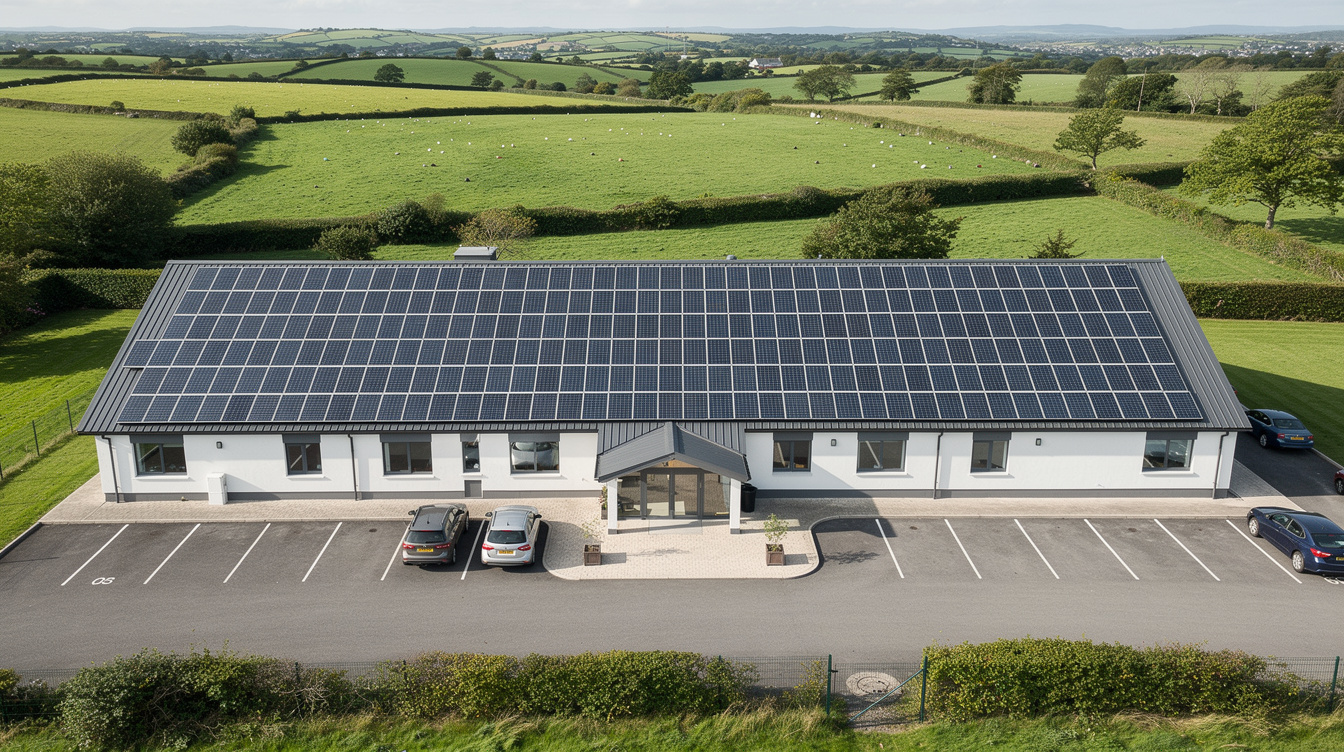
- Install solar panels on community buildings (GAA clubs, community halls, schools, churches)
- Coordinate group purchases of solar panels for members’ homes at negotiated rates
- Develop community solar farms
- Manage community battery storage projects
- Run energy retrofit programmes for the local area
SEAI support for SECs includes:
- €10,000–€25,000 for an Energy Master Plan — a professional assessment of the community’s energy needs and opportunities
- A dedicated SEAI mentor assigned to guide the community
- Access to community grant funding of up to €162,600 for solar PV on community buildings
- Training, workshops, and networking with other SECs
Model 3: Renewable Energy Community (REC)
This is the newest and most exciting model, enabled by the EU’s Clean Energy Package and transposed into Irish law. A Renewable Energy Community is a legal entity where members can:
- Generate renewable energy collectively
- Store energy in shared battery systems
- Share electricity between members (including across different buildings)
- Sell surplus to the grid
The key innovation is energy sharing. In a REC, solar panels on a community hall can supply electricity to nearby homes through the grid, with the energy credited to participating households. This means you do not need panels on your own roof to benefit from local solar generation.
Ireland is currently piloting this model through the INNO-TREC project (Innovative Transactive Renewable Energy Communities), funded by Horizon Europe. The project runs through June 2029 and is developing tools to make RECs easier to set up and manage.
Community Power: Ireland’s Pioneer
Community Power, based in Nenagh, Co. Tipperary, is Ireland’s first community-owned electricity supplier. Here is how they work:
| Feature | Detail |
|---|---|
| What they do | Develop community-owned solar farms and supply electricity to customers |
| Ownership model | Co-operative — customers become member-owners |
| Solar projects | Solar farms in Mayo, Galway, and Tipperary (RESS 1 & RESS 2 winners) |
| Exit fees | None |
| How to join | Switch your electricity supply at communitypower.ie |
| European network | Member of REScoop Europe (1,900+ citizen energy co-ops) |
Switching to Community Power is the simplest way to support community solar in Ireland — no upfront investment, no panels to install, and no lock-in contracts.
How to Get Involved: A Step-by-Step Guide
There are several ways to participate in community solar in Ireland, depending on how much time, money, and commitment you want to invest:
Option 1: Join an Existing SEC (Easiest)
- Visit the SEAI Sustainable Energy Communities map on seai.ie to find a group near you
- Attend a meeting — most SECs welcome new members at any time
- Participate in group energy projects (bulk-buy solar, community retrofit programmes)
- Benefit from negotiated installer rates and shared expertise
Option 2: Switch to Community Power (Simplest)
- Visit communitypower.ie and sign up as a customer
- Your electricity comes from community-owned renewables
- No installation needed — just switch supplier like any electricity change
- Your money supports community-owned solar farms instead of corporate utilities
Option 3: Start a New SEC (Most Impact)
- Gather 5–10 interested neighbours, businesses, or community organisations
- Apply to SEAI’s Sustainable Energy Communities Network
- Receive a dedicated SEAI mentor and €10,000–€25,000 for an Energy Master Plan
- Develop projects: solar on community buildings, group purchases, energy retrofits
- Apply for community grants (up to €162,600 for solar PV on community buildings)
Option 4: Invest in a Community Solar Farm (Most Financial Return)
- Find a community solar co-operative accepting investment (Community Power, local RECs)
- Invest a minimum share (typically €500–€5,000)
- Receive dividends from electricity sales over 15–20 years
- Typical returns: 3–6% annually, with capital returned over the project lifetime
Prefer Your Own Solar Panels?
If you do have a suitable roof, get a free quote from SEAI-registered installers.
Community Solar vs Individual Rooftop Solar
Both have their place. Here is how they compare:
| Factor | Individual Rooftop Solar | Community Solar |
|---|---|---|
| Upfront cost | €4,200–€12,700 (after grant) | €0 (subscription) to €500–€5,000 (investment) |
| Savings potential | Higher — direct self-consumption at retail rates | Lower — savings come via bill credits or dividends |
| Suitable for renters | No (unless balcony solar) | Yes |
| Suitable for apartments | Limited | Yes |
| SEAI grant | Up to €1,800 | Up to €162,600 for community buildings |
| Property value increase | Yes | No direct impact |
| Maintenance responsibility | Yours | The community group or co-operative |
| Best for | Homeowners with suitable roofs | Renters, apartment dwellers, and community-minded homeowners |
The two approaches are not mutually exclusive. If you own your home with a good roof, installing your own solar panel system will give you the best financial returns. But you can also join your local SEC and support solar on community buildings at the same time.
Government Support and Funding in 2026
Ireland is putting serious money behind community energy:
- €558 million in Budget 2026 for home and community energy upgrades
- RESS auctions reserve specific capacity for community-led projects — RESS 1 and RESS 2 have already awarded contracts to community solar farms
- SEAI SEC funding: €10,000–€25,000 for Energy Master Plans, plus access to community grant funding
- Community solar PV grants of up to €162,600 for non-profit and community buildings
- Horizon Europe funding for pilot projects like INNO-TREC, developing new tools for Renewable Energy Communities
- EU Clean Energy Package legislation transposed into Irish law, giving RECs legal standing to generate, store, share, and sell electricity
Challenges and Limitations
Community solar in Ireland is growing fast, but there are real challenges to be aware of:
- Regulatory complexity — Setting up a Renewable Energy Community involves significant legal and regulatory work. The rules around energy sharing are still being finalised
- Grid connection delays — Community solar farms need grid connections from ESB Networks, which can take 12–24 months to arrange
- Volunteer fatigue — SECs rely on volunteers. Sustaining energy and commitment over multi-year projects is challenging
- Investment risk — Like any investment, community solar farm shares carry risk. Returns depend on electricity prices, weather, and operational costs
- Scale limitations — Ireland’s community solar sector is still young compared to countries like Germany, Denmark, and the Netherlands where community energy is mainstream
- Energy sharing rules — The ability to directly share electricity between buildings in a REC is being piloted but is not yet widely available
What’s Coming Next
The next few years will be transformative for community solar in Ireland:
- RESS 3 and beyond — Future auction rounds will likely increase the community energy allocation, creating more opportunities for community solar farms
- Energy sharing pilots — The INNO-TREC project (running to 2029) will develop practical tools and frameworks for energy sharing within RECs
- Plug-in solar legalisation — Energy Minister Darragh O’Brien has signalled openness to legalising plug-in solar, which could make community solar in apartment blocks much simpler
- Private wire legislation — Proposed new rules would allow direct connections between generators and consumers, and between neighbouring properties — a game-changer for local energy sharing
- Community battery storage — Shared batteries serving entire streets or estates could become the next step beyond community solar generation
The Bottom Line
Community solar is not a replacement for putting panels on your own roof — individual rooftop solar will always give you the best pound-for-pound savings. But for the hundreds of thousands of Irish people who cannot install their own panels, community solar opens a door that was previously closed.
The simplest step you can take today is to find your local Sustainable Energy Community on the SEAI website or switch your electricity supply to Community Power. Neither requires any upfront investment or installation work.
If you are more ambitious, starting or joining a community solar project can deliver real financial returns, reduce your community’s carbon footprint, and keep energy investment local. With €558 million in government funding available and new EU-backed legislation supporting energy sharing, there has never been a better time to get involved.
Ready to Go Solar?
Whether it’s community solar or your own rooftop system, get a free personalised quote.
Related Articles
Solar Panels for Farms Ireland 2026: TAMS III Grants, Costs & ROI for Irish Farmers
Complete guide to farm solar panels in Ireland. TAMS III covers 60% of costs. Typical payback 2.5-5 years with savings of €4,000-€15,000/year.
Solar Carports Ireland 2026: Costs, Planning Permission, EV Charging & Is It Worth It?
Solar carport costs in Ireland from €6,000–18,000. Covers planning permission, SEAI grant eligibility, EV charger integration and real payback figures for 2026.
Solar Panel Grants for Landlords in Ireland 2026: SEAI Grant, Tax Relief & BER Rules
Landlords can claim the SEAI solar grant plus up to €10,000 tax relief per rental property. Full 2026 guide to eligibility, BER rules, and ROI.