
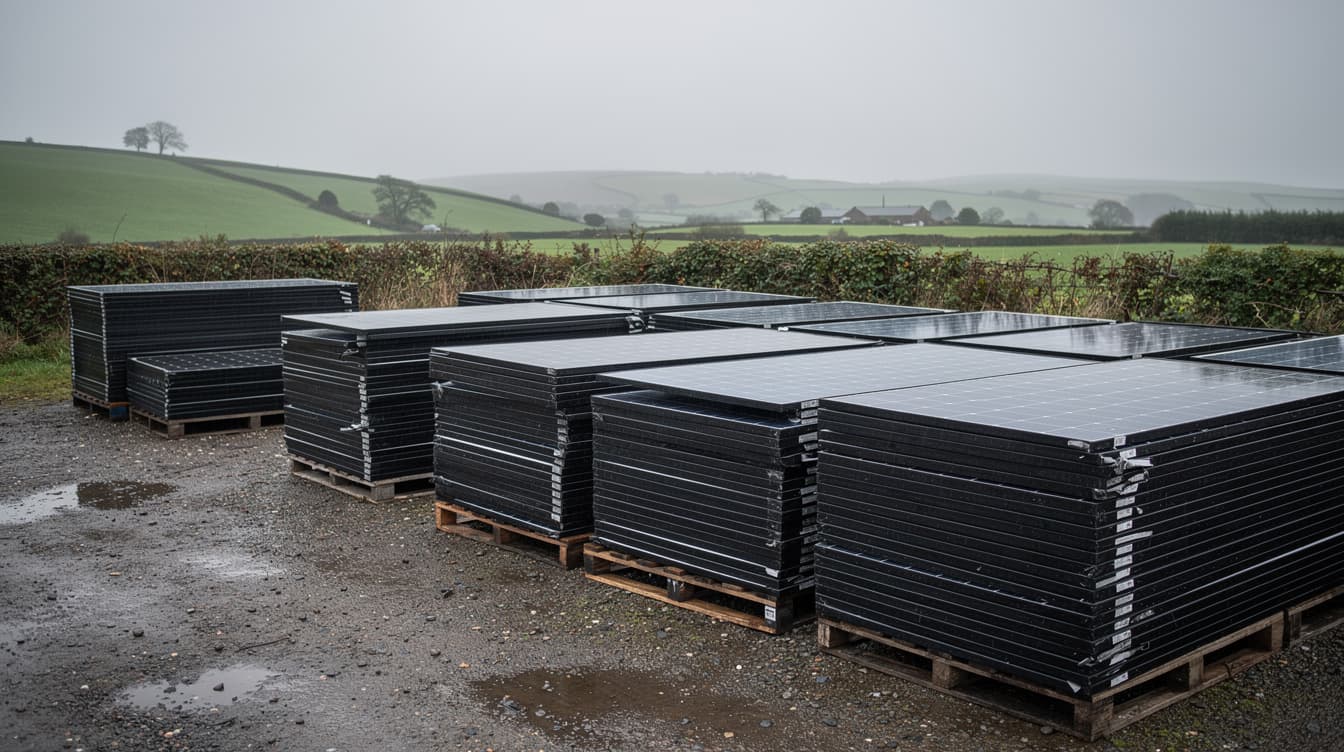
Solar Panel Recycling & Disposal Ireland 2026: WEEE Rules, Cost & Where Panels Actually Go
Solar panels in Ireland don’t belong in a landfill and, since 2018, it’s illegal to put them there. They fall under the WEEE Directive as electrical equipment, which means the retailer or installer that supplied them is legally on the hook for taking them back at end of life – free of charge. In practice, most homeowners never think about disposal because panel warranties run 25–30 years and the first wave of Irish domestic PV is only just reaching that mark. This guide walks through what actually happens when your panels hit end of life, where they go, and what it costs.
Ireland installed its first serious wave of domestic PV around 2018–2020 – the SEAI grant era – but panels installed earlier through pilot schemes are already hitting 20 years old. The question of “what do we do with dead panels?” is starting to come up for real. Here’s the honest 2026 picture: the recycling infrastructure exists, most of the panel by weight is recyclable, and legal responsibility sits with the producer – but the practical routes for a homeowner are narrower than the industry likes to admit.
Are solar panels actually recyclable?
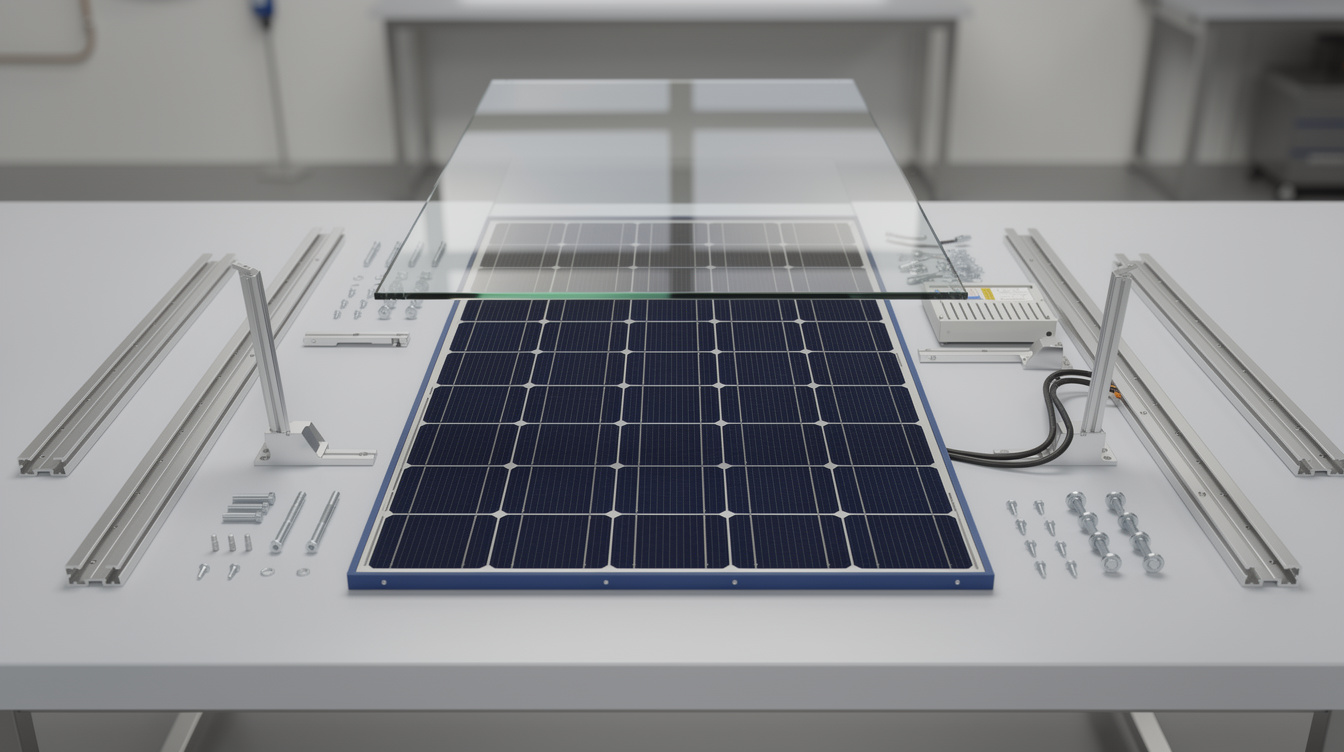
Yes, but with an asterisk. A modern silicon PV panel is roughly:
| Component | % of panel weight | Recyclable? |
|---|---|---|
| Glass (front sheet) | ~70% | Yes — standard glass recycling |
| Aluminium frame | ~10% | Yes — standard metals recycling |
| Silicon cells + copper busbars | ~5% | Yes — specialist thermal or chemical process |
| EVA encapsulant, backsheet, junction box | ~15% | Partial — usually incinerated for energy recovery |
A typical 400 W panel weighs 22 kg. Around 20 kg of that — the glass and aluminium — goes back into general recycling streams straightforwardly. The remaining 2 kg contains silicon, silver, copper, tin and small amounts of lead in older panels. That fraction is where the specialist recyclers earn their keep. Recovery rates of 95%+ by mass are achievable and are the standard the industry benchmarks against.
What Irish law actually says — WEEE Directive 2012/19/EU
Solar PV panels have been formally within the scope of the EU Waste Electrical and Electronic Equipment (WEEE) Directive since 14 August 2018. In Ireland the directive is transposed through the European Union (Waste Electrical and Electronic Equipment) Regulations. What that means in practical terms:
- Producer responsibility. Whoever puts a panel on the Irish market — the manufacturer, importer or distributor — is legally responsible for financing its end-of-life collection and treatment. Not you.
- Free take-back. The producer (or their approved compliance scheme, usually WEEE Ireland or ERP Ireland) must collect the panel at end of life at no cost to the homeowner.
- 1-for-1 obligation. If you buy new panels, the retailer must take an equivalent number of old panels off you for free.
- No landfill. Sending PV panels to landfill or to a general waste facility that doesn’t hold a WEEE authorisation is an offence.
All of this sounds tidy on paper. The reality on the ground is patchier.
How to actually recycle a solar panel in Ireland in 2026
There are four practical routes. Which one fits depends on how many panels you have, whether they still work, and how you originally bought them.
Route 1: Give them back to the installer (best case)
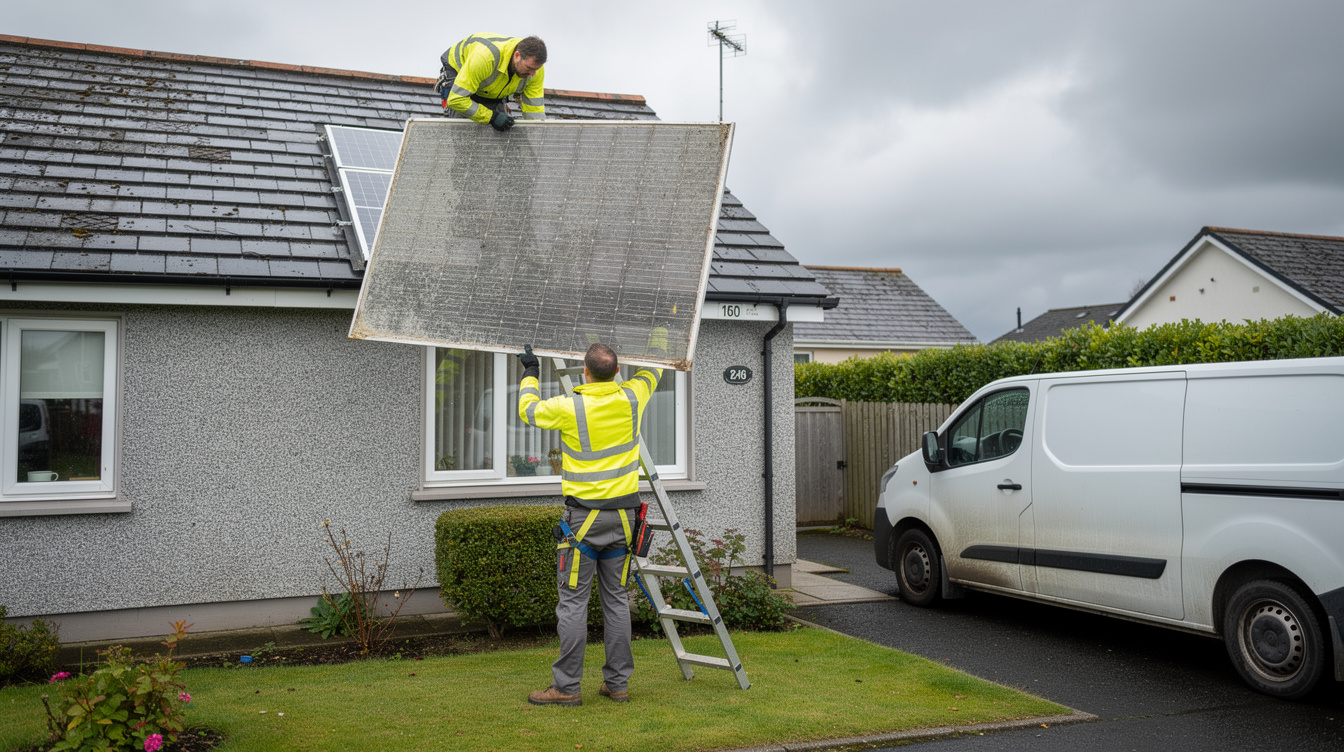
If you’re having your system upgraded, replaced or removed by an SEAI-registered installer, they should take the old panels away as part of the job. This is what the WEEE Directive intends. A good installer already has a route to a WEEE-authorised waste collector and factors it into the quote. Ask up front — the phrase you want is “What’s your WEEE disposal route for the removed panels?” A vague answer is a red flag.
Route 2: Contact WEEE Ireland or ERP Ireland directly
These are the two approved compliance schemes operating in Ireland. Either will arrange collection or point you to the nearest Bring Centre that accepts PV panels. Not every Bring Centre does — call ahead. Collection is free for the homeowner.
- WEEE Ireland: weeeireland.ie — the larger of the two compliance schemes.
- ERP Ireland: erp-recycling.org/ie — the other authorised operator.
Route 3: 1-for-1 take-back when buying new
If you’re replacing panels with a new set from the same retailer, they’re legally required to take the old ones off you at zero cost. This applies whether the retailer is a national installer or an online shop that ships to Ireland. Get the take-back agreed in writing before you buy.
Route 4: Local Authority Bring Centre
Some local authority Bring Centres accept small numbers of PV panels under their WEEE category. Larger centres in Dublin, Cork, Galway and Limerick generally do; smaller rural centres often don’t. Bring a photo of the panel and call before you drive over.
Planning to upgrade or replace old panels?
Get quotes from SEAI-registered installers who handle WEEE disposal as part of the job.
What does solar panel recycling actually cost?
For the homeowner: nothing. Producer responsibility means the compliance scheme is funded by a levy paid by manufacturers at the point of sale. That levy is embedded in the panel price you paid at install — typically €2–€5 per panel — and it’s what pays for collection and treatment years later.
For the industry, treatment costs run around €0.50–€0.90 per kg processed. A standard 22 kg silicon panel therefore costs €11–€20 to recycle end to end. Recovered materials — particularly aluminium, silver and copper — offset a chunk of that. Modern specialist recyclers in continental Europe (notably ROSI Solar in France and Reiling in Germany) have recovery rates high enough that the process is close to breaking even on materials value alone.
The elephant in the room — capacity in Ireland
Ireland does not currently have a domestic solar panel recycling facility. Panels collected through WEEE Ireland or ERP Ireland are shipped to specialist processors in France, Germany, the Netherlands or Belgium. That’s not a scandal — the volumes don’t yet justify a dedicated Irish plant — but it does mean the process has a shipping carbon cost that’s not always disclosed.
By SEAI’s own tracking there were roughly 130,000 domestic solar PV installations in Ireland by end-2025. If we assume 15 panels per install (avg 5 kWp), that’s roughly 2 million panels on Irish roofs. At 25 year lifespan, the annual end-of-life volume will scale from <5,000 panels/year today to 50,000–100,000/year by 2045. That’s the point at which a domestic recycling plant becomes commercially viable — and industry lobbies are already advocating for it.
When to recycle vs when to reuse
A panel doesn’t stop working at 25 years — it just produces less. Manufacturers guarantee 80–85% of rated output at year 25, and real-world panels often outperform that. A 400 W panel at 30 years old still producing 300 W is not scrap — it’s a perfectly usable panel for a garden shed, a caravan, an off-grid cabin, or an off-grid project.
Reuse before recycling is the WEEE hierarchy’s explicit priority. In practice:
- Working panels: Sell secondhand on DoneDeal, Adverts.ie, or via specialist marketplaces like SecondSol. Typical resale price for a 15 year old 250 W panel: €20–€40 each.
- Panels with minor cosmetic damage but working electrics: Same routes, discounted 30–50%.
- Panels with cracked cells or shattered glass: Straight to recycling — they’re a fire risk if reinstalled.
- Panels with delamination or major backsheet failure: Recycling only — performance is compromised and moisture ingress makes them dangerous.
Insurance write-offs — storm and fire damage
Panels destroyed in a storm, fire or vehicle impact go through your insurer. What matters for recycling:
- Take photos before anything is moved — both for the claim and for your installer’s records.
- Insurers usually appoint their own contractor to remove and replace. Ask them explicitly for the WEEE waste transfer note. Keep it on file.
- Damaged panels with cracked glass are hazardous waste in transit — do not attempt to move them yourself. Junction boxes on damaged panels can still hold live DC voltage even when disconnected from the grid.
- Your home insurance policy should cover the full replacement including recycling costs of the old panels.
What about the inverter and battery?
Both are also within WEEE Directive scope and follow the same producer-responsibility rules. Two things are different:
- Inverters have a shorter working life — 10–15 years typically — so end-of-life comes up sooner than for panels. The compliance scheme covers replacement.
- Lithium batteries (Tesla Powerwall, GivEnergy, Huawei, Sonnen etc.) fall under the Battery Directive as well as WEEE. Two obligations, one route: return to the retailer or installer. Do not put a lithium battery in general waste — the fire risk in a bin lorry is real.
The carbon accounting question
A common talking point from critics is that the CO₂ embodied in manufacturing a panel exceeds the CO₂ it saves over its lifetime. That was true in the 1990s. It stopped being true around 2005. In 2026 the picture is:
- A 400 W silicon panel embodies roughly 700 kg CO₂ equivalent in manufacture, shipping and installation.
- The same panel on an Irish roof displaces around 300 kg CO₂ per year of grid electricity.
- Carbon payback: roughly 2.3 years. Over a 25-year life it displaces about 7.5 t CO₂ per panel — more than 10× what it took to make.
- Recycling and reprocessing add about 30 kg CO₂ per panel at end of life, mostly from shipping to European recyclers.
So even including the recycling footprint, a solar panel is a solidly positive carbon investment. The end-of-life carbon load doesn’t change the case. What matters more is that we develop domestic recycling capacity so we’re not shipping panels 1,500 km to Germany.
Ready to Go Solar?
Get your free personalised quote from SEAI-registered installers.
Solar recycling myths worth killing
“Solar panels are toxic waste.”
Modern crystalline silicon panels contain trace lead in the solder and small amounts of tin. Neither is at levels that would classify the panel as hazardous under the EU Waste Framework Directive. Older CdTe (cadmium telluride) thin-film panels are more strictly regulated, but these represent under 3% of the Irish domestic market.
“Most panels end up in landfill anyway.”
In Ireland this is illegal. The WEEE compliance scheme audits collection and treatment rates — there is no evidence of significant domestic PV going to landfill. In parts of the developing world where panels are shipped as second-hand goods and later dumped, the picture is less clean — but that’s not the Irish domestic scenario.
“Recycling costs more than the recovered materials are worth.”
Historically true, less true each year. Silver recovery is the big lever — there’s roughly 10 g of silver in a modern panel, and at 2026 prices that’s about €9 in silver alone before glass, aluminium and copper. Modern process recovers 90%+ of that silver.
“Once panels start degrading they’re useless.”
False. A panel at 70% of rated output is still useful for low-priority loads. The industry term is “PV downcycling” and it’s an actively growing secondhand market.
Solar recycling FAQ
What if the manufacturer of my panels has gone out of business?
The WEEE compliance scheme — not the manufacturer — is the entity you go to. WEEE Ireland or ERP Ireland accept legacy panels regardless of whether the original producer still exists. That’s a design feature of the scheme.
Can I DIY recycle a panel?
No. Breaking down a panel yourself exposes you to glass shards, EVA fumes if heated, and small amounts of lead in the solder. Move panels intact to a WEEE facility.
Are second-hand panels covered by grants?
No. The €1,800 SEAI grant requires panels from the Triple E approved list installed new by a registered installer. Second-hand panels are an off-grant DIY route only.
What happens to solar batteries at end of life?
Lithium battery packs are stripped, cells tested, and any usable cells re-formed into new packs for lower-demand applications (backup power, forklift batteries). Unusable cells are shredded and processed for lithium, cobalt and nickel recovery.
Will recycling get cheaper over time?
Yes — volumes are the driver. As the annual end-of-life panel count in Europe rises past 1 million/year in the late 2020s, dedicated recycling lines become more economical. Ireland-based recycling is likely by the mid-2030s.
The bottom line
Solar panel recycling in Ireland in 2026 is a solved problem in law and a maturing one in practice. Your responsibility as a homeowner is minimal — give the panels back to your installer or a WEEE compliance scheme when they’re done, and that’s it. The cost sits with the producer, the recycling infrastructure exists in Europe if not yet in Ireland, and modern panels are 95%+ recoverable.
The bigger question isn’t whether recycling works — it does — but whether the panels reach end of life at all. Most modern silicon panels installed today will still be producing 80% of rated power at year 30. Buy quality, install cleanly, and worry about recycling in 2055.
Ready to Go Solar?
Get your free personalised quote from SEAI-registered installers.
Related Articles
Best Solar Setup Ireland 2026: Complete System Design Guide
The best solar setup for Ireland 2026 — panels, inverter, battery, diverter and installer — with 4 real-world configurations, prices and paybacks.
20 Solar Panels Ireland 2026: Cost, Output, Battery & Payback
What 20 solar panels cost in Ireland 2026 (€12.7-18.6k net after grant), 7,600-8,100 kWh output, roof space, battery choice and payback vs 10 or 14 panels.
Solar Panel Temperature Coefficient Ireland 2026: How Heat Affects Output
What temperature coefficient really means for Irish solar output, real cell temps by season, 2026 brand rankings, and why low-light beats heat spec in Ireland.