
Solar Panels for a 4-Bed House in Ireland 2026: System Size, Costs & Savings
Solar Panels for a 4-Bed House in Ireland 2026: System Size, Costs & Savings
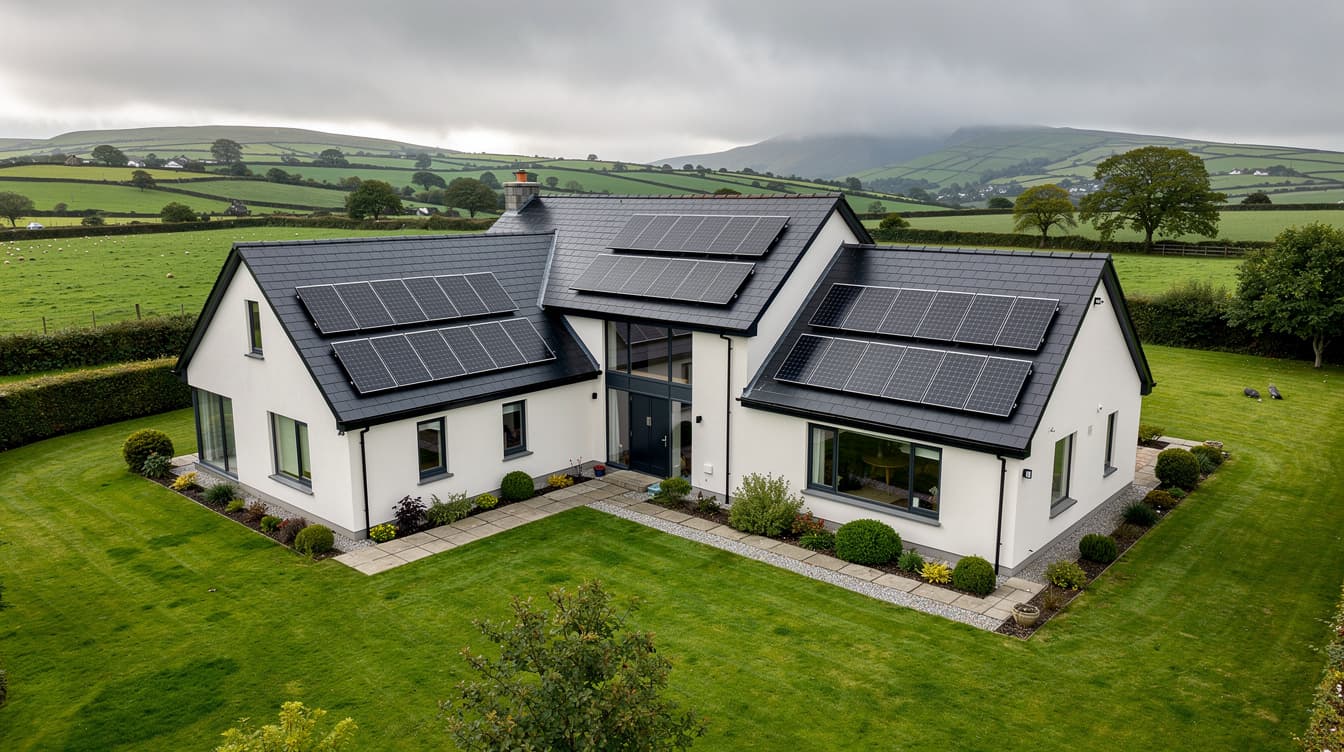
A 4-bed detached or semi-detached house uses more electricity than average — and has more roof space to work with. That combination makes it one of the best candidates for solar in Ireland. Here is exactly what size system you need, what it will cost after the SEAI grant, and how much you will save every year.
If you live in a 4-bed house, your electricity bills are probably €1,600–€2,400 a year. That is a lot of money flowing to your energy supplier. Solar panels can claw back €1,000–€1,500 of that annually — and with the SEAI grant still at €1,800 for 2026, the payback period has never been shorter.
This guide covers everything: the right system size for your usage, full cost breakdowns with and without battery storage, realistic savings calculations, and step-by-step instructions for getting started.
The Quick Numbers
For a typical 4-bed house in Ireland (2026):
- Recommended system: 12–16 panels / 5.3–7.0 kWp
- Roof space needed: 23–31 m²
- Cost before SEAI grant: €8,500–€12,500
- Cost after SEAI grant: €6,700–€10,700
- Annual savings: €1,000–€1,500
- Payback period: 5–8 years
Those numbers cover the range from a standard 4-bed semi to a large detached house with high electricity usage. Now let us work through the detail so you can see where your house falls.
How Much Electricity Does a 4-Bed House Use?
The first step is understanding your electricity consumption. A 4-bed house typically uses significantly more than the Irish average of 4,200 kWh because of the extra bedrooms, larger living spaces, and usually more occupants.
| Household Type | Annual Usage | Annual Bill (2026) |
|---|---|---|
| 4-bed semi, gas heating, 3–4 people | 4,200–5,200 kWh | €1,600–€1,980 |
| 4-bed detached, gas heating, 4–5 people | 5,000–6,500 kWh | €1,900–€2,470 |
| 4-bed detached, oil heating, 4–5 people | 4,500–5,800 kWh | €1,710–€2,200 |
| 4-bed with heat pump | 6,000–8,500 kWh | €2,280–€3,230 |
| 4-bed with heat pump + EV charging | 8,000–11,000 kWh | €3,040–€4,180 |
Based on 2026 average electricity cost of ~€0.38/kWh including standing charges, PSO levy, and 9% VAT.
The easiest way to find your actual usage: log into your electricity supplier’s online portal, or check the “kWh used” figures on your last 4 bills and add them up. If you have a smart meter, ESB Networks can give you exact data.
What Size Solar System Do You Need?
In Ireland, 1 kWp of solar panels produces roughly 900–1,050 kWh per year depending on location (the southeast gets more sun than the northwest) and roof orientation (south-facing is best, east/west still works well).
The goal is to match your system size to your daytime electricity usage. You will never use 100% of what your panels generate — some gets exported to the grid — but the closer the match, the faster the payback.
| System Size | Panels (440W) | Annual Output | Best For |
|---|---|---|---|
| 4.4 kWp | 10 | 4,000–4,600 kWh | Lower-usage 4-bed (gas heating, 3 people) |
| 5.3 kWp | 12 | 4,800–5,500 kWh | Average 4-bed household (4–5 people) |
| 6.2 kWp | 14 | 5,600–6,500 kWh | High-usage or heat pump homes |
| 7.0 kWp | 16 | 6,300–7,300 kWh | Heat pump + EV charging |
| 8.8 kWp | 20 | 7,900–9,200 kWh | Maximum roof coverage, future-proofing |
Our recommendation for most 4-bed houses: A 12–14 panel system (5.3–6.2 kWp) hits the sweet spot. It covers most of your electricity needs, maximises the SEAI grant value, and pays for itself in 5–7 years.
If you have a heat pump or charge an EV at home, go bigger — 16 panels (7.0 kWp) or even 20 panels (8.8 kWp) makes financial sense because you are displacing expensive grid electricity with free solar power.
Full Cost Breakdown (2026 Prices)
Solar panel installation in Ireland is VAT-free for residential properties in 2026. The SEAI grant provides €700 per kWp for the first 2 kWp and €200 per kWp for capacity between 2–4 kWp, up to a maximum of €1,800.
| System | Panels | Cost (0% VAT) | SEAI Grant | Net Cost |
|---|---|---|---|---|
| 4.4 kWp | 10 | €7,300–€8,500 | €1,780 | €5,520–€6,720 |
| 5.3 kWp | 12 | €8,500–€9,800 | €1,800 | €6,700–€8,000 |
| 6.2 kWp | 14 | €9,500–€11,000 | €1,800 | €7,700–€9,200 |
| 7.0 kWp | 16 | €10,500–€12,500 | €1,800 | €8,700–€10,700 |
| 8.8 kWp | 20 | €13,000–€15,500 | €1,800 | €11,200–€13,700 |
Prices based on quotes from SEAI-registered installers in Ireland as of May 2026. Includes panels, inverter, mounting hardware, cabling, scaffolding, and labour. Prices vary by location, roof complexity, and brand of panel/inverter.
What is Included in These Prices?
- Solar panels: Typically N-type TOPCon monocrystalline, 420–450W per panel (brands like Trina, JA Solar, Longi, or Canadian Solar)
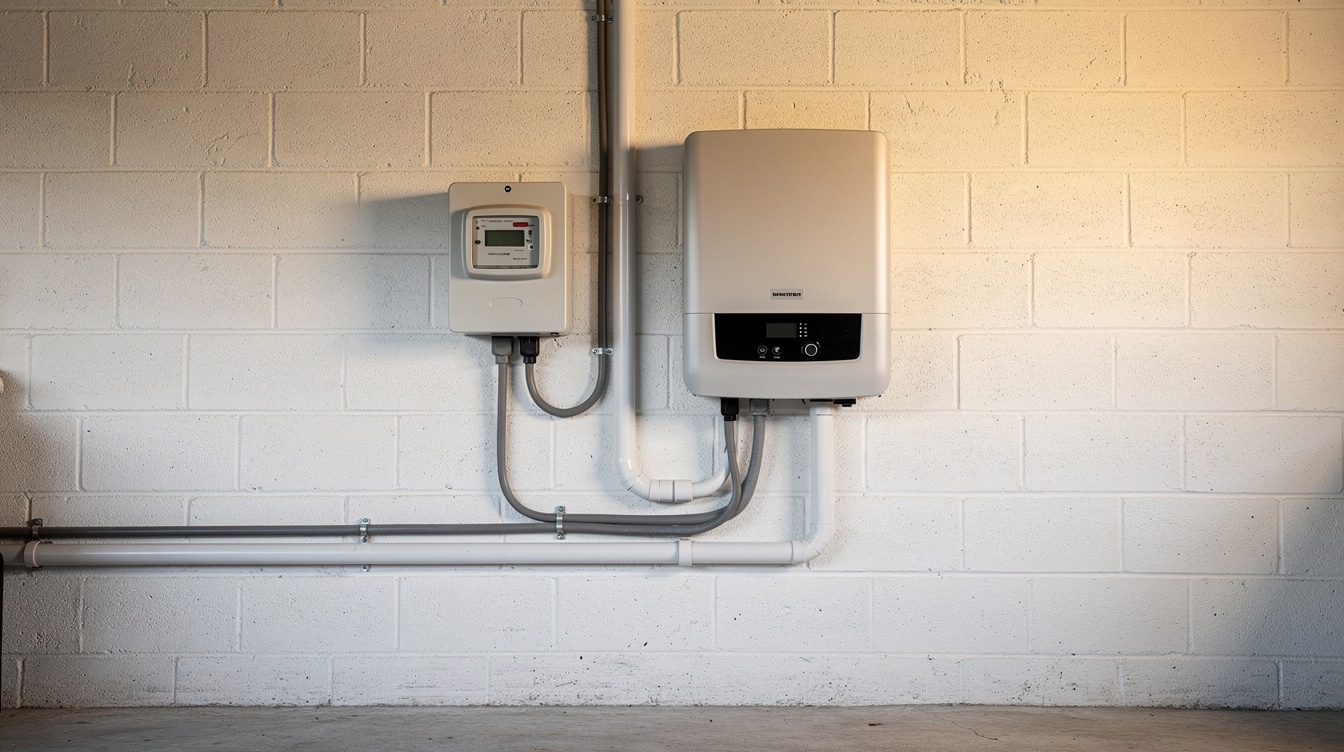
- Inverter: String inverter (SolarEdge, Huawei, or Solis) or microinverters (Enphase)
- Mounting system: Roof-integrated or on-roof rails
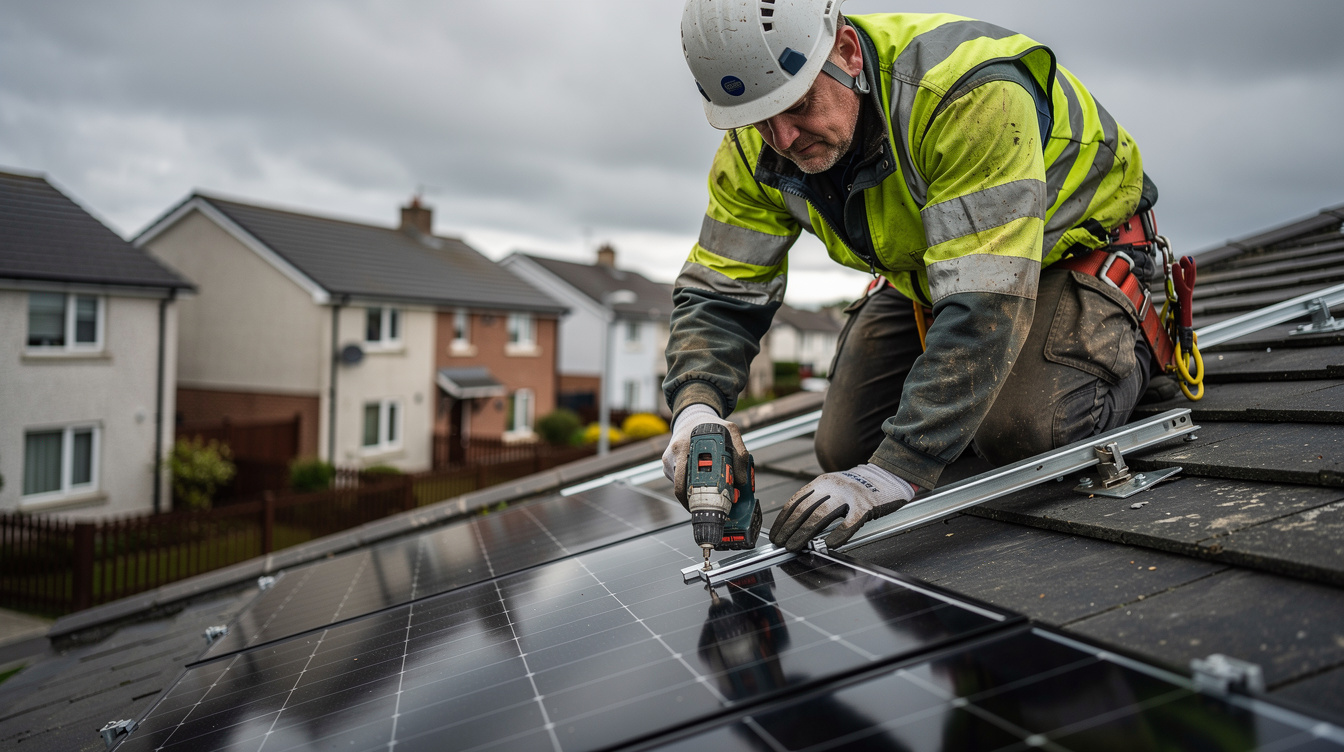
- All electrical work: AC/DC isolators, generation meter, consumer unit connection
- Scaffolding
- ESB Networks notification (NC6 form)
- SEAI grant paperwork
Ready to Go Solar?
Get your free personalised quote from SEAI-registered installers.
Savings: Three Real Scenarios
How much you save depends on two things: how much solar electricity you use yourself (self-consumption) versus how much you export to the grid. Electricity you use yourself saves you the full retail rate (~€0.38/kWh). Electricity you export earns you the Clean Export Guarantee rate (~€0.18–€0.24/kWh depending on your supplier).
Scenario 1: 4-Bed Semi, Gas Heating, 12 Panels
- System: 5.3 kWp (12 panels)
- Annual output: ~4,900 kWh
- Self-consumption: 55% (2,695 kWh used directly)
- Export: 45% (2,205 kWh sold back)
- Savings from self-use: 2,695 × €0.38 = €1,024
- Export income: 2,205 × €0.21 = €463
- Total annual benefit: €1,487
- Net system cost: €7,350
- Payback: 4.9 years
Scenario 2: 4-Bed Detached, Oil Heating, 14 Panels
- System: 6.2 kWp (14 panels)
- Annual output: ~5,700 kWh
- Self-consumption: 45% (2,565 kWh — lower because oil heating means less daytime electricity use)
- Export: 55% (3,135 kWh sold back)
- Savings from self-use: 2,565 × €0.38 = €975
- Export income: 3,135 × €0.21 = €658
- Total annual benefit: €1,633
- Net system cost: €8,450
- Payback: 5.2 years
Scenario 3: 4-Bed Detached, Heat Pump + EV, 16 Panels
- System: 7.0 kWp (16 panels)
- Annual output: ~6,500 kWh
- Self-consumption: 65% (4,225 kWh — heat pump and EV soak up daytime solar)
- Export: 35% (2,275 kWh sold back)
- Savings from self-use: 4,225 × €0.38 = €1,606
- Export income: 2,275 × €0.21 = €478
- Total annual benefit: €2,084
- Net system cost: €9,700
- Payback: 4.7 years
Key takeaway: The more electricity you use during the day (heat pumps and EV charging are ideal), the faster solar pays for itself. Scenario 3 has the highest system cost but the shortest payback because so much expensive grid electricity is being displaced.
Should You Add a Battery?
A battery stores surplus solar electricity for use in the evening when the panels are not generating. This increases your self-consumption rate from ~50% to ~75–85%, meaning less electricity is exported at the lower feed-in rate and more is used at the full retail rate.
| Battery Option | Capacity | Added Cost | Extra Annual Savings | Battery Payback |
|---|---|---|---|---|
| 5 kWh (e.g. Huawei Luna) | 5 kWh | €2,500–€3,500 | €250–€350 | 8–12 years |
| 10 kWh (e.g. Tesla Powerwall) | 10–13.5 kWh | €6,000–€8,500 | €400–€550 | 12–16 years |
Our honest take: For most 4-bed houses, start with panels only. The panels pay for themselves in 5–7 years. A battery adds comfort (backup power, higher self-use) but the financial payback is longer. You can always add a battery later — just make sure your installer fits a battery-ready inverter (most modern hybrid inverters are).
The exception: if you have a heat pump and/or EV and very high electricity usage, a 5 kWh battery can make sense from day one because the extra self-consumption savings are larger.
Will Your Roof Fit the Panels?
A 4-bed house typically has more roof space than a 3-bed semi, which is one of its biggest advantages for solar. Here is what you need:
| Number of Panels | Roof Area Needed | Typical Fit |
|---|---|---|
| 10 panels | ~19–21 m² | Fits most 4-bed semis (one roof face) |
| 12–14 panels | ~23–27 m² | Fits most 4-bed detached (one roof face) |
| 16–20 panels | ~31–39 m² | May need two roof faces (east/west split) |
Standard panel dimensions in 2026: approximately 1.75m × 1.10m (1.93 m² per panel). You also need ~20cm clearance around the array edges.
Roof orientation: South-facing is ideal (100% output). Southeast or southwest gives ~95%. East or west gives ~80–85%. Even a split array across east and west faces works well — you get morning and evening generation, which often matches household usage patterns better than a single south-facing array.
If your roof has dormers, Velux windows, or a chimney, these reduce usable space. Your installer will do a site survey and design the layout. Use our solar panel calculator for a quick estimate.
4-Bed Houses with EVs and Heat Pumps
This is where solar really shines for 4-bed houses. Many 4-bed homeowners are also upgrading to heat pumps or switching to electric vehicles — and both massively increase electricity consumption.
How much extra electricity do these add?
- Air-to-water heat pump: 3,000–5,000 kWh/year for a 4-bed house (replaces oil/gas heating)
- EV charging: 2,000–3,500 kWh/year (based on 12,000–20,000 km driven)
- Combined: An extra 5,000–8,500 kWh/year on top of your base electricity use
Without solar, that could push your annual electricity bill above €4,000. With a 7.0–8.8 kWp solar system, you can offset €1,500–€2,000+ of that cost every year. The larger system costs more upfront, but the payback is actually faster because you are displacing more expensive grid electricity.
Pro tip: If you have an EV, set it to charge during peak solar hours (10am–3pm) using a smart charger or timer. This maximises self-consumption and minimises exports. Many 4-bed households with an EV achieve 65–75% self-consumption rates without a battery.
Ready to Go Solar?
Get your free personalised quote from SEAI-registered installers.
The SEAI Grant: How It Works for 4-Bed Houses
The SEAI solar PV grant for 2026 is confirmed at up to €1,800. Here is how the calculation works:
| Capacity Band | Rate | Amount |
|---|---|---|
| First 2 kWp | €700 per kWp | €1,400 |
| Next 2 kWp (2–4 kWp) | €200 per kWp | €400 |
| Above 4 kWp | €0 | €0 |
| Total maximum | €1,800 |
Key eligibility rules:
- Your house must have been built and occupied before 2021
- You must use an SEAI-registered installer
- No means testing — the grant is available to all eligible homeowners regardless of income
- The installer handles the grant application on your behalf
- Grant is paid directly to you after installation is complete and inspected
For a detailed walkthrough, see our SEAI solar grant application guide.
How to Get Started
- Check your electricity usage. Log into your supplier’s portal or add up your last 4 bills. This determines your ideal system size.
- Get 3 quotes. Always compare at least 3 quotes from different SEAI-registered installers. Prices vary by €1,000–€3,000 for the same system size.
- Check your roof. South, southeast, or southwest facing is best. East/west split also works. Avoid significant shading from trees or neighbouring buildings.
- Choose your system. For most 4-bed houses, 12–14 panels (5.3–6.2 kWp) is the sweet spot. Go bigger if you have a heat pump or EV.
- Book installation. Lead times in 2026 are typically 4–8 weeks. Installation itself takes 1–2 days.
- Enjoy the savings. Your installer handles the SEAI grant paperwork and ESB Networks notification. You start saving from day one.
Get Your Free Solar Quote Today
Compare prices from vetted, SEAI-registered installers near you.
Common Questions About Solar for 4-Bed Houses
Is a 4-bed house too big for solar panels to make a difference?
Not at all — it is actually the opposite. The higher your electricity usage, the more money solar saves you. A 4-bed house with a 12–16 panel system can offset 60–80% of its annual electricity bill.
Can I install solar panels if my house was built after 2021?
You can install solar panels, but you will not qualify for the SEAI grant. Houses built after 2021 should already meet NZEB (Nearly Zero Energy Building) standards which typically include solar panels. If your new-build does not have panels, you can still install them — you just pay the full cost without the €1,800 grant.
Do I need planning permission?
No, in most cases. Solar panels on a house roof are exempt development in Ireland, provided the panels do not project more than 15cm above the roof surface and do not cover more than 50% of the total roof area. For 12–16 panels on a 4-bed house, you will almost certainly be within these limits. See our planning permission guide for edge cases.
How long do solar panels last?
Modern solar panels come with 25–30 year performance warranties and typically last 30–40 years. The inverter may need replacing after 12–15 years (cost: €1,000–€1,500). By then, your panels will have long since paid for themselves.
Will solar panels increase my property value?
Yes. Research from the ESRI and estate agents consistently shows that solar panels add €5,000–€15,000 to Irish property values, and they improve your BER rating — increasingly important for both buyers and renters. A 4-bed house with an A-rated BER sells faster and for a premium.
Related Guides
Related Articles
Solar Panel System Cost by Number of Panels Ireland 2026: 8, 12, 14, 20, 24 Panel Prices
What 8, 12, 14, 16, 20 or 24 solar panels actually cost in Ireland 2026 — net after €1,800 SEAI grant & 0% VAT, output kWh, roof area & battery add-ons.
6kW Solar System Cost Ireland 2026: Real Prices, Output & Payback
6kW solar costs €7,700–€10,500 net after the €1,800 SEAI grant and 0% VAT in Ireland 2026. Real quote, 5,270 kWh/yr output, EV/battery ROI.
5kW Solar System Cost Ireland 2026: Real Prices, Output & 25-Year ROI
5kW solar system costs €6,700–€9,200 net after the €1,800 SEAI grant and 0% VAT in Ireland 2026. Full itemised breakdown, real output data & battery ROI.