
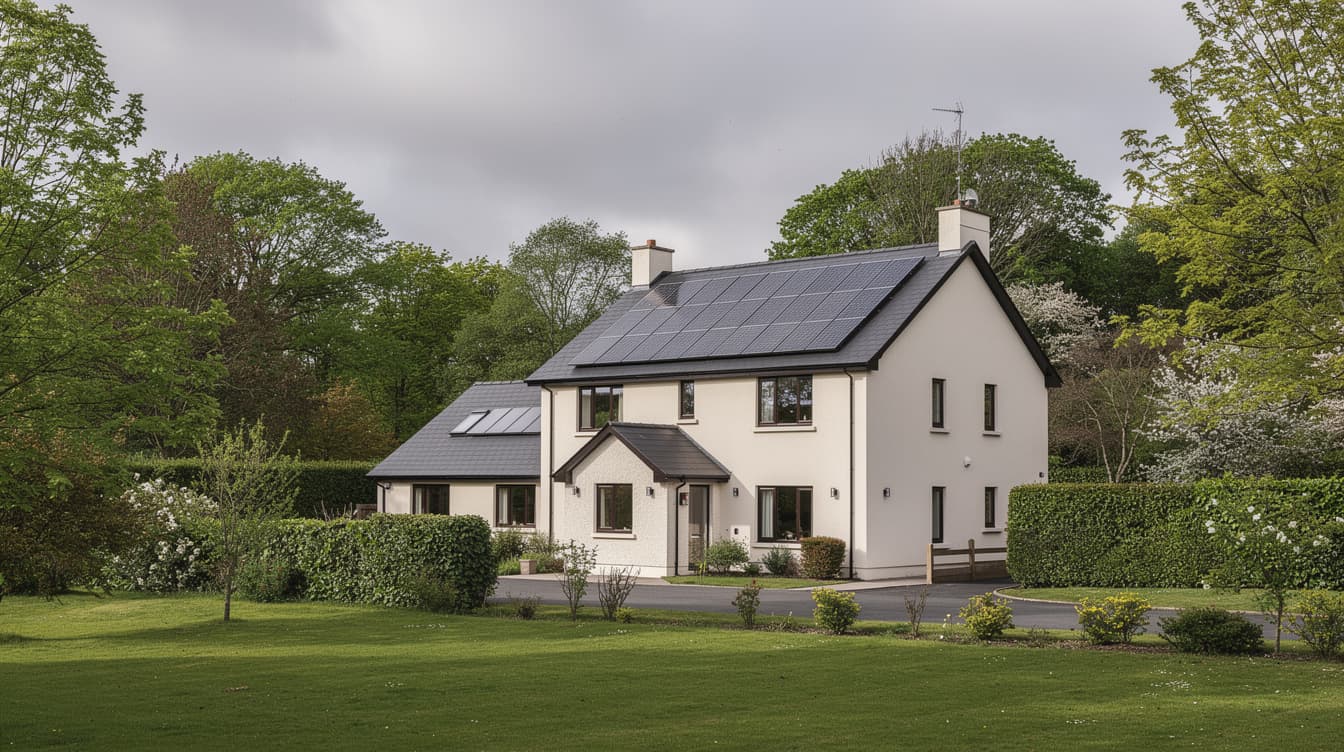
Solar Panels for Detached Houses in Ireland 2026: System Size, Costs & Why Detached Homes Get the Best Returns
Solar Panels for Detached Houses in Ireland 2026: System Size, Costs & Why Detached Homes Get the Best Returns
Detached houses have more roof space, higher energy bills, and better solar geometry than any other house type in Ireland. Here is a practical guide covering system sizing, costs after the SEAI grant, and realistic savings for detached homeowners in 2026.
If you own a detached house in Ireland, you are sitting on one of the best platforms for solar energy in the country. Unlike terraced or semi-detached homes, you typically have a large, unobstructed roof with multiple orientations to choose from. You also tend to use more electricity — which means you self-consume a higher percentage of what your panels generate, and that is where the real savings come from.
This guide is specifically written for detached house owners. We will cover how much roof space you actually have, what system size makes sense for your household, exact 2026 costs after the SEAI grant and zero VAT, and what savings you can realistically expect.
Why Detached Houses Are Ideal for Solar
Detached houses consistently deliver the best solar returns in Ireland, and it comes down to three simple advantages:
▲
More Roof Space
40–70 m² usable area vs 20–35 m² for terraced homes
⚡
Higher Usage
5,000–8,000 kWh/yr means more self-consumption
☀
No Shading
No adjoining walls means fewer shading issues from neighbours
The higher your electricity usage, the more of your solar generation you use directly — and self-consumed solar is worth roughly 3× more than exported solar. A detached house using 6,000 kWh per year will self-consume 35–50% of a 5 kWp system’s output, compared to perhaps 25–35% for a smaller terraced house with lower usage.
And because you are not sharing walls, there are no party wall complications for scaffolding access. Installation is faster and simpler than on terraced or semi-detached homes.
Roof Space: How Many Panels Can You Fit?
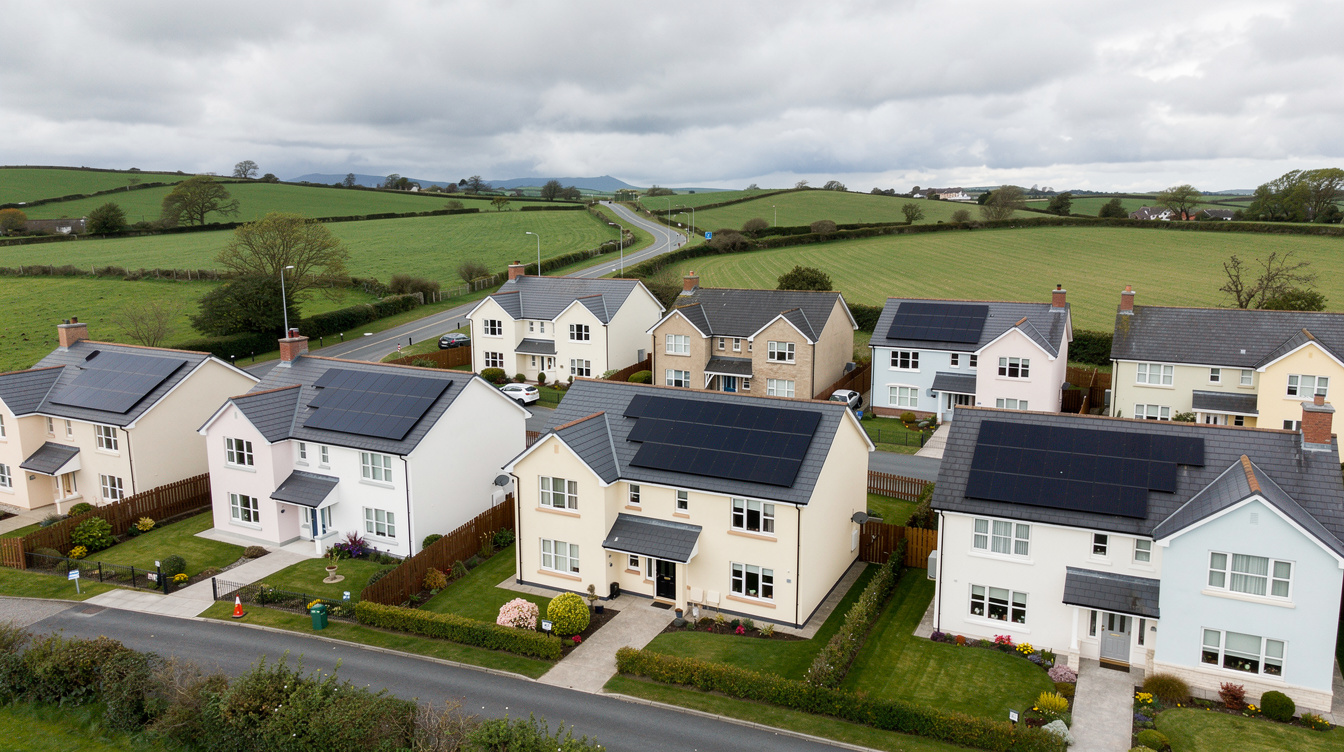
A typical Irish detached house has 40–70 m² of usable roof area across two or more slopes. Each modern 440W panel measures about 1.9 m × 1.1 m (roughly 2.1 m²), so you need to allow about 2.1–2.3 m² per panel including mounting gaps.
Here is what you can typically fit by house type:
| Detached House Type | Roof Area (main slope) | Panels That Fit | System Size |
|---|---|---|---|
| 3-bed dormer bungalow | 25–35 m² | 10–14 | 4.4–6.2 kWp |
| 3-bed two-storey detached | 30–40 m² | 12–16 | 5.3–7.0 kWp |
| 4-bed two-storey detached | 35–50 m² | 14–20 | 6.2–8.8 kWp |
| 5-bed executive detached | 45–70 m² | 18–28 | 7.9–12.3 kWp |
Important: Irish building regulations require a 500 mm setback from all roof edges, and you need to leave clearance around chimneys, vents, and velux windows. A good installer will do a site survey and tell you exactly how many panels your specific roof can take.
The big advantage of a detached house is that you can use multiple roof slopes. If your south-facing slope is partially shaded by a chimney, you can put extra panels on the east or west slope to make up the difference.
Ready to Go Solar?
Get your free personalised quote from SEAI-registered installers.
Recommended System Sizes by Household
The right system size depends on your electricity usage, not just your roof space. Here is what we recommend for detached houses in 2026:
| Household | Annual Usage | Recommended System | Annual Generation |
|---|---|---|---|
| Couple, no EV | 3,500–4,500 kWh | 3.5–4.4 kWp (8–10 panels) | 3,200–4,000 kWh |
| Family of 4, no EV | 4,500–6,000 kWh | 4.4–5.3 kWp (10–12 panels) | 4,000–4,800 kWh |
| Family of 4 + EV | 6,000–8,500 kWh | 5.3–7.0 kWp (12–16 panels) | 4,800–6,400 kWh |
| Large family + EV + heat pump | 8,000–12,000 kWh | 7.0–10.0 kWp (16–23 panels) | 6,400–9,100 kWh |
For most detached households, a 10–14 panel system (4.4–6.2 kWp) is the sweet spot. It maximises the SEAI grant, generates enough to cover 40–60% of your usage directly, and pays for itself in 5–7 years.
If you have an EV or are planning to get one, it is worth sizing up. Charging an EV from solar during the day is essentially free driving — see our solar panels and electric cars guide for the full breakdown.
2026 Costs & SEAI Grant Breakdown
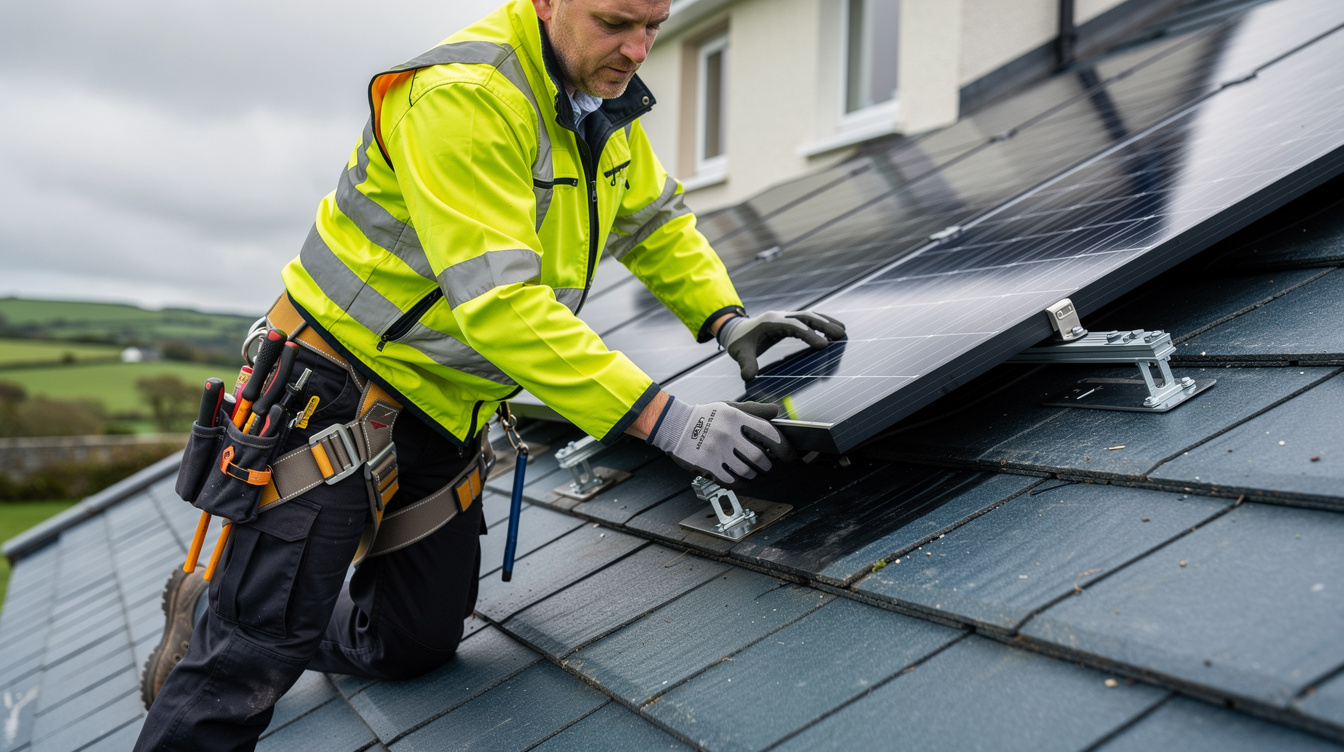
Solar panel costs in Ireland have stabilised in 2026. Zero VAT on residential solar (in place since May 2023) and global panel oversupply have kept prices competitive. Here is what detached house owners can expect:
| System Size | Panels | Cost (0% VAT) | SEAI Grant | You Pay |
|---|---|---|---|---|
| 3.5 kWp | 8 | €6,400–€7,400 | €1,700 | €4,700–€5,700 |
| 4.4 kWp | 10 | €7,600–€8,800 | €1,800 | €5,800–€7,000 |
| 5.3 kWp | 12 | €8,300–€9,900 | €1,800 | €6,500–€8,100 |
| 7.0 kWp | 16 | €10,500–€12,500 | €1,800 | €8,700–€10,700 |
| 10.0 kWp | 23 | €14,000–€17,000 | €1,800 | €12,200–€15,200 |
How the SEAI grant works: The grant pays €700 per kWp for the first 2 kWp, then €200 per kWp up to 4 kWp. The maximum grant is €1,800 for any system of 4 kWp or larger. Your home must have been built and occupied before 2021, and you need an MPRN.
The average cost per kWp installed in Ireland in 2026 is approximately €1,800–€2,100, covering panels, inverter, mounting hardware, cabling, and labour. Detached houses sometimes come in at the lower end because roof access is easier (no scaffolding on party walls, no access restrictions).
For a detailed breakdown of all costs, see our definitive solar panel costs guide.
Realistic Savings & Payback Period
Detached houses save more than other house types because they use more electricity. Here is what to expect from a typical 5.3 kWp system (12 panels) on a detached house:
Example: 4-bed detached house, 5.3 kWp system, family of 4
| Annual generation | 4,800 kWh |
| Self-consumed (40%) | 1,920 kWh × €0.30 = €576 |
| Exported to grid (60%) | 2,880 kWh × €0.10 = €288 |
| Immersion diverter savings | €180–€250 |
| Total annual savings | €1,044–€1,114 |
With a net cost of €6,500–€8,100 after the SEAI grant, that gives a payback period of 6–7 years. After that, you are generating free electricity for another 18–19 years (panels are warranted for 25 years).
Tip: Adding a solar immersion diverter (€300–€500 installed) sends excess solar to your hot water tank instead of exporting it at €0.10/kWh. This significantly boosts your self-consumption and savings.
Ready to Go Solar?
Get your free personalised quote from SEAI-registered installers.
Roof Orientation: South, East-West & Split Systems
One of the biggest advantages of a detached house is orientation flexibility. Here is how different roof faces perform in Ireland:
| Orientation | Output vs South | Best For |
|---|---|---|
| South | 100% | Maximum total output |
| South-East / South-West | 90–95% | Excellent — barely different from south |
| East or West | 80–85% | Good for spreading output across the day |
| East-West split | 80–85% per side | Best for self-consumption — morning + evening peaks |
| North | 50–60% | Not recommended |
The east-west split strategy: If your detached house runs north-south (meaning your main roof slopes face east and west), do not worry. An east-west split system — with panels on both sides — actually produces electricity over a longer portion of the day. You get morning generation from the east and evening generation from the west. Total annual output is about 15–20% less than a pure south system, but self-consumption can be higher because the output better matches when you actually use electricity.
For more on this, see our guide: Can I Put Solar Panels on East and West Facing Roof?
Should You Add a Battery?
A battery stores excess solar energy generated during the day so you can use it in the evening. For detached houses, batteries make more sense than for smaller homes because you generate more excess.
A Battery Makes Sense If:
- You export a lot of solar (over 50% of generation)
- You use most electricity in the evening
- You have or plan to get an EV
- You want backup power for outages
- You are installing solar + battery together (0% VAT on both)
A Battery May Not Be Worth It If:
- You work from home (high daytime self-consumption already)
- You have a solar immersion diverter absorbing excess
- Budget is tight — panels alone give the best ROI
- You are adding a battery later (23% VAT applies separately)
Battery costs in Ireland in 2026 range from €4,500 for a 5 kWh system to €9,000–€12,000 for a 13.5 kWh Tesla Powerwall 3. The most popular brands are Huawei Luna2000 (most common, works seamlessly with Huawei inverters), GivEnergy (best value), and Tesla Powerwall (best backup power).
For a full battery analysis, see our solar battery storage Ireland guide.
Planning Permission for Detached Houses
Good news: most detached house solar installations in Ireland are exempt development. You do not need planning permission as long as:
- Panels do not project more than 150 mm above the roof surface
- Panels do not extend above the ridge line
- The total panel area does not exceed 50 m² (or 12 m² for flat-mounted systems on walls or on the ground)
- The house is not a protected structure or in an architectural conservation area
For a 12-panel (5.3 kWp) system, you need about 25–28 m² of roof space — well within the 50 m² limit. Even a large 20-panel system uses about 42 m², still under the threshold.
Detached houses in architectural conservation areas (common in towns like Dalkey, Malahide, Kinsale) may need planning permission if the panels are visible from a public road. Your installer will advise you on this.
For the full rules, see our planning permission guide.
Choosing an Installer for a Detached House
When getting quotes for a detached house, here is what to look for:
- SEAI registration — mandatory for the grant. Check the SEAI registered contractor list.
- Site survey — any reputable installer will visit your home, inspect the roof, and measure before quoting. If they quote by phone alone, walk away.
- Panel and inverter brands — ask what brands they use. Tier 1 panels (Trina, JA Solar, Longi, Canadian Solar) and Huawei or SolarEdge inverters are the standard in Ireland.
- Warranty — expect 25-year panel warranty, 10–15 year inverter warranty, and a 2-year workmanship warranty (SEAI minimum).
- Multiple quotes — always get at least 3 quotes. Prices can vary by 20–30% for the same system.
Use our free quote tool to get quotes from SEAI-registered installers in your area, or browse our installer directory by county.
Ready to Go Solar?
Get your free personalised quote from SEAI-registered installers.
Common Questions from Detached House Owners
How many solar panels does a detached house need?
Most detached houses do best with 10–14 panels (4.4–6.2 kWp). If you have an EV or heat pump, you may want 14–20 panels. Your installer will recommend a size based on your electricity bills and roof space.
Do I need planning permission for solar panels on a detached house?
Almost certainly not. Solar panels on a detached house are exempt development as long as total panel area is under 50 m², panels do not project more than 150 mm above the roof, and your home is not a protected structure. A 14-panel system uses about 30 m² — well within limits.
What is the payback period for solar on a detached house?
Typically 5–7 years for a standard system after the SEAI grant. Detached houses often see faster payback than smaller homes because higher energy usage means more self-consumption of solar energy.
Can I put panels on both sides of my roof?
Yes. An east-west split system generates electricity over a longer portion of the day, which can improve self-consumption. Total annual output is about 15–20% less than pure south, but the financial return can be similar because you use more of what you generate.
Will solar panels increase my home’s value?
Yes. Solar panels improve your BER rating, which directly affects property value in Ireland. A one-point BER improvement can add 1–3% to your home’s value. For a detached house worth €400,000, that is €4,000–€12,000. See our full guide on solar and property values.
Related Articles
Solar Panel System Cost by Number of Panels Ireland 2026: 8, 12, 14, 20, 24 Panel Prices
What 8, 12, 14, 16, 20 or 24 solar panels actually cost in Ireland 2026 — net after €1,800 SEAI grant & 0% VAT, output kWh, roof area & battery add-ons.
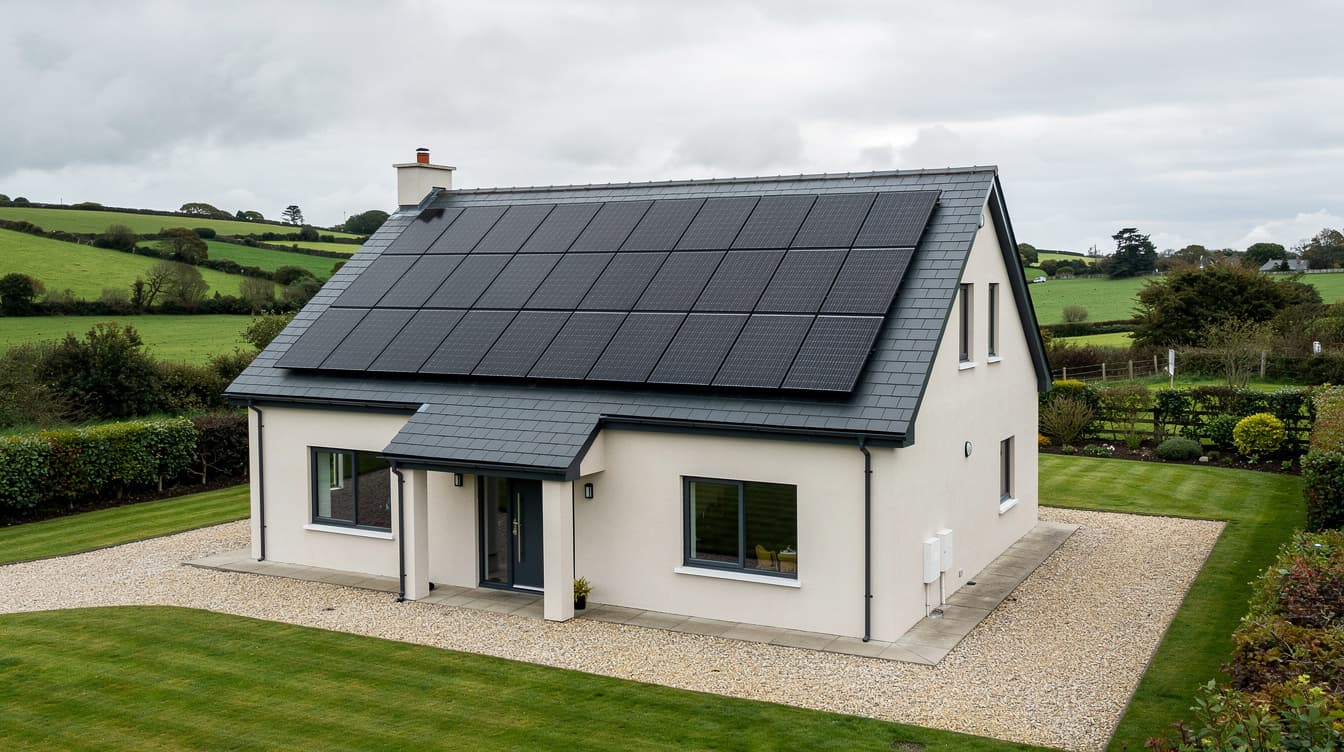
6kW Solar System Cost Ireland 2026: Real Prices, Output & Payback
6kW solar costs €7,700–€10,500 net after the €1,800 SEAI grant and 0% VAT in Ireland 2026. Real quote, 5,270 kWh/yr output, EV/battery ROI.
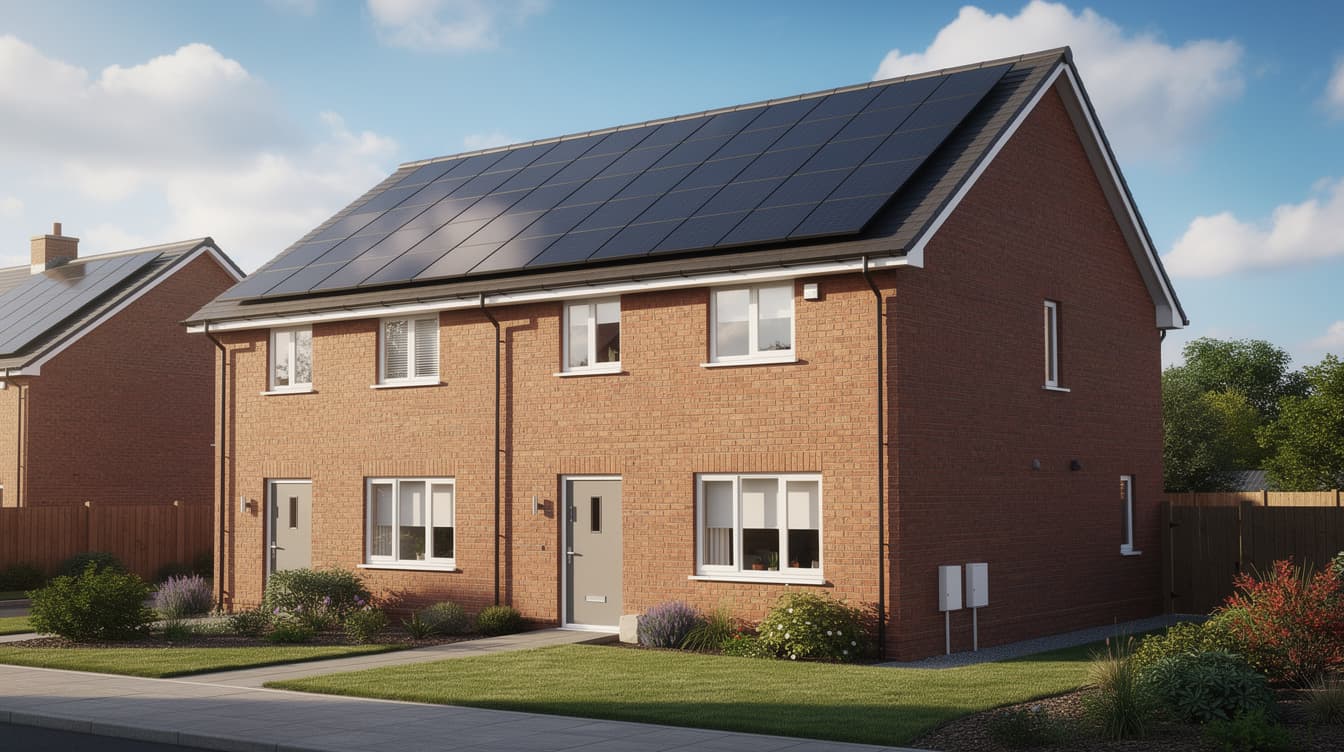
5kW Solar System Cost Ireland 2026: Real Prices, Output & 25-Year ROI
5kW solar system costs €6,700–€9,200 net after the €1,800 SEAI grant and 0% VAT in Ireland 2026. Full itemised breakdown, real output data & battery ROI.